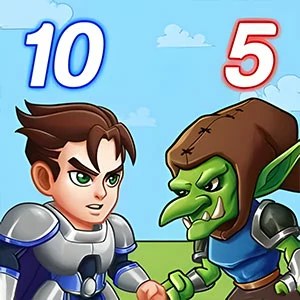

Potion Rush is a browser match-3 puzzler where you brew potions by matching three or more items, with over 200 levels each carrying its own goal. Suits casual puzzle fans who like short, goal-driven sessions.
Potion Rush is a match-3 puzzle game you play in a browser. The catalogue description says you brew potions and work toward becoming a "potion master," matching three or more identical items to clear them from the board. Each level has its own type and goal, and you have to hit that goal to finish the puzzle. There are more than 200 levels. That's the core of it. No downloadable client, no account setup mentioned, just a puzzle game you open and play. This guide sticks to what the catalogue tells us and keeps any extra advice at the level of general match-3 habits rather than claims about specific boards.
What the game actually asks of you
The description is short but it sets out three things worth holding onto. First, matching: you clear items by lining up three or more of the same kind. Second, objectives: a level's goal is not always the same, because "each level has a different type and goal." Third, volume: the game runs past 200 levels, so you are in for a long sequence of small puzzles rather than one big session.
What the description does not give us is a control scheme, a scoring formula, a timer, a move limit, or a list of level types. It does not say whether you swap tiles, tap pairs, or drag. It also does not say whether levels are timed or move-limited. Those details are simply not in the catalogue notes, and guessing at them would be more misleading than helpful. The practical upshot: read the on-screen goal before you touch anything, because the game itself will tell you what a level wants in a way these notes can't.
One more note on the description: it mentions "crazy potions" and a potion-master framing, which is the theme, not a mechanic. Treat the brewing language as flavour. The thing you actually do is match items.
The loop, and what you're really optimising for
Strip away the potion dressing and a match-3 loop is simple. You look at the board, find groups of three or more identical items, clear them, and the board changes. New items appear or existing ones shift. You keep clearing until the level's goal is met. Then the next level gives you a different goal, and you start again. That's the whole shape of it, and the catalogue's line about 200-plus levels tells you the game expects you to repeat that shape a lot.
So what are you optimising for? Not score, as far as the description goes. The stated success condition is reaching the level goal. That distinction matters more than it sounds. In match-3 games generally, players who chase the biggest immediate match often do worse than players who make the match that serves the objective. If this level is about clearing a particular kind of item, then matching that item is progress and matching something else is not, no matter how satisfying the bigger group looks. The catalogue doesn't spell out the level types, so I can't tell you what they are. But the principle holds: the goal is the target, and your matches are the tool.
That leads to a habit worth building early. Before your first move on any level, find the goal text and read it. Then, on each turn, ask whether your candidate match moves you toward that goal. If it doesn't, look for one that does. Match-3 boards usually offer several legal moves at once, and choosing between them is most of the skill. The description's emphasis on different goals per level is a hint that a single fixed strategy won't carry you through 200-plus puzzles.
Mistakes that end levels early
I can't tell you which specific moves fail on specific boards, because the catalogue doesn't describe any boards. What I can do is name the mistakes that reliably hurt in match-3 games, framed as things to watch for rather than claims about Potion Rush's particular levels.
- Matching before reading the goal. The description says every level has its own goal. Moving first and reading second means your opening moves are effectively random with respect to what the level wants.
- Taking the biggest group every time. A four- or five-item match looks better than a three, but if it clears items the goal doesn't care about, it's wasted effort. Bigger isn't automatically better when there's an objective.
- Ignoring the bottom of the board. In most match-3 games, clearing lower rows shifts more of the board than clearing near the top, which can open up new options. It's a general habit, not a rule the catalogue states, but it's worth testing for yourself.
- Playing fast when you're stuck. If no move looks useful, slowing down beats tapping something to feel productive. A careless match can leave the board worse than it was.
- Treating a level type as familiar. Because goals vary, a habit that worked on the last level may not apply to the next. Re-read the goal each time rather than assuming.
Notice that none of these require knowing the game's internals. They're about attention and restraint, which are free.
Phone versus desktop
The catalogue doesn't specify which devices Potion Rush supports, and it doesn't describe touch or mouse controls. So I can't tell you the game plays better on one or the other. What I can say is that it's a browser game, and browser match-3 titles generally run on whatever you open them in. If you're on a phone, the board will be smaller and your finger covers part of the screen while you play; if you're on a desktop, you have more room to see the whole board at once. Those are facts about screens, not about this game.
My suggestion, clearly labelled as a suggestion: try it on the device you'll actually use most, and if the board feels cramped or the controls feel awkward, switch. Don't assume the desktop version is the "real" one. The catalogue makes no such claim.
A short practice plan
You don't need a long warm-up for a match-3 game. You need a few deliberate sessions where you pay attention to how you're deciding. Here's a simple plan that uses only what the description establishes.
Session one: read every goal. Play a handful of levels and, before each one, say the goal out loud or write it down. Then play normally. The point isn't to win; it's to break the habit of moving before you've read. Notice how often the goal changes from level to level, since the description says it always does.
Session two: one move, one question. On each turn, before you match, ask whether the match serves the goal. If it doesn't, look for one that does. You'll probably find you have more choices than you thought. This is the single most useful habit in any objective-based match-3 game.
Session three: slow down when stuck. Deliberately play a few levels at half speed. When you feel the urge to tap something just to keep going, stop and scan the board again. The goal here is to notice the impulse and resist it.
Ongoing: keep a short note. After a level you fail, jot one line about why. Not a detailed analysis, just a sentence. Over time those lines will tell you more about your own habits than any general guide can, including this one.
What to expect from the long haul
More than 200 levels is a lot of matching. The description promises variety through differing level types and goals, which is the game's way of keeping the loop from going stale. Whether it succeeds is something you'll judge for yourself. What you can control is how you approach each level: read the goal, choose matches that serve it, and don't rush when the board is unhelpful.
That's the honest beginner's guide. The catalogue tells us the matching rule, the varying goals, and the level count. Everything beyond that, including the specific level types and controls, is for the game to show you. Open it in a browser when you have a few minutes, read the first goal carefully, and start matching. The rest you'll learn by playing.