First 60 Seconds: A Cockpit That Feels Borrowed From the Arcade I tapped the screen and immediately collided with a purple asteroid before I registered my ship had moved at all. That's not a complaint—it’s just the kind
First 60 Seconds: A Cockpit That Feels Borrowed From the Arcade
I tapped the screen and immediately collided with a purple asteroid before I registered my ship had moved at all. That's not a complaint—it’s just the kind of twitch-response calibration the game demands right out of the gate. You get a tiny triangle of a fighter, a black starfield, and a chiptune bass pulse that sounds like someone left a Sega Genesis running in a warehouse. No tutorial prompt, no story crawl. Just incoming fire from a turret that's already aiming for the spot you're occupying. My second try, I lasted 18 seconds. Third try, 42. By minute four, I had a blister forming on my thumb and a decent grasp of why I kept dying.
Loop Logic: Surviving Is the Strategy, Killing Is the Bonus
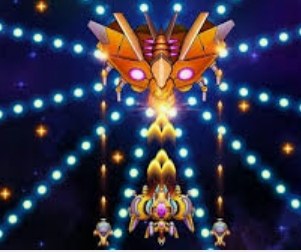
Space Attack doesn't hand you a mission. The goal is pure survival scoring—rack up points by blowing up enemy fighters, turrets, and the occasional bolted-together miniboss that drifts in from the edges. There's no cover, no regenerating shield, no secondary weapon you can hoard. You have one gun and a health bar that depletes faster than you think. What I quickly realized is that the game wants you to treat movement as your primary weapon. Firing is secondary.
Every wave throws a slightly different mix at you: groups of fast interceptors that try to ram, slow turrets that spray in fixed patterns, asteroid chunks that break apart into smaller, faster fragments. The score multiplier ticks up the longer you stay alive without taking a hit, but the real optimization isn't about chaining kills—it's about deciding when to let an enemy drift off-screen rather than chasing it into a crossfire. I started seeing my runs as a series of micro-decisions: do I hold this corner and sweep left, or do I thread through the middle and hope the spawn pattern doesn't trap me? The answer usually came down to what type of enemy sound cue I'd just heard.
What Kills You Before You Know Why
There are a handful of deaths I kept repeating in my first dozen runs that felt unfair until I slowed down and watched what actually happened. These aren't bugs. They're habits the game punishes severely.
First: edge-hugging. On a phone screen especially, it's tempting to slide your ship into a corner where you think you only have to watch one direction. Space Attack spawns enemies from all sides, and some of the nastiest projectiles come from the same edge you're pressed against. You'll get hit by something that literally wasn't on screen a quarter-second earlier. I lost five runs in a row to a turret that materialized directly behind my left-corner hideout.
Second: panic fire. Holding down the shoot button feels natural, but your gun has a slight cooldown rhythm that isn't visible. If you just mash or hold, you'll miss the timing on burst damage against shielded enemies. I learned to tap in groups of three, pausing a beat between them. It sounds fussy, but it's the difference between stripping a miniboss's armor in one pass versus getting clipped by its return volley.
Third: the double-back instinct. When an asteroid swarm splits, your brain screams "reverse!"—and that's exactly when a fast interceptor spawns behind you. I had to train myself to corkscrew through the gap instead of retreating. Retreating in Space Attack just puts you in an unscouted section of screen with unknown projectiles already in flight.
Phone vs. Desktop: Same Game, Two Completely Different Animals
I tested this on a Pixel 6 and a mid-range laptop with a trackpad, then again with a basic wireless mouse. The difference isn't subtle—it changes which enemy types feel threatening and how you should approach movement entirely.
On phone, the touch controls are a virtual joystick that appears wherever you place your left thumb, with auto-fire on the right side that you can toggle to manual in a small settings gear I almost missed. The auto-fire is generous but not smart. It shoots at the nearest target, not the most dangerous one. Against turrets that sit at the edge and lob slow orbs, auto-fire will waste shots on a harmless asteroid fragment while the turret lines up a kill shot. I turned auto-fire off after about 15 minutes and my survival time improved immediately. The trade-off is that now your right thumb is busy tapping, which means you can't brace the phone the same way. I ended up laying the phone flat on a desk and using both index fingers like tiny arcade sticks. Looked ridiculous, worked great.
Desktop with a mouse feels almost like a different game. Ship movement snaps to the cursor position, which gives you much finer control over drift and stop-start dodging. You can hover in a gap between two projectile streams that would be a death sentence on a thumbstick. The downside is that clicking to shoot introduces a tiny but real lag if you're not using a keyboard key for fire. I mapped fire to the spacebar and kept the mouse for movement only, and it felt close to a twin-stick setup without the second stick. If you're on a trackpad, honestly, just switch to phone. The friction curve is too steep and you'll blame the game for what's really a hardware mismatch.
Enemy Types You'll Learn to Hate (and One You Should Love)
The turrets are the true run-enders. They don't chase, so your instinct is to ignore them and deal with the moving threats first. Bad plan. Turrets fire in staggered patterns that cover the exact zones you need to dodge into when an interceptor pushes you. I started prioritizing turrets the moment they appeared, even if it meant letting a fighter escape. Clean up the static threats first, then dance with the movers.
The interceptors come in two flavors: the fast, fragile ones that beeline for your current position and the slower armored ones that fire a spread of three shots before retreating. The fast ones are actually helpful—they trigger bomb power-ups when killed in quick succession. I didn't notice this until a run where I accidentally wiped four of them in a chain and the screen cleared. Now I actively herd them into a cluster before firing.
Minibosses appear roughly every 90 seconds based on my count, though I never timed it officially. They soak up damage and fire spiraling patterns that look intimidating but have consistent gaps. The trick is to stay in the lower third of the screen and make small lateral adjustments instead of big sweeping dodges. Every miniboss I've faced telegraphs its big attack with a brief flicker. If you fire during that flicker, you cancel the attack. I pulled it off twice in ten attempts, so it's not a reliable strategy yet, but it's there.
Sound Design That's Actually Useful
I usually play browser games muted. With Space Attack, I'd argue you're handicapping yourself. Each enemy type has a distinct spawn sound—a low thud for turrets, a rising whine for interceptors, a crackling hiss for asteroid fields. With headphones on, I started reacting to threats before they fully entered the screen. That extra half-second is the difference between a clean dodge and a restart. The music itself is fine, a looping retro pulse that I stopped noticing after a while, but the sound effects are doing real gameplay work. If you're on desktop with external speakers, push the volume higher than you think you need. The audio cues get buried easily under the music track at default mix levels.
A Practice Plan That Won't Make You Hate Yourself
I burned an hour just throwing myself at waves and getting frustrated before I started structuring my attempts. Here's what actually moved my high score from around 2,000 to consistently above 8,000 in a single evening.
Spend your first five runs ignoring score entirely. Don't shoot. Just dodge. See how long you can survive on movement alone. This teaches you the spawn rhythms and the projectile speeds without the distraction of aiming. I hit 47 seconds with no weapon, and it completely changed how I read the screen.
Next five runs, focus only on turret priority. The moment you hear that low thud, hunt the turret. Let fighters go. Let asteroids drift. You'll die more at first because you're moving aggressively into unknown areas, but you're building the reflex that matters most for mid-game survival.
Then do ten runs where you only fire in three-shot bursts, never holding down the button. Count the rhythm out loud if you have to. This drill alone pushed me past a miniboss I'd never beaten because I finally had the damage output when I needed it instead of a half-cooled-down gun firing weak single shots.
Finally, alternate between phone and desktop for two runs each. You'll notice your phone runs feel frantic and your desktop runs feel surgical. Playing both actually improved my phone scores because I started visualizing the "mouse precision" gaps even when my thumb couldn't hit them perfectly. The mental model transfers.
What I Still Can't Figure Out
There's a power-up that looks like a spinning orange diamond. I've grabbed it maybe six times and I still don't know what it does. It doesn't clear the screen, doesn't seem to boost damage, and doesn't add a shield. My best guess is a temporary speed increase, but honestly I'm usually too busy not dying to measure my ship's velocity. If someone figures it out, I'd love to know. The game isn't going to tell you—there's no help screen, no pause menu with a legend, just that tiny settings gear and a mute toggle.
Also, score submission appears to be local only. I couldn't find a leaderboard, which is either a deliberate choice to keep it casual or a feature that hasn't been wired up yet. Either way, I just started taking screenshots of my high scores like it's 2004 and I'm proving something to my friends on a forum.
Bottom Line From Someone Who Kept the Tab Open
Space Attack isn't trying to be deep. It's a browser-based arcade shooter that knows exactly what lane it's in and stays there. The controls work well enough on phone once you kill the auto-fire, and on desktop with a mouse it's genuinely satisfying. The difficulty curve is steep but fair—most of my deaths I could trace back to a bad decision I made two seconds earlier, not a cheap spawn. For a free game you can pull up in a browser with no account or download, it overdelivers on the one thing that matters: the moment-to-moment tension of threading a ship through a closing gap of orange fire. I'll probably keep it bookmarked for those ten-minute gaps between meetings where I want something that demands full attention without requiring a commitment.