First Minute, First Mistake I opened Royal Crown Blast expecting something halfway casual, maybe a match-three with sparkles. What I got was a grid full of bombs and a timer that doesn't care about your feelings. The fir
First Minute, First Mistake
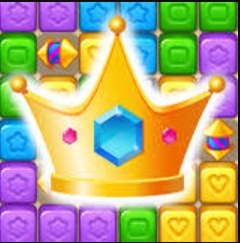
I opened Royal Crown Blast expecting something halfway casual, maybe a match-three with sparkles. What I got was a grid full of bombs and a timer that doesn't care about your feelings. The first board looks almost friendly — bright gems, royal purple trim, a crown icon hovering near the top like it's cheering you on. Then you tap the first cluster and the chain reaction starts. Within forty seconds I'd already cornered myself with a single bomb isolated in the bottom left, no adjacent matches, no power-up ready. The game doesn't warn you. It just waits for you to realize you've lost three moves too late.
That first minute sets the tone. This isn't a slow-build puzzle game where you can undo a bad tap. Royal Crown Blast treats every move like it's already part of a combo you haven't planned yet. The crown at the top isn't decoration — it's a progress marker that fills as you clear specific bomb types, and watching it stall out because you got greedy with a big explosion two rows over is its own kind of frustration. I learned that the hard way in my second session.
What You're Actually Optimizing For
On the surface you're clearing bombs. Tap a connected group of two or more same-colored bombs, they detonate, everything above shifts down, new bombs fill in from the top. Standard gravity-fed blast mechanics. But the real loop is about feeding the crown meter efficiently while keeping the board from going dead. Every level asks you to collect a certain number of specific bomb colors — say, twelve red royal bombs and ten blue sapphire bombs — and the crown meter only advances when you clear those target colors. Clearing off-color bombs still helps because it reshuffles the board and can drop fresh target bombs into play, but it doesn't directly progress the level. You feel this tension constantly: do I take the easy four-cluster right now, or do I break it apart with a smaller match to set up a better cascade?
The combo system is where advanced play lives. Consecutive matches without a "dead tap" — where you clear a group that doesn't lead to another immediate match — build a multiplier that shows up as a small jewel counter near the crown. Let it drop, and you're back to base clearing power. Keep it climbing and suddenly a three-bomb group clears like five. The game doesn't explain this in detail. I noticed the multiplier after maybe ten minutes when I accidentally strung together six matches and saw the crown meter jump disproportionately. From then on, I stopped treating the board as a series of single moves and started reading it two or three detonations ahead. That shift alone took me from clearing maybe 60% of a level's target to finishing with moves to spare.
There's also an implicit timer, though not the kind that counts down seconds. Every move you make without advancing the crown meter tightens the board's "deadlock potential." Columns fill unevenly, colors clump in unreachable corners, and eventually you're staring at a board where no two matching bombs touch. When that happens, the level ends regardless of how many moves the game technically still allows. You can feel it coming about four moves out if you're paying attention. I started watching the bottom three rows obsessively because that's where deadlocks usually begin.
The Habits That Keep You Alive Past the Basics
Here's what separates a run that fizzles at 40% crown charge from one that clears the level with a satisfying little fanfare. None of this is in a tutorial.
Stop clearing the biggest cluster first. I know it's satisfying. A group of eight bombs lighting up is why we play these games. But big clears early in a level often dump a mess of random colors into the upper board without giving you a follow-up move. I started looking for medium clusters — three or four bombs — that sat directly above or adjacent to another matching group of the same color. Clearing the top cluster drops the lower one into alignment, and that's your free second match. Two moves, one cascade, multiplier active. This alone turned around my third attempt.
Color priority is not equal. The target colors the level asks for matter, but so does the distribution of what's actually on the board. If the level wants twelve red and ten blue, and your board is drowning in green and yellow with only three reds visible, clearing greens isn't neutral — it's actively digging you out of a hole. I spent a few runs stubbornly hunting reds and watched the board lock up because I ignored what was plentiful. You clear what the board gives you, not what the goal demands, until the ratio swings back in your favor. Treat off-color clears as board maintenance.
The bottom row is a trap. Bombs on the lowest row can only be cleared by matching them directly. Nothing drops from below to trigger a chain. If you leave target-color bombs sitting on the bottom row without a clear plan, they're basically dead weight until you spend a move on them specifically. I started prioritizing bottom-row target bombs even when the match was small, just to get them out of that dead zone. Letting them sit is how you end up one ruby short with no moves left.
Power-ups are not panic buttons. You'll occasionally see a special bomb appear — sometimes a crown bomb that clears an entire row or column, sometimes a color bomb that removes every bomb of one type. The beginner instinct is to save them for when the board looks scary. The advanced move is to use them early as board resets when your target colors are scarce. Popping a color bomb on a color you don't need immediately reshuffles the board and often drops a wave of the color you do need. I held onto a crown bomb for an entire run once, waiting for the perfect moment, and ended up losing with it still sitting there unused. Now I fire them the moment I notice two consecutive moves that don't produce a natural cascade.
When the Board Fights Back
Royal Crown Blast has a subtle difficulty curve that isn't about harder level goals — it's about board layouts that narrow your options. Some levels start with bombs arranged in disconnected checkerboard patterns. You'll see three reds, but they're separated by single greens in a way that no single clear connects them. These boards punish impulsive tapping harder than the early levels. You have to create adjacency by clearing the blockers first, and that means accepting a move with no direct crown progress to set up the next three moves with progress. It feels wrong. It's correct.
Another pattern I noticed: cascades that look helpful can actually hurt you. A big chain reaction might clear twelve bombs in one go, which feels great, but the resulting board fill is completely random. I've had cascades that cleared my last visible target-color bombs and replaced them with a board full of the wrong colors. When you're close to hitting the crown goal, smaller, controlled clears keep your target colors on the board longer. I learned to resist the dopamine hit of a big cascade once the crown meter was above 70% full.
Phone vs Desktop Feels Different
I played on both, and there's a meaningful difference. On desktop with a mouse, my accuracy was higher — I could tap exactly the bomb I wanted, even in tight clusters where bombs are small. The cursor gives you a pixel-level preview of what you're about to select. On a phone screen, my thumb obscured the lower-left corner constantly, and I mis-tapped adjacent bombs probably once every eight or nine moves. That's enough to break a combo streak. If you're on mobile, I'd suggest playing with your device flat on a surface and using your index finger for better precision. The game doesn't have an undo, and a single fat-fingered tap on a solo bomb that doesn't match anything will instantly drop your multiplier to zero. That's brutal when you've built a x5 chain.
Performance-wise, the game ran smoothly in a browser on both platforms. No noticeable lag between taps, explosions animate quickly, and the board refill is nearly instant. That speed matters because the game's flow relies on being able to scan the new board state the moment it appears. Any delay would break the rhythm. I didn't encounter crashes or freezes across maybe twenty total sessions.
One oddity on mobile: the crown meter sits near the top of the screen, and on longer levels where I was really focused on the lower board, I'd forget to check it. That led to situations where I'd hit the goal without realizing and keep playing cautiously when I could've just finished the level. On desktop, the meter is in your peripheral vision more naturally. Small thing, but it affected how I paced my moves.
A Practice Plan That Actually Builds Better Instincts
I'm not going to tell you to "play daily" or "just practice." That's filler advice. Here's what I did after my first ten frustrating runs that actually changed my results. This is a short, repeatable drill you can run in your first few sessions.
Load any level — doesn't matter which — and for the first six moves, forbid yourself from clearing any group larger than three bombs. Seriously. Even if a six-cluster is glowing right there. This forces you to scan for chain potential instead of grabbing the obvious big move. After six moves, play normally but keep a mental count of how many times your clear directly sets up the next clear without a dead tap. When I started, I was at maybe two out of ten moves. After three sessions of this drill, I was hitting five or six. The crown meter fills noticeably faster once you're consistently chaining moves rather than reacting to whatever cluster catches your eye.
Second drill: play one full level where you prioritize bottom-row bombs above all else, even if the matches are tiny. Clear every matchable bomb on the lowest row before you touch anything in rows three and above. This teaches you to see the board's danger zones. It'll feel slow and inefficient, and you might not finish the level. That's fine. The goal is to burn in the habit of scanning the bottom first. After doing this three times, I found myself automatically checking the bottom row at the start of every move, and my deadlock rate dropped significantly.
Third: once you're comfortable with the first two drills, play a level where you intentionally pop any power-up the moment you get it. Don't save it. Don't wait for the "right moment." Just use it as soon as it appears. This will feel wasteful, but it teaches you that power-ups are renewable and that early board resets are often more valuable than a perfect late-game save. You'll learn what each power-up actually does to board state rather than what you imagine it'll do in a crisis. After a few rounds of this, you can go back to saving them — but you'll save them with better judgment about when the board actually needs intervention.
Between these three drills, you're looking at maybe 25–30 minutes of focused practice. That's enough to move past the "click the biggest thing" phase and start playing Royal Crown Blast like someone who understands its rhythm. The game rewards anticipation, not speed. Every run I lost came down to a moment where I stopped thinking two moves ahead and just reacted. Every run I won, I could point to three or four specific setups where I chose a smaller clear to preserve a chain.
It's a free browser game, so there's no barrier to trying these drills a few times. I came back to it over a couple of days and the habits stuck. The game doesn't change — the boards are random within each level's constraints — but your reading of them either sharpens or you keep losing to the same deadlock. The crown's not going to fill itself.