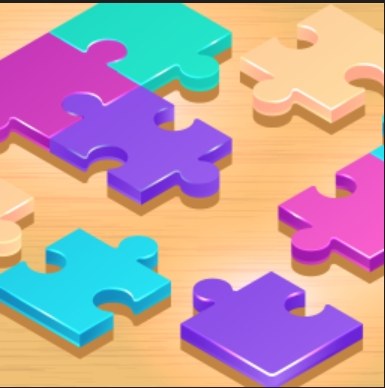
Jigsaw Casual strips the classic puzzle pastime down to its purest form: no timers, no meta-game, just the quiet satisfaction of fitting pieces together. It suits anyone seeking a relaxing, low-pressure brain teaser that’s instantly familiar. This guide offers practical tips for sorting, border-building, and breaking through stuck spots, making it ideal for casual players who want a smoother, more methodical experience.
Jigsaw Casual is a browser game that takes the classic pastime of assembling a picture from scattered pieces and strips it down to its most direct form. There is no elaborate backstory, no timer-driven pressure, and no complex meta-game to manage. What you get is a grid of interlocking fragments and the quiet satisfaction of making them fit. Because the game relies on familiar puzzle logic, most players will find themselves able to start immediately. The challenge, as with any jigsaw, is not understanding the goal but managing the process when you hit a wall. This walkthrough focuses on the practical methods for pushing past those stuck spots, no matter which stage you are on.
The Basic Loop: Sorting Before Assembling
At its core, Jigsaw Casual asks you to complete a sequence of images by dragging pieces into place. The core loop is simple: look at a piece, determine where it belongs, and connect it to the larger picture. What you are actually optimizing for is efficiency. Every time you stop to stare at a blank area of the board, you lose momentum. The key is to work in a structured order rather than randomly trying pieces until one clicks.
Start with the border. Edge pieces have one flat side, which makes them instantly identifiable. Pull every piece with at least one straight edge to the side and assemble the frame first. This gives you a defined boundary and a visual anchor for everything else. Once the frame is complete, sort the remaining pieces by color or by distinct visual features. If the image has a bright red object, a clear sky, or a patch of green foliage, group those pieces together. This pre-sorting is the single most effective way to avoid the frustration of scanning the entire board for a single missing piece.
Why Runs Get Stuck Early
Most runs end not because the puzzle becomes impossible but because the player falls into a few specific traps. The most common mistake is trying to build from the center out without any reference points. Without the frame in place, you have no idea how the pieces align with the overall image. The second mistake is refusing to rotate pieces. In many jigsaw games, pieces only fit one way, but some casual versions allow rotation. If you are not cycling through orientations, you will miss obvious connections. Third, players often fixate on one section for too long. If you have spent more than a minute trying to force a specific piece into a specific spot, stop. Move to another section and let your brain work on the problem subconsciously.
Another early-run killer is attempting to place pieces based on shape alone. In a real jigsaw, the shape is a strong clue. In Jigsaw Casual, the visual pattern on the piece should be your primary guide. A piece that shows a sliver of a car door will not fit into a patch of sky, no matter how similar the tab and blank shapes look. Trust the image before the shape. If the game does not provide a reference image, keep the original picture in a separate browser tab or on your phone so you can zoom in on details.
How to Break a Stuck Spot
When you hit a genuine wall, the worst thing you can do is keep pushing the same pieces. Instead, use a systematic reset. First, scan the board for pieces that you have already placed but that look slightly off. Often, a piece is in the right area but rotated incorrectly, or it is actually a similar-looking piece that belongs a few spaces away. Do not be afraid to pull a suspected misplaced piece out and try its neighbors in that gap.
Second, switch your focus from the pieces in your hand to the empty spaces on the board. Look at the shape of the hole you are trying to fill. Count the tabs and blanks. Then, scan your unsorted pile for pieces that match that exact configuration. This narrows the search dramatically. Third, use the process of elimination on color boundaries. Where two distinct colors meet, the pieces along that edge will contain both colors. Isolate those transition pieces first. They act as guideposts and make the rest of the section much easier to fill.
If you are still stuck, step away from the puzzle for a few minutes. Close the tab or look at a different part of the screen. The brain is remarkably good at solving spatial problems in the background. When you return, you will often spot the connection immediately. This is not a trick; it is a legitimate strategy used by experienced puzzlers. The goal is to reduce the cognitive load of holding too many piece positions in your head at once.
Device Notes: Phone and Desktop Differences
Jigsaw Casual is a free browser game, which means you can play it on both mobile and desktop. The experience is not identical, and adjusting your approach based on your device will save you time. On a desktop, you have the advantage of a large screen and a precise mouse pointer. Use this to your benefit by keeping the entire puzzle visible at a reasonable zoom level. Resist the urge to zoom in too far; you need to see the whole picture to recognize where a piece belongs. If the game has a zoom feature, use it only for verifying the details of a small, tricky section, then zoom back out.
On a phone or tablet, the smaller screen means you will likely be zooming and panning more frequently. This is where sorting becomes even more critical. Keep your unsorted pieces roughly organized by color in different areas of the screen. This prevents you from swiping through a giant, disorganized pile every time you need a specific piece. The drag-and-drop motion on a touchscreen can also cause accidental piece drops. Be deliberate with your finger movements, and if you find yourself frequently dropping pieces into the wrong spot, slow down your pace. Accuracy matters more than speed in a casual puzzle game.
One note on browser play: because Jigsaw Casual runs in a browser window, your page may refresh or lose focus. The game likely autosaves your progress, but do not count on it. If you have a large section assembled, consider leaving the game open in a dedicated tab so you do not accidentally lose your work to a misclick or a system update.
A Practical Practice Plan
If you want to improve your ability to get past stuck spots, you do not need to play for hours on end. Instead, use a short, structured practice routine. Start with the smallest puzzle size available in Jigsaw Casual. Time yourself, but not for the sake of speed. The goal is to complete the puzzle without ever resorting to random clicking. If you catch yourself just trying pieces in a spot to see if they fit, stop and force yourself to articulate why that piece might belong there. Look at the color, the line continuity, and the shape. This builds the observational habit you need for larger puzzles.
Once you can complete a small puzzle methodically, move to a medium size. Here, you should practice the "sectioning" strategy. Pick a distinct object in the image, such as a house or a tree, and assemble that object completely before touching the background. This teaches you to manage multiple small sub-puzzles simultaneously. If you get stuck on a section, deliberately switch to a different object rather than quitting or fighting through it.
For your third practice session, try playing with the pieces rotated randomly. If the game does not auto-orient pieces, you will need to manually rotate each one. This is a valuable exercise because it forces you to rely on the visual image rather than the shape of the piece. It is much harder, but it will make your brain faster at recognizing patterns when you return to normal play.
Finally, practice the "walk away" technique. Set a timer for five minutes. When the timer goes off, if you have not made meaningful progress in the last minute, close the game and do something else for ten minutes. When you come back, you will be surprised at how obvious the next move seems. This is not procrastination; it is a deliberate reset that prevents you from developing tunnel vision.
Final Thoughts on the Stuck Spots
Getting stuck in Jigsaw Casual is not a sign of failure; it is a natural part of the puzzle-solving process. The game is designed to be a relaxing, casual experience, and the difficulty should ramp up gradually as the images become more complex. When you hit a wall, remember the basic checklist: finish the border, sort by color, focus on transition pieces, and do not be afraid to move misplaced pieces. If none of that works, walk away for a bit. The puzzle will still be there when you return, and your refreshed perspective will likely solve the problem in seconds.
Above all, remember that a jigsaw puzzle is meant to be enjoyable. The moment you start feeling frustrated, you have lost the plot. Take a breath, zoom out, and look at the big picture. You are not racing anyone, and the only reward for finishing is the satisfaction of seeing the complete image. With these strategies, every stage becomes a manageable sequence of small victories rather than a single, overwhelming task. Play a round in your browser when you have a few spare minutes, and practice one of these techniques each time. Over several sessions, you will find that the stuck spots become rarer and the flow of assembly becomes smoother.