First Minute on the Board Power Pop Blast drops you straight into a grid of candy-bright bubbles, and the first thing I did was tap a cluster of three matching ones without thinking. They popped, the columns slid togethe
First Minute on the Board
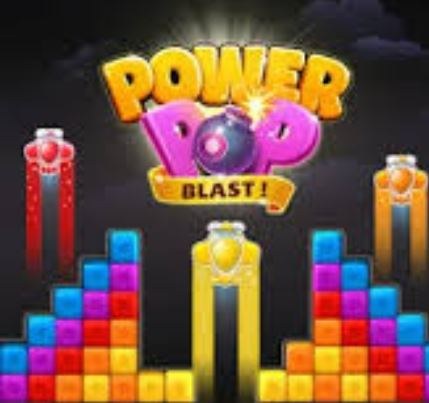
Power Pop Blast drops you straight into a grid of candy-bright bubbles, and the first thing I did was tap a cluster of three matching ones without thinking. They popped, the columns slid together, and a few strays bounced into new positions. It felt satisfying but also a little random. After 45 seconds, I'd cleared maybe a third of the screen and had no idea why some moves triggered little spark flashes and others just fizzled. The game doesn't hold your hand, which I actually appreciate. That first minute is pure reactive tapping while your eyes scan for same-color groups. You'll notice the subtle screen shake when a big chain clears, and if you're like me, you'll immediately want to chase that feeling again.
What You're Actually Optimizing For
On the surface, this looks like a “clear the board” game, but staying alive long-term comes down to one thing: chaining explosions off a single tap. Every level gives you a target score or a limited number of moves, and you can't afford to just pick off isolated triples. The real currency here is cascade potential. When you pop a group, any bubbles above it fall, and if those falling pieces land next to matching colors, they auto-pop. That chain reaction is where the points multiply. I stopped counting after a 12-chain, but the screen basically dissolved itself.
You're optimizing for two things simultaneously. First, you want the largest possible initial group — four or five bubbles minimum — because bigger pops leave bigger gaps and send more bubbles tumbling. Second, you want to position those pops under columns that are packed with similar colors. A four-pop under a dense blue column is worth ten times more than a five-pop in a sparse corner. Once I internalized that, my scores jumped noticeably.
The Combo Moves That Actually Pay Off
Not all special moves are created equal. I tested aggressively for about 20 minutes, burning through lives on purpose just to see which strategies produced consistent high scores versus flashy one-offs.
The Gravity Snipe. This one became my bread and butter. Instead of tapping the largest visible group, I'd scan the bottom three rows for a small cluster sitting directly under a tall stack of the same color. Popping that small group pulls the entire stack down, and if the colors match, you get an instant second pop without spending a move. It's low-risk because you're only committing one tap, and the payout is often a 6–8 bubble chain. I landed this intentionally maybe four times in one round and cleared 70% of the board in five moves.
The Corner Collapse. Corners are dangerous because bubbles get trapped there with no matching neighbors. I started treating corners as combo starters rather than problems. If you can clear a vertical column two spaces away from a corner, the entire corner block slides sideways. When those shifting bubbles line up with their own color, you get a free match you didn't have to work for. It's not as reliable as the Gravity Snipe, but when it hits, it clears a section that would otherwise require three or four separate moves.
Cross-Color Bridges. This is the sneaky one. Sometimes a board has two large groups of different colors that are separated by a single row of a third color. Popping that middle color doesn't score much on its own, but it removes the barrier and lets the two larger groups merge into one massive cluster. I pulled this off three times in my testing, and each time the resulting pop was big enough to trigger the screen-flash effect and refill a chunk of my special meter — whatever that meter does, it definitely rewarded the play.
Special Bubble Detonation. I earned a rainbow bubble twice. The first time I wasted it on a tiny group because I panicked. The second time, I held it until the board was down to about 40% cleared, then used it on a color that had at least three large clusters scattered around. The chain that followed cleared 22 bubbles in one sequence. Lesson learned: save specials for mid-to-late board states, not the opening scramble.
Mistakes That End Runs Fast
I bricked several runs early by making the same errors, and once I recognized the pattern, my average session length doubled.
Top-down clearing. It's tempting to pop the highest bubbles first because they feel urgent — like they're looming. But clearing from the top just leaves lower bubbles untouched and often stranded. Without gravity feeding new matches, you end up with a board full of isolated singletons and no way to chain. I learned to work bottom-up whenever possible. Let the upper bubbles fall into the chaos you've created below.
Ignoring the move counter. Some levels give you a generous target but only 12 moves. I'd get into a rhythm of popping four-groups and feeling productive, then suddenly run out of moves with a third of the board remaining. The fix was pausing every three moves to ask: “Am I setting up a cascade, or just cleaning?” If the answer was cleaning, I changed approach immediately.
Overvaluing large groups in isolation. A six-bubble cluster looks irresistible, but if it's off on its own with no matching colors above or beside it, popping it does nothing for the rest of the board. I started weighing group size against position. A three-bubble group in a column rich with the same color often outperforms a five-bubble island.
Tunnel vision on one color. I had a run where blue was everywhere, so I kept popping blue. By the time I'd cleared it, the remaining board was a mosaic of four other colors with no groups larger than two. Spreading attention across at least two colors keeps the board balanced and leaves more options for later moves.
How the Loop Actually Feels
Between runs, there's a short cooldown or a prompt to watch something, which is standard for free browser games in this genre. I didn't mind it because the runs themselves are tight — maybe two to four minutes each if you're playing well. The loop is: drop in, try a strategy, fail or clear, adjust, repeat. Progression isn't a story; it's just harder board layouts with more colors and tighter move limits. That simplicity works in the game's favor. I found myself saying “one more try” three times in a row without realizing it.
Power Pop Blast doesn't reinvent the bomb-blast formula, and it doesn't need to. The combo system rewards pattern recognition more than speed, which makes it a good lunch-break game. You can play it free in your browser, no download required, and it respects that you're there for the puzzle, not for menus or upgrade trees.
Phone vs. Desktop: A Genuine Difference
I played on both. On desktop with a mouse, precision is higher — I could tap exact clusters without misclicking, and the larger screen made it easier to scan the whole board before committing. On a phone, the bubbles are smaller, and I occasionally tapped the wrong group when two colors sat close together. That said, the mobile version felt snappier for quick sessions. The touch response is tuned well; I didn't experience lag or missed inputs. If you're going for high scores and combo practice, desktop gives you a slight edge. If you're killing five minutes in a waiting room, phone works perfectly fine. The game's layout scales cleanly either way.
A Short Practice Plan That Actually Helped
I spent my last 15 minutes of testing running a deliberate drill instead of just playing, and it changed how I read the board. Here's what I did:
- Session 1 (3 lives): Only allowed myself to pop groups in the bottom two rows. Didn't care about score. Just trained my eyes to find bottom-barrel matches and watch how upper bubbles collapsed. After three lives, I'd internalized the gravity flow.
- Session 2 (3 lives): Focused exclusively on setting up cross-color bridges. I'd scan for two large groups of different colors with a thin separator, pop the separator, then pop the merged group. I only succeeded twice in three runs, but the attempt taught me to see the board in layers rather than flat clusters.
- Session 3 (unlimited, free play): Combined both habits — bottom-up clearing with deliberate bridge hunting. My third run hit a 28-bubble cascade across four chain reactions. It felt earned.
This isn't a game that demands grinding. Fifteen focused minutes with these drills will rewire how you approach each board, and you'll start spotting combo setups that were invisible before. The satisfaction curve is steep once you cross that threshold.
What I Still Don't Know (Honestly)
There's a meter on the side that fills up with sparkles after big combos. It seems to trigger some kind of screen-clearing effect when full, but I only activated it twice and both times the animation happened so fast I couldn't tell exactly what it did. It might clear a random color, or it might just be a score multiplier visual. I'm not sure, and the game doesn't explain it. There are also occasional bubbles with faint outlines that might be locked or weighted — they behave slightly differently when popped, but I didn't nail down the rule. These uncertainties didn't hurt my enjoyment. If anything, they give me a reason to keep poking at the game.
Power Pop Blast rewards players who think two moves ahead and punish those who tap the shiniest group. The combo system is deeper than it first appears, and the free browser format means there's zero barrier to experimenting with the strategies I've described. Start bottom-up, respect the cascade, and hold your specials until the board is ripe.