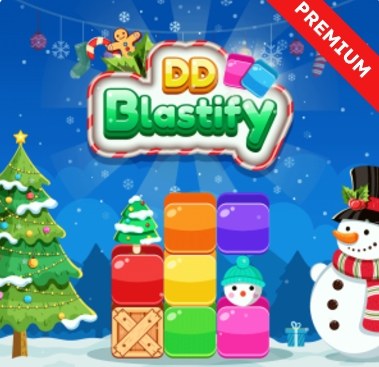
Dd Blastify is a free browser blast puzzle with no official description, so this guide covers general strategy. Suits players who want to think ahead rather than chase big explosions.
Dd Blastify arrives on the site with no catalogue description attached. That means there is no plot summary, no control list, and no official word on what the levels contain. What follows is written from the genre the title sits in and from the way this kind of game usually behaves. Treat it as general play advice, not a documented feature list. If the game itself contradicts anything here, the game wins.
The headline asks a fair question: how do you stay calm when stages get hard? Most guides answer it with breathing exercises. That is not the useful answer. The useful answer is that calm in a puzzle game is a byproduct of preparation. You stay composed because you already know what you are going to do next. The rest of this walkthrough is about building that preparation, stage by stage, in a game whose exact rules you learn by playing rather than by reading.
What we actually know, and what we are assuming
Confirmed: the game is called Dd Blastify, it is playable in a browser, and it is free to start. Everything else is inference. There is no supplied description to quote, so any claim about a story, a character, a power-up, a level count, or a scoring system would be invented. We will not do that.
Reasonable inference, based on the name and the genre: this is a blast-style puzzle game, the kind where you clear groups of pieces from a board, the board refills or shifts, and each stage gives you a limited number of moves or a target to reach. If that is the shape of it, the advice below applies. If it turns out to be something else, the section on reading the board still applies, because every puzzle game rewards players who look before they click.
The loop, and what you are really optimizing
In a blast puzzle, you are not optimizing for the biggest explosion. Beginners go for the biggest explosion, because it feels good and because the screen rewards it with movement and sound. Experienced players optimize for something less exciting: the position of the board after the blast.
Here is the distinction in practice. Two moves might both clear a group of the same size. One leaves the remaining pieces spread across the board in a way that makes future groups unlikely. The other leaves them clustered, so the next group is already half-formed. Same score, different future. The second move is correct.
That single idea, thinking one move past the move you are making, is most of the skill in this genre. It is also the thing that breaks down when stages get hard. Under pressure, players stop looking at the board and start looking at the move counter. That is when mistakes happen.
So the thing you are actually managing is attention, not difficulty. The stage is not trying to beat you. It is asking you to notice one more thing than you noticed last time.
Mistakes that end runs early
Playing the first move you see. This is the most common failure and it is not close. The first move you see is usually a valid move, which is why it is dangerous. It is visible precisely because it is obvious, and obvious moves are rarely the best ones. Scan the whole board before you commit to anything. If you find yourself making a move within a second of the board settling, you are guessing.
Saving a big group for later. Players hoard. They see a large cluster, decide it is too valuable to spend now, and clear small groups instead. Then the board shifts, the cluster breaks apart, and the move they saved is worth less than it was. In most blast games, a large group is not an asset to hold. It is an asset to convert while it still exists in that shape. Unless the stage has told you otherwise, take the big one when it is stable.
Ignoring the edges and corners. Corner pieces are hard to group because they have fewer neighbors. Edge pieces are slightly easier. Middle pieces are easiest. This means a board with a lot of corner clutter is closer to trouble than a board with a busy center. When you have a choice, clear inward from the awkward areas rather than polishing the easy middle.
Burning the last few moves on a lost cause. If you can see that the target is out of reach, the run is over whether you spend the moves or not. Two things are worth doing instead. First, finish the moves anyway, because the board state at the end tells you what the stage was actually asking for. Second, note the specific thing that beat you. Not "it was hard." Something concrete, like "the new pieces kept landing in the left column and I never cleared that column." A specific note is something you can fix. A vague one is not.
Restarting too fast. There is a real temptation, after a loss, to hit restart immediately and try to outrun the frustration. That usually produces a worse attempt than the one you just lost, because you are playing fast to feel better rather than playing well to win. Give it five seconds. Look at the fresh board. Then start.
Changing strategy mid-stage for no reason. If your plan was working and you are two moves from finishing, do not abandon it because a shinier group appeared. Finish what you started. Panic switches are how winnable stages turn into losses.
Reading a hard board
When a stage feels impossible, the problem is usually not the stage. It is that you are looking at the board as a picture instead of as a set of options.
Try this. Before your first move, count the groups you can see. Not the sizes, just the number. Then pick the two that are furthest apart on the board and ask which one you would rather leave alone. That question forces you to think about consequences rather than rewards, and it takes about ten seconds.
Then, on each subsequent move, ask one question: what does the board look like after this? If you cannot picture it, the move is a guess. Guesses are fine when you are learning a new stage. They are not fine when you are trying to beat one.
On genuinely difficult stages, the winning line is often a sequence of medium moves rather than one huge one. Big moves rearrange things. Medium moves keep the board manageable. If you are stuck, try a few turns of deliberately small, tidy clears and see whether the board opens up.
Phone versus desktop
Blast puzzles generally work on both, and there is a real trade-off worth naming.
- On a phone, you play closer to the screen and tapping feels immediate. The downside is that your finger covers the piece you are about to select, and the board is smaller, so it is easier to misread a group's size.
- On a desktop, the whole board is visible at once and a mouse cursor is precise. The downside is that you can move faster than you can think, which encourages the first-move mistake described above.
If you are stuck on a specific stage, switching devices is a legitimate tactic. Not because one is better, but because the change in scale makes you look at the board properly again. A stage you have failed ten times on a phone can look obvious on a laptop, and vice versa. The board did not change. Your reading of it did.
One more note: play sitting up. Slouching toward the screen is a reliable way to start making sloppy moves, because it narrows what you can see at the edges of the board. It sounds trivial. It is not.
A short practice plan
You do not need to grind for hours. You need short sessions with a specific focus. Twenty minutes is plenty.
Session one: slow play. Pick any early stage. Play it as slowly as you can stand, and before every single move, name the reason you are making it. Out loud is fine. The goal is not to win. The goal is to break the habit of moving before thinking.
Session two: consequence reading. On each move, before you commit, predict what the board will look like afterward. Then make the move and check. You will be wrong often at first. Being wrong is the point, because the gap between your prediction and the result is exactly the thing you are training.
Session three: the stuck stage. Go back to the stage that is beating you. Play it three times and lose it three times if you have to, but each time, write down one specific reason you lost. Not a feeling. A reason. By the third attempt you will usually see the pattern, and the pattern is almost always something you can change.
Session four: tidy clears. Deliberately avoid the biggest group on the board for the first several moves. Clear small, awkward groups instead, especially near corners and edges. See how the board feels afterward. Many players find this is the first time they have actually controlled a board rather than reacting to it.
Repeat as needed. Progress in this genre is not a straight line. You will have a run where everything clicks, followed by three stages that make you feel like you have learned nothing. That is normal, and it is not evidence that you are bad at the game.
The calm part, honestly
Here is the whole trick, and it is less mystical than the headline suggests. Calm comes from having a next step. When you know what you are doing and why, pressure does not build the same way, because there is nothing left to panic about. The move counter is still ticking. You just are not watching it.
So when a stage gets hard, do not try to relax. Get specific instead. Look at the board. Count the groups. Pick the move that leaves the best position, not the biggest explosion. Lose a few times and write down why. Do that and the difficulty stops feeling like a wall and starts feeling like a puzzle, which is what it was the whole time.
Dd Blastify is free to play in your browser, so there is no cost to running that experiment. Start with the slow session. It is the least fun one and the one that changes the most.