First Impressions: What the Screen Looks Like When You Land I loaded Merge Heroes Fix expecting a typical merge-and-wait game. What I got in the first 60 seconds was a bit more frantic. You've got a grid, a handful of lo
First Impressions: What the Screen Looks Like When You Land
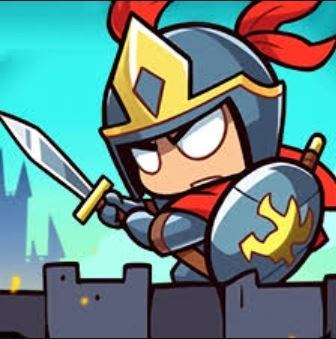
I loaded Merge Heroes Fix expecting a typical merge-and-wait game. What I got in the first 60 seconds was a bit more frantic. You've got a grid, a handful of low-level warrior-looking units, and a monster creeping in from the right edge. The tutorial doesn't hold your hand much. It throws a few arrows at the merge button and lets you figure out that dragging identical units together is the main verb. The first merge feels satisfying—two little swordsmen become a slightly bigger one with a tiny stat bump. But the monster doesn't stop walking. That's the first lesson: this isn't a idle merge where you can zone out. The board stays active.
By minute three I'd accidentally merged the wrong pair twice because I panicked and tried to clear space. The grid feels cramped early on, and that's intentional. You'll spend a lot of mental energy deciding what to keep and what to sacrifice. The art is clean but not precious—you can tell the units apart at a glance, which matters when the pressure picks up. The sound design is minimal, mostly little thwacks and a rising tone when a boss wave approaches. I played with sound on for about ten minutes, then muted it. Didn't lose much. That's not a dig. Some games need audio cues to play well. This one doesn't, which makes it a solid second-screen game while you're half-watching something.
What You're Actually Optimizing For
The core loop is deceptively simple: merge units to make stronger ones, position them on the grid to intercept enemies, survive waves. But after about fifteen minutes I realized I wasn't playing a merge game with combat. I was playing a space management puzzle with merge mechanics. Every unit takes up one cell, and the board is tight. Your real resource isn't gold or gems (though those exist). It's open tiles. When the board fills up, you can't spawn new base units, and that's usually when a run starts spiraling.
So what should you optimize? In order of importance: keeping at least two empty columns on the right side of the grid, maintaining one high-level damage dealer near the center, and never merging just because you can. That last one hurt to learn. I threw away a level 5 archer early because I merged it into a level 6 that ended up in a bad position and got swarmed before it could attack. The merge button lights up temptingly, but positional value often outweighs raw stats. A level 4 unit in the right spot does more work than a level 6 stuck in the back corner.
Gold comes in slowly from defeated enemies. You'll use it to buy base units from a shop that refreshes every few waves. The shop doesn't always give you what you need, so you're often making do with suboptimal merges. That's by design. The game wants you to feel slightly behind, always scrambling to patch a hole in your formation. I found that buying the cheapest unit just to fill a critical empty tile was sometimes the right call, even if it didn't merge with anything. A warm body blocks a hit. That's value.
Mistakes That End Runs Early (I Made Most of These)
Let me walk through the specific ways I lost runs in my first twenty minutes. These aren't theoretical. They're what the death screen showed me repeatedly.
Over-merging your frontline. It's tempting to combine everything into one super-unit and let it carry. But one strong unit can only attack one enemy per turn. When three low-level monsters walk down the same lane, that level 7 knight swings once and two things get past. I lost a run at wave 8 because I had a beautiful merged titan on the left side while three rats nibbled through my right flank. Spread your merges across at least two lanes. You don't need symmetry, but you need coverage.
Ignoring the wave preview. The game shows a small icon or silhouette of what's coming next. I didn't notice it until run three because it's tucked near the top. A skull icon means a tougher enemy. A cluster of small icons means a swarm. If you see a swarm coming, stop merging for power and start merging for quantity. Fill the board with level 2s and 3s instead of chasing a single level 5. Swarms punish tall compositions. Bosses punish wide ones. The preview tells you which to prepare.
Buying from the shop reflexively. The shop button pulses when you have enough gold. It's a dark pattern—it wants you to spend. But buying a random unit that doesn't match anything on your board just eats a tile and gives you a merge project you might not finish before the wave hits. I started treating the shop as an emergency button, not a regular upgrade path. If I had two of a unit already and the shop offered a third, I'd buy. Otherwise I let the gold sit. Unspent gold doesn't clog your board.
Forgetting you can sell. There's a small trash or sell icon that I completely overlooked for the first ten minutes. You can drag a unit onto it to clear a tile and get back a fraction of its gold cost. It's a terrible return on investment, but when the board is full and you need one open space to spawn a critical merge piece, selling a level 1 archer you'll never use is the right move. Don't be precious about low-level units. They're fodder.
How Units Actually Behave (It's Not Always Obvious)
Units attack the nearest enemy in their row. If their row is empty, they'll target the row above or below, but at reduced effectiveness. I didn't test the exact damage falloff, but it's noticeable. A ranged unit three rows away from the action is basically decoration. This means your formation matters more than your total merge level. I started building a "spine" down the middle two rows, with my strongest melee units there, and put ranged units directly behind them. Flanking rows got whatever leftovers I could spare.
Some units have subtle special behaviors. Archers seem to attack slightly faster but have less health. Shield-bearing units take an extra hit before dying. The game doesn't spell this out anywhere I could find. I only noticed after watching a shielded level 3 survive a hit that killed a level 3 swordsman. If you're deciding between merging two archers or two shield units, lean toward shields for your frontline and archers for the back. The merge path matters for more than just the number.
Enemy types also vary. Basic melee monsters walk straight down a lane. Flying enemies ignore your frontline entirely and go for your back row unless you have a ranged unit in their path. I lost a run to a bat that sailed past three melee units and took out my only healer-like unit. After that I always kept one archer or mage in the middle-back, even if it was low level. Anti-air insurance.
Phone vs Desktop: A Quick Feel Check
I played on both a laptop browser and a mid-range Android phone. The game loads fine on either—no install, just a browser tab. On desktop, the drag-and-drop merging feels crisp with a mouse. You can be precise about placement, which matters when the board is crowded. Keyboard shortcuts are minimal or nonexistent from what I could tell. It's a mouse game.
On mobile, the touch controls work but require a bit more care. My thumb occasionally obscured the unit I was dragging, and I merged the wrong pair twice because my finger slipped. The hitboxes are generous enough that you won't constantly mis-tap, but when the timer's ticking down and you're rushing, fat-finger errors happen. I played slightly better on desktop, but mobile was more convenient. If you're struggling with mobile precision, try zooming the page in slightly. It helps separate the tiles.
Battery drain was negligible. It's not a graphically intense game. I played for twenty minutes and my phone didn't get warm. That's a plus if you're killing time on a commute.
An Honest Practice Plan for Your First Few Sessions
If you're just starting, don't try to win. The game doesn't expect you to clear everything on your first attempt, and the early losses teach more than a guide can. That said, here's a structure I used that turned my fourth run from a wave-6 wipe into a wave-12 respectable loss.
Run one: play with no strategy. Just merge whatever glows and see how the enemies move. Watch the death screen. Note which wave killed you and what unit type overwhelmed you. That's your baseline.
Run two: focus entirely on board space. Never let the grid get more than 80% full. Sell low-level units aggressively. You'll probably still lose, but later. Notice how much easier it is to react when you have empty tiles.
Run three: pay attention to the wave preview before every round. Build wide for swarms, tall for bosses. Try to keep one unit of each damage type (melee and ranged) at a decent merge level. This run you might reach a boss and actually have a plan for it.
Run four: combine the space discipline from run two with the preview awareness from run three. Now add shop discipline—only buy when a unit completes a merge you already have two-thirds of on the board. This was the run where I felt like I was playing the game instead of reacting to it.
Between runs, take a short break. The game doesn't punish you for closing the tab and coming back later. Your progress resets per run anyway. I found that stepping away for five minutes after a frustrating loss helped me see the board more clearly on the next attempt. Merge games reward patience, and Merge Heroes Fix is no exception—even if its timer tries to convince you otherwise.
A Few Things I Still Haven't Figured Out
After about twenty minutes total playtime, some mechanics remain unclear to me. There's a faint glowing border that sometimes appears around certain units. It might indicate a combo bonus or a critical-hit chance, but the game never explained it and I didn't trigger it consistently enough to test. I also noticed that merging three units of the same type (instead of two) occasionally produced a higher-level result than expected. That could be a core mechanic I missed in the tutorial, or it might be a bonus for efficient merging. Either way, it's worth experimenting with if you have the board space to hold three identical units.
The game feels like it has depth beyond what the first half-hour shows. I can see the skeleton of a meta-progression system—there's a faint "upgrade" tab in the menu that was grayed out during my session. It might unlock after a certain number of runs or after hitting a specific wave. I didn't reach it, so I won't pretend to know what it does. But it suggests the game isn't purely a one-shot roguelike merge experience. There's probably a long-term grind here for people who stick with it.
For a free browser game, Merge Heroes Fix offers a solid puzzle-combat hybrid that respects your time while demanding your attention during runs. It's not flashy, but the mechanics feel honest. You lose because you made a bad merge or ignored the wave preview, not because the game threw an unfair spike at you. That's more than I can say for a lot of games in this genre. If you're looking for something to play in short bursts that rewards thinking ahead, this one's worth a tab.