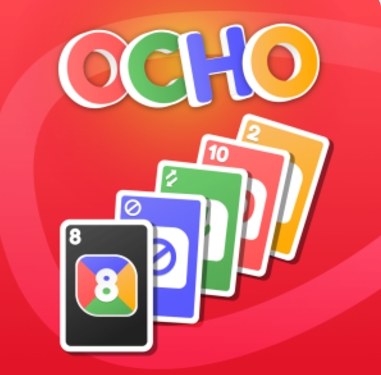
Ocho is a browser puzzle game with no listed description or controls, so you learn by playing. Best for patient puzzle fans who enjoy figuring out rules themselves.
Is Ocho Worth Playing? A Quick Review and First Impressions
Ocho shows up in the puzzle category with a shelf label that tells you almost nothing. There's no catalogue description to lean on here, and no control scheme listed. What we do have is a verified load check: on desktop, the game loaded in 7511 milliseconds, roughly seven and a half seconds. That's the entire factual footprint. No story summary, no mechanic breakdown, no developer notes, no release information.
So this quick review has to be honest about what it can and can't say. I can't tell you what Ocho's rules are, because nobody supplied them. I can't tell you what the eight in the name refers to. I can tell you it's filed as a puzzle game, it runs in a browser on desktop, and it took about seven and a half seconds to get going on the test machine. Everything past that point is genre reasoning and practical advice, clearly labeled as such.
What the catalogue actually confirms
Three things. One: Ocho exists in the puzzle category. Two: it loaded successfully on desktop hardware. Three: the load time was 7511 milliseconds — not instant, not painfully slow, but long enough that you'll notice a pause before anything appears.
That's it. The description field is empty. The controls field is empty. If you're the kind of player who wants to read a paragraph of premise before clicking, you won't get one from the store page. You'll have to judge the game by playing it.
The missing controls field is worth flagging on its own. It could mean the game uses such standard input that the field was skipped, or it could mean the catalogue simply never captured it. Puzzle games in browsers usually settle on mouse clicks, drag-and-drop, or arrow keys, but that's a pattern across the genre, not a fact about Ocho. Go in ready to try all three.
How a puzzle game like this usually works
Without specifics, the useful thing is to describe the shape of the category and let you map it onto what you see. Browser puzzles tend to be built around one tight loop: read the board, make a move, watch the board change, decide again. The good ones make that loop feel like a conversation. The weak ones make it feel like trial and error with extra steps.
What you're optimizing for is almost always one of a few things. Clearing the board. Reaching a target state. Surviving as long as possible without breaking a rule. Or finding the single correct sequence that solves a fixed layout. Most puzzle games blend two of these — a fixed solution path plus a limit on how many moves you get to find it.
Pay attention to which one Ocho is doing in the first two minutes. That tells you how to think. If moves are limited, every click is a resource and hesitation costs you. If the board keeps refilling, you're managing a flow rather than solving a lock. If there's a visible counter or timer, that's your real opponent, not the tiles.
Also watch what happens when you make a legal move versus an illegal one. Games that flash or animate rejections are teaching you the rule set for free. Games that silently do nothing are making you guess. Neither is automatically bad, but the first is faster to learn.
Mistakes that end runs early
Even without knowing Ocho's rules, there are failure patterns that show up across the entire puzzle genre. These are concrete and worth watching for.
- Clicking before you read the board. The most common way to lose a puzzle game in the first minute is to start moving pieces before you understand the goal state. Take five seconds. Look at the whole board. Find the edges.
- Burning limited moves on obvious plays. If moves are scarce, the move that screams "do me first" is often the trap. The obvious play is usually the one the designer expects, and it's often the one that blocks the real solution.
- Ignoring the counter. Any number on screen — moves, time, lives, level — is a constraint. Players who treat it as decoration find out it was load-bearing.
- Restarting too fast. Restarting feels productive. It usually isn't, because it throws away the information you just paid for with a failed attempt. Note what killed you before you reset.
- Assuming the first solution is the intended one. Many puzzles accept a brute-force answer but reward the elegant one. If something felt clumsy, it probably was.
- Playing tired. This sounds soft, but puzzle performance drops hard with fatigue. Two sharp minutes beat twenty foggy ones.
The seventh-and-a-half-second load time adds one more practical note. If you're the impatient type, that pause is where bad habits start. Don't click around the screen while it's loading hoping to skip ahead. Let it finish, then look at the board.
Desktop versus phone
The verified check only covered desktop, so that's the only platform I can speak to with any confidence. It loaded there, in about seven and a half seconds, with no reported failure.
Whether Ocho works well on a phone is unknown. The catalogue doesn't say, and I'm not going to guess at touch support that hasn't been confirmed. What I can say is that puzzle games are unusually sensitive to input method. A game built around precise clicking can feel clumsy under a thumb. A game built around dragging can feel tedious with a mouse. Until you try it, treat the phone version as an open question rather than an assumption.
If you do try it on desktop first, the seven-and-a-half-second load is worth knowing about so you don't assume the page has frozen. Give it the full stretch before you reload.
A short practice plan
Because the rules aren't documented here, the smart approach is to treat your first session as reconnaissance rather than a run you're trying to win.
First two minutes: don't try to solve anything. Make moves and watch what happens. Learn what counts as a legal move, what the board does in response, and whether there's a visible goal.
Next five minutes: pick one objective and chase it. If there's a counter, watch how fast it drains. If there's a score, watch what raises it. You're looking for the one variable that matters most.
Then: attempt a real run with the intent to finish. When it fails, write down — mentally or literally — the exact moment things went wrong. Not "I lost," but "I spent my last move on the corner piece and then had nothing left."
After three or four attempts, you'll know more about Ocho than any store page could tell you. That's the nature of an undocumented puzzle game. The learning is the content.
The honest verdict
Is Ocho worth playing? On the evidence available, it's a genuine unknown. It loads on desktop, it's categorized as a puzzle, and it's free to try in a browser. That's a low-risk proposition if you like the genre, because the cost of finding out is a few minutes and a seven-second wait.
What it isn't is a game with a documented pitch. No description, no listed controls, no premise to evaluate. If you need to know what you're getting into before you click, this one won't help you. If you're comfortable poking at a puzzle board until it reveals its rules, there's nothing here telling you to stay away either.
My advice: try it once, treat the first session as a tutorial you have to write yourself, and decide from there. Puzzle games live or die on whether the core loop clicks, and no amount of catalogue text substitutes for thirty seconds of actually moving pieces around. Play it free in your browser, give it a fair shot, and trust your own read over any review — including this one.