First Minute on the Board You open Hexagon Block Sort and the screen fills with a honeycomb of hexes, each carrying a soft pastel shade or a little icon you'll quickly learn to scan for. The top of the screen has a handf
First Minute on the Board
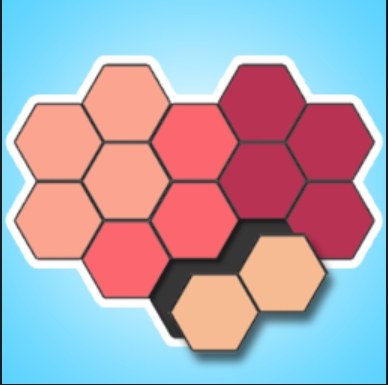
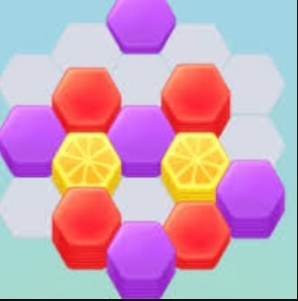
You open Hexagon Block Sort and the screen fills with a honeycomb of hexes, each carrying a soft pastel shade or a little icon you'll quickly learn to scan for. The top of the screen has a handful of empty slots waiting to receive blocks. No timer flashes at you. No music swells. The first few moves feel like tidying a desk drawer: you drag a pale blue cluster from the center of the board, slot it into a matching holder, and watch the remaining tiles settle with a faint click. That sound does a lot of work. It’s crisp without being aggressive, the kind of audio feedback that says "correct" without needing a pop-up or a star animation.
Within ninety seconds you’ve cleared maybe a quarter of the board. You notice that some hexes sit in tidy stacks, while others are wedged behind two or three layers of different colors. You poke at a yellow cluster near the left edge, realize you’d be burying a green set you need two moves from now, and undo the action with a quick tap. The game lets you backtrack freely on most layouts, which immediately changes how you approach it. You’re not just reacting; you’re auditioning moves in your head.
By the end of the first minute I had made one genuine mistake that trapped a small red group under a cascade I hadn’t seen coming, and I’d undone it. That early forgiveness is the game’s way of telling you it’s not here to punish you. It wants you to stay in the flow, which for a casual sorting game is exactly the right tone.
What You’re Actually Optimizing
Hexagon Block Sort borrows its bones from the match-and-clear sorting games you’ve seen on every app store, but the hex grid changes the geometry enough that old habits need a small rewrite. On a square grid, blocking is mostly a matter of vertical columns. Here, each tile touches up to six neighbors, so a badly placed clear can strand pieces in diagonal pockets you didn’t intend to create. The loop is simple: pick a connected chunk of same-color hexes, drag them into one of the collection slots at the top, and repeat until the board is empty or you run out of open slots.
You’re optimizing for two things at once: board visibility and slot economy. Every chunk you remove reveals the layer beneath it, which might free up chunks you couldn’t reach before. But each removal also claims one of your limited slots, and once a slot is full enough to complete a set, it resets to empty. The tension lives between those two facts. Do you grab the biggest chunk you can see, clearing space fast but possibly filling a slot with colors you won’t see again for ten moves? Or do you chip away at a single color, keeping your slots lean while the board stays cluttered longer?
In practice, I found myself prioritizing slot turnover. A slot with two or three hexes of the same color is dead weight until you find more of that color, and if the board doesn’t cooperate, that slot becomes a countdown. You have a fixed number of them, and once they’re all occupied with incomplete sets, the session ends. So the real skill isn’t just matching; it’s reading the board’s distribution early and committing to colors that appear in abundance. If I saw six or seven tiles of the same pale green scattered across the board in the first twenty seconds, I’d hunt those aggressively and leave the singleton colors alone until I absolutely had to touch them.
Mistakes That End Runs Early
After a few dozen sessions, patterns emerge in the ways things fall apart. The most common one I ran into was what I started calling "premature clearing." You spot a fat cluster of orange hexes sitting right in the middle of the board, you drag it up, and suddenly you’ve revealed three different colors underneath that you have no slots for. The orange cluster was acting as a lid, and popping it without a plan just accelerates chaos. The fix is boring but effective: before touching a large surface-level cluster, check whether it’s covering something you can’t handle yet. If the answer is yes, try to work around its edges first.
Another trap is color blindness to your own slots. You get absorbed in the board and forget that two of your five slots are holding mismatched pairs. You clear a new color, realize you have nowhere to put it, and the game gently but firmly tells you you’re stuck. On a phone screen this is especially easy to do because the slots sit at the very top edge, outside your main focus. I learned to glance up after every third move, almost like checking a rearview mirror.
A subtler mistake is ignoring the "merge" behavior. In some hex sorting games, dropping a chunk onto a slot that already holds the same color simply adds to the count. Here, that’s how you complete sets, and it’s the only way to free up a slot. But if you fill a slot to, say, five out of six required hexes and then stop seeing that color, you’re in limbo. You’ve committed a slot to a color the board isn’t currently offering. I started treating a nearly-full slot as a problem to solve immediately, even if it meant taking a smaller chunk than I wanted. A slot one tile away from completion is a ticking clock; clear it or it will clog you later.
Finally, there’s the undo crutch. The undo button is generous, often letting you rewind several moves, but it can lull you into sloppy play. I’d catch myself making a move thinking "I can always undo" and then realizing three moves later that the board state I wanted to return to is now buried under cascading reveals. Undo is best used for fat-finger errors and genuine misreads, not as a strategy layer.
Phone vs Desktop: Where It Feels Best
I played Hexagon Block Sort on both a mid-size phone and a laptop browser, and the experience splits in ways worth noting. On a phone held vertically, the hex grid fills the screen nicely, and dragging chunks with a thumb feels direct and satisfying. The hexes are large enough that I rarely mis-tapped, even on a crowded board. The trade-off is that the collection slots sit up near the notch or camera cutout, and on longer sessions I found my hand creeping up the phone to reach them, which gets tiring after fifteen minutes.
On desktop, the mouse gives you precision that a thumb can’t match. You can hover over a cluster, see the subtle highlight that confirms which pieces are connected, and plan two or three moves ahead without committing. The wider screen also means the slots are easier to monitor in peripheral vision. The downside is that dragging with a mouse feels slightly less tactile; the physical act of pulling a chunk across the board lacks the pleasant friction of a touchscreen. If you’re going for high scores or trying to clear a particularly stubborn layout, I’d pick the desktop version. For quick, idle moments on the couch, the phone wins.
One practical note: on both platforms, the game runs smoothly in a browser without any downloads. No account required, no ad that locks you out of the board for thirty seconds. There are ads between sessions, but they’re skippable and don’t interrupt the actual sorting. That matters for a game you’re likely to play in short bursts.
What the Game Doesn’t Tell You
Genre conventions fill in some gaps here. There’s no catalogue description to lean on, so I’m working from what the game shows rather than what it claims. It doesn’t have levels in the traditional sense. Each board is a self-contained puzzle, and when you clear it or get stuck, a new shuffled layout appears. There’s no progression system, no star ratings, no unlockable themes that I could find. That might sound bare, but it keeps the focus narrow. You’re here to sort hexes, and the game refuses to pad that with meters or daily challenges.
It also doesn’t explain its color palette choices, but they’re worth noticing. The pastels are distinct without being garish, which helps during longer sessions when screen fatigue sets in. A bright neon palette would make the hex grid feel like work after ten minutes; these muted tones let you settle into a rhythm. If you have any degree of color vision difficulty, the shades are differentiated enough in brightness that you can probably distinguish most of them, though I can’t speak to every type of color perception.
One thing I inferred from playing multiple boards: the layouts aren’t purely random. Some arrangements feel hand-tuned, with specific choke points that require a particular sequence of clears. Others seem more procedurally scattered. The hand-tuned ones are more satisfying because they have a solution path you can discover, almost like unwrapping a puzzle box. The purely random ones can occasionally generate boards that are unsolvable from the start, which is a known quirk of the genre. If you hit one of those, just refresh and move on; it’s not a reflection of your sorting skills.
A Short Practice Plan for Casual Sessions
If you’re playing Hexagon Block Sort during coffee breaks or while waiting for something, you can get noticeably better with a small amount of deliberate practice. I put together a loose routine that takes about ten minutes and fits the casual nature of the game without turning it into homework.
Start with three boards where your only goal is to keep every slot empty for as long as possible. Don’t worry about clearing the board. Just practice identifying colors that appear in clusters of four or more and moving those first, while ignoring the tempting single tiles. This trains your eye to spot high-density colors quickly.
Next, do two boards where you announce each move out loud before you make it, including why you’re choosing that cluster. It feels silly, but vocalizing "I’m taking the purple three-piece because it frees the blue group behind it" forces you to articulate your reasoning instead of playing on autopilot. You’ll catch bad decisions before they happen.
Finally, play one full board at your natural pace and notice where you hesitate. The hesitation points are where your brain is doing extra work, usually because you’re weighing two similar options. After the session, replay that moment in your head and decide which option you’d choose next time. That single reflection step compounds fast.
The whole sequence takes about ten to twelve minutes and fits easily into a lunch break. You don’t need to do it every day; even twice a week will sharpen your board reading enough that casual sessions feel smoother and less prone to early dead ends.
When the Sorting Clicks
There’s a moment in Hexagon Block Sort, usually around the third or fourth board of a sitting, where the pace shifts. You stop hunting for clusters and start seeing the board as layers. The top hexes become transparent in your mind, and you’re already picturing what’s underneath. Your moves speed up, not because you’re rushing, but because the decisions are arriving pre-formed. That state is what casual sorting games are built to deliver, and this one hits it reliably.
The game won’t surprise you with twists. It won’t hand you a narrative or a sense of progression. What it does is carve out a small, quiet space where the only thing that matters is color matching and the pleasant weight of a chunk sliding into its slot. For a free browser game you can open in a tab and close without consequence, that’s exactly enough.