First 60 Seconds: Cold Coffee and a Straight Line I opened Tower Defense Yandex expecting something flashy and got a muted color palette and a grid. No animated mascot, no voiceover telling me the kingdom was doomed. Jus
First 60 Seconds: Cold Coffee and a Straight Line
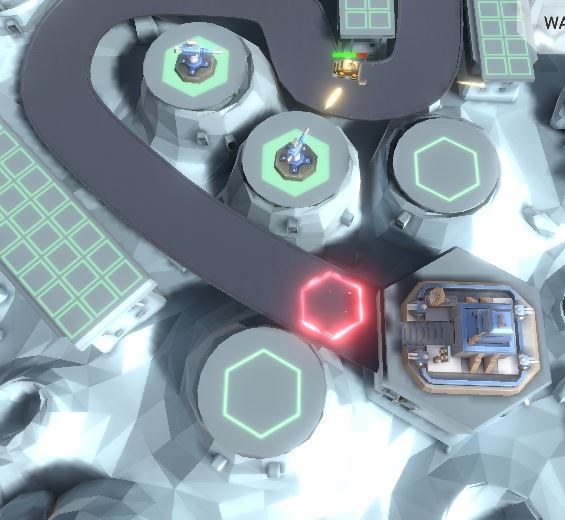
I opened Tower Defense Yandex expecting something flashy and got a muted color palette and a grid. No animated mascot, no voiceover telling me the kingdom was doomed. Just a path, a few placement nodes, and a quiet "wave 1" button. The first enemy was a lazy blob. I dropped a basic arrow tower near a bend and watched it plink away. That's when I realized the game trusts you to figure things out without a tutorial pop-up parade. If you need hand-holding, that silence might feel cold. If you like poking at systems until they click, it's a relief.
The Core Loop: Space, Timing, and the Upgrade Temptation
This isn't a game about frantic clicking. You build towers between waves, hit start, and watch your little kingdom of damage numbers. The map is the real opponent. Paths curl around rocks and cut through narrow corridors, and every tower spot forces a trade-off. Do you cover two lanes weakly from that raised platform, or commit to melting one choke point?
Currency is tight, and the upgrade tree feels deliberately stingy. You're always choosing between a new basic tower in a critical spot or pumping two upgrades into an existing archer that's already softening targets for your splash tower. I found myself staring at the screen during wave 18, mentally calculating whether I could afford a frost tower upgrade before the fast runners showed up. That quiet math is the loop. You're optimizing for coverage density — how much pain can you pack into the path's overlapping kill zones before your cash runs dry.
Who Actually Clicks With This
This game suits people who enjoy losing to their own greed. If you've ever played a tower defense title and thought "I can squeeze one more wave before upgrading," then watched your defenses crumble, you'll recognize the rhythm here. It rewards restraint.
Methodical planners will like the pause-between-waves structure. There's no real-time pressure to drop towers mid-fight, so you can take a breath, count tiles, and reposition if you haven't committed yet. Players who get bored during "auto-battle" sections might bounce off — you'll spend a lot of time spectating your own setup, especially in early waves when the creeps are slow and harmless.
It also appeals to minimalists who hate visual clutter. The art style is functional, almost diagram-like. Enemies are clearly distinct by shape and color, not by particle effects. If you need spectacle or loot boxes to stay engaged, this won't scratch that itch. If you enjoy staring at a clean board state like a chess puzzle, it fits.
Mistakes That End Runs Early
I killed three promising runs before I adjusted. Here's what actually punished me, not theoretical advice.
Overbuilding one lane too soon. On split-path maps, I'd dump three towers on the left corridor, crush it, then watch helplessly as the right side leaked. The game doesn't send equal waves down each path. It'll test your weak flank suddenly around wave 11. Scout the full route before placing your third tower.
Ignoring the slow debuff. Frost or glue towers don't impress on the stats screen. Their damage numbers look pathetic. But fast-moving enemies — especially those little bat things that ignore pathing — will slip past a high-damage setup if they aren't slowed. I lost a run with three maxed cannon towers because I couldn't hit what wouldn't stay still.
Upgrading before expanding. A level-three archer costs roughly the same as two level-one archers on opposite corners of a bend. The two fresh towers often deliver more total damage and cover more angles. I kept falling for the shiny upgrade button because big numbers feel good. The game punishes that feeling.
Selling towers impulsively. You get a partial refund, not a full one. I'd panic-sell a poorly placed tower during a leak, buy something else, then realize I couldn't afford the upgrade I actually needed. Now I treat tower placement as semi-permanent and only sell when I'm reworking a whole section between waves.
Device Feel: Phone Thumbs vs Mouse Precision
I played on both desktop and a mid-range Android phone. Desktop was smoother for tower placement, especially when nodes are clustered near path edges. The click-and-drag to pan feels natural with a mouse. On phone, I occasionally fat-fingered a tower onto the wrong tile because my thumb obscured the grid. The UI doesn't have a confirm-placement option, so you're stuck with the mistake unless you sell at a loss.
Phone battery drain was moderate. After 30 minutes, my device was warm but not alarming. The game loads fast on a spotty connection, which makes it a decent commuter option. No offline mode that I could find — it wanted a connection on launch, though I didn't test airplane mode extensively.
If you're serious about hard-mode clears, play on desktop or at least use a stylus. The extra precision matters when you're trying to squeeze a tower into a pixel-wide gap between rocks.
Sound and the Lack of It
The audio is sparse. Tower shots make functional little thwips and thuds. There's no music during waves, just a low ambient hum that I didn't notice until I turned off the tab and realized my room was quieter. This is actually a plus if you're playing while listening to a podcast. The game doesn't compete for your ears. Sound cues for leaks — enemies reaching the exit — are subtle. I missed one entirely while my coffee grinder was running. If you rely on audio warnings, keep the volume up or stay visually locked on the exit zone.
A Practice Plan That Won't Waste Your Time
After a dozen runs, I settled into a routine that helped me stop bleeding early waves. This isn't a speedrun strat; it's just a way to build good instincts.
First three runs: Don't try to win. Seriously. Spend them learning the map geometry. On your first attempt, place towers only near the exit to see which enemies reach it. On the second, build only near the spawn to watch how waves group up. On the third, experiment with one damage type per lane to feel out resistances. You'll lose all three. That's the point.
Runs four to six: Commit to a two-tower core. Pick one single-target tower and one area-of-effect tower. Place them so their ranges overlap on a straight path segment, not a corner. Upgrading both equally teaches you how the upgrade curve feels without overinvesting in a favorite. If you leak, don't restart instantly. Watch which enemy type broke through and adjust next run.
Runs seven onward: Introduce one support tower. Add a slow or debuff tower to your core setup. Position it at the start of the overlap zone so enemies are weakened before your damage dealers engage. This is the point where the game's rhythm clicked for me. The support tower felt like a waste of money until I saw my archers landing shots they'd normally miss.
After that, you'll have a sense for whether the game's pacing works for you. Some players will want deeper upgrade trees or hero units. This game doesn't offer those. It's a stripped-down puzzle with tower defense dressing, and that's either refreshing or too bare depending on your taste.
What the Game Doesn't Tell You
A few things I wish I'd known earlier, gleaned from stubborn trial and error:
- Enemies with shields reduce damage from the front. Towers hitting them from behind or the side deal full damage. Path bends aren't just for range coverage; they create flanking angles.
- You can tap an incoming wave icon to see its composition before committing to a build phase. I missed this for my first five runs and built blind.
- Tower range indicators lie slightly at the edges. Place a tower, then watch its first few shots to confirm it's actually reaching the path segment you intended.
- There's no "restart wave" button. If you're leaking badly, you either sell and scramble or accept the loss and restart the whole map. The lack of a rewind option stings during long runs.
The Grind Question
There's no meta-progression that I found. No permanent upgrades between maps, no currency you bank for future runs. Each map is a fresh start with the same tower options. For some, that's purity. For others, it'll feel pointless. If you need a carrot on a stick — unlockable towers, skins, persistent stats — you'll hit a motivation wall after clearing the available maps. The game assumes you're playing for the satisfaction of a clean defense, not for a number-go-up loop.
Who Should Skip This
If you love tower defense for the story campaigns, voiced characters, or genre-blending gimmicks, Tower Defense Yandex will feel skeletal. It doesn't have a hook beyond the core mechanic. Players who tilt easily at single mistakes might also struggle, since one misplaced tower on wave 19 can undo twenty minutes of careful building with no undo option.
But if your favorite part of any strategy game is the quiet planning phase — moving pieces in your head before you commit — this scratches that itch without demanding your full attention. It's a browser tab you check between tasks, a puzzle that resets clean every time. I kept coming back not because it was exciting, but because my previous loss had a clear, fixable cause. That clarity is rare.