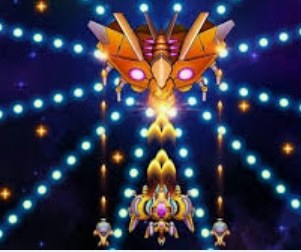
First Minute on the Field I loaded up Space Attack expecting something frantic and got exactly that, but in a way that felt manageable. The screen is black, dotted with stars scrolling slowly downward, and your ship sits
First Minute on the Field
I loaded up Space Attack expecting something frantic and got exactly that, but in a way that felt manageable. The screen is black, dotted with stars scrolling slowly downward, and your ship sits near the bottom. Within seconds, small enemy craft start drifting in from the top edges. My first instinct was to hold down the fire button and sweep left to right — and that actually worked for about ten seconds. Then a slightly faster orange ship zipped through my line and I was toast. You restart instantly, which matters. No menus, no "watch an ad to continue." Just blink and you're back in. The first minute teaches you that this isn't a game about dodging elaborate bullet curtains. It's about small positioning errors that pile up.
What You're Actually Optimizing For
Space Attack isn't coy about what it wants from you. You have one life. You have a rapid-fire laser that never runs out. Enemies come in waves that get denser and introduce new movement patterns. There's no story beat, no upgrade tree between runs, no currency I could spot. The only number that changes is your score in the upper corner. So the loop is pure survival with a side of score-chasing.
What you're really optimizing for is screen control. Not just killing things quickly, but keeping the area directly above your ship clear enough that you always have an escape path. The game rewards restraint more than aggression. If you chase kills toward the sides, you'll get pinned when a fresh wave spawns from the opposite edge. I learned that the hard way maybe four runs in a row.
The scoring seems to multiply when you destroy enemies in quick succession, so there's a risk-reward tension. Bunch up three or four small fighters and pop them in one sweep, and the points jump noticeably. But the moment you tunnel vision on a combo, a stray ship drifts into your flank. Every run feels like a negotiation between playing safe and getting greedy.
What the Game Doesn't Tell You
Space Attack drops you in with no tutorial, which I appreciate. But there are a few things that took me a dozen runs to figure out. First, your hitbox is smaller than your ship sprite. I'm pretty sure it's centered on the cockpit area — shots that clip your wing tips don't register. You can squeeze through gaps that look impossible if you focus on that central point. Second, enemy shots travel at different speeds. The basic red lasers are slow and easy to step around. But around wave five or six, turquoise bolts start appearing that move maybe 40% faster. I kept dying to those because I was dodging at the same rhythm I'd built up for the slow projectiles.
There's also a subtle audio cue when a tougher enemy is about to enter from the top. A low hum ramps up for about a second and a half before it appears. Once I noticed that, I stopped getting blindsided by the armored ships that take multiple hits to destroy.
Mistakes That End Runs Early
I catalogued my deaths over about twenty minutes of play, and patterns emerged. The most common killer wasn't a wall of bullets — it was drifting to the bottom corners. Your ship moves at a fixed speed, and if you're hugging the left or right edge when a group spawns diagonally from you, there's often not enough time to cross the screen. Staying in the middle third of the playfield gives you equal reaction distance to both sides.
Another run-ender: holding the fire button constantly. It works fine early on, but later waves have enemies that split into smaller pieces when destroyed. If you're spraying indiscriminately, you'll break open a large ship and suddenly have three tiny fragments moving unpredictably right on top of you. Tapping in controlled bursts — especially when the screen gets busy — prevents those self-inflicted chaos moments.
The third mistake I made repeatedly was watching my own ship instead of the spawn points. Your peripheral vision can handle keeping your ship safe if you're looking higher on the screen. When I focused on my ship's position, I'd react to threats after they were already well into the playfield. Shifting my gaze upward toward where enemies appear gave me an extra half-second on every dodge.
One subtle thing: the game doesn't pause between waves. Enemies just keep coming. I caught myself relaxing for a split second after clearing a dense cluster, and that's exactly when a single fast-mover would slip through. There's no breathing room unless you create it by leaving one slow enemy alive while you reposition.
Phone vs Desktop — It Actually Matters Here
I played on both a laptop with arrow keys and on my phone using touch controls, and the experience differs enough that it's worth mentioning. On desktop, you get precise, instant directional input. You can tap left-left-right in quick succession and the ship responds perfectly. This makes weaving through tight patterns feel crisp. The downside is that your hand can cramp after ten or fifteen minutes because you're basically holding down two keys the whole time.
On mobile, the controls are a virtual joystick on the left and auto-fire on the right. The joystick is serviceable but has that slight floaty feeling all touch joysticks have. Your thumb drifts, and you'll occasionally overshoot a dodge because there's no tactile feedback. However, the auto-fire is actually a blessing on phone — it removes the mental load of managing shooting, so you can focus entirely on movement. I found my phone runs lasted slightly longer on average, probably because I was forced to play more conservatively without the precision of keys.
If you're on a phone, I'd recommend holding it in landscape and using two thumbs — left for movement, right hovering near the bottom for stability rather than any actual input. The auto-fire handles everything. On desktop, remap the controls if you can. I didn't find an in-game option for that, but the default arrow keys work fine for right-handed players. Lefties might have a rougher time.
Enemy Types and When to Worry
After enough runs, I started recognizing the enemy roster. The basic triangular fighters move in straight diagonal lines and fire occasionally. They're not threatening alone but become dangerous in groups of five or more. The round orange ships move in a sine wave pattern and don't shoot — they're trying to ram you. I treat these as priority targets because their curved movement makes them hard to predict when you're also dodging bullets.
Around what I think is wave eight, a larger hexagonal ship appears that takes about six hits to destroy. It moves slowly but fires three-shot spreads. The natural instinct is to focus it down immediately, but I lost several runs doing exactly that. The spread shots create a zone of denial, and while you're pouring fire into the hex ship, smaller enemies fill the gaps. I started treating the big ships as terrain — dodge their spreads, clear the small fry, and then deal with them when the screen is quieter.
There's also a small, incredibly fast ship that doesn't fire at all but zips horizontally across the screen at random intervals. It's easy to ignore until it clips you because you were focused on something else. I learned to listen for a high-pitched whine that accompanies its entrance. It's brief, but it's there.
A Practice Plan That Actually Helped
I'm not a score-chaser by nature, but I wanted to see if a deliberate approach would push my runs longer. I settled on a simple practice loop that took about fifteen minutes and noticeably improved my consistency. It's not complicated, but it gave my play some structure instead of just hammering the restart button.
First, I played three runs where I didn't fire at all. The goal was purely to dodge and watch enemy movement patterns. I died quickly each time, but I started noticing how certain ships telegraph their entry. The game throws a lot at you, but the patterns are learnable when you're not also trying to aim. After those three observation runs, I switched to five normal runs where my only goal was to never touch the screen edges. If I drifted to within a ship-width of the border, I counted it as a mental error. This drilled the center-third habit into my hands.
Then I did two runs focused entirely on killing priority targets — the orange rammers and the fast horizontal zippers — before anything else. My score was lower on these runs because I let easy targets pass, but I survived longer. Finally, I played three all-out runs trying to combine everything. My best run after this practice session was nearly double my previous high score, and it felt less frantic even though the screen was busier.
I'd recommend this sequence if you're hitting a wall. It takes about twenty minutes and breaks the cycle of repeating the same mistakes without understanding why you're dying. The no-shooting runs felt silly at first, but they were the most valuable part.
Small Details That Make a Difference
A few things I noticed that aren't obvious at first glance. The starfield in the background isn't purely cosmetic — it scrolls at a consistent speed, and I started using it as a reference for enemy movement. Fast enemies visibly outpace the stars, which gives you a split-second warning before you consciously register the ship itself. It sounds minor, but your brain can process that parallax cue faster than identifying a new sprite.
Also, destroyed enemies sometimes leave behind a brief flicker of debris. That debris doesn't hurt you. I spent my first several runs dodging harmless pixel chunks because I assumed everything on screen was deadly. It's not. Trust the hitbox, not the visual noise.
The game runs smoothly in any modern browser — I tested in Chrome and Firefox without issues. No loading screens beyond the initial boot, and the instant restart is genuinely the best feature. It respects your time in a way many free browser games don't. There's no ad interruption mid-run, which is rare and worth appreciating.
When to Push and When to Hold
The rhythm of Space Attack clicked for me around the fifteenth run. It's a game that wants you to alternate between aggressive bursts and patient repositioning. When a new wave spawns and the screen is relatively empty, that's your window to push forward slightly and thin out the herd before they spread. But the moment you see three or more enemy shots on screen, your job switches to pure survival. Find the gap, slide through it, and reset to center.
I found myself getting into a flow state where I wasn't consciously tracking every enemy, just maintaining a sense of the screen's danger density. When that density tipped past a certain point, I'd back off toward the bottom and wait for things to thin out. The game rewards that instinct. It punishes heroics.
Your score will climb naturally if you focus on staying alive. The multiplier from consecutive kills is nice, but it's a trap if you're not already comfortable with the basics. Get the survival habits down first — the points come later.