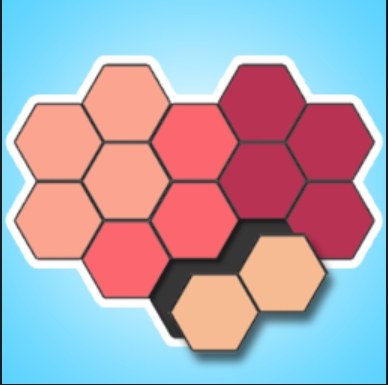

Pretty Tiles is a calm, no-timer puzzle game where you match pairs and clear the board. It’s ideal for kids building spatial skills and casual players seeking a relaxing coffee-break activity. No combos or pressure, just patient, orderly thinking.
Pretty Tiles is a puzzle game built around a very simple promise: arrange tiles, match them up, and clear the board. There’s no story to follow, no timer breathing down your neck, and no complicated combo system to memorize. That makes it an easy recommendation for kids who are still getting used to spatial thinking, and for casual players who want something to fiddle with during a coffee break. If you are looking for a game that asks for a little patience instead of lightning reflexes, this is worth a try.
Who This Game Is Actually For
The clearest audience here is younger players. The visual style leans bright and tidy, and the core action—picking tiles and matching them—is the kind of thing that feels familiar to anyone who has played a memory game or a simple card-matching app. But kids are not the only ones who will get something out of it. Adults who play games casually, maybe on a lunch break or while winding down in the evening, will find that the pace is forgiving. There is no pressure to act fast, and the game does not punish you for thinking for a few extra seconds before making a move.
That said, if you are a hardcore puzzle veteran looking for a deep brain-burner, this might not scratch that itch. Pretty Tiles is not about complex rule sets or hidden mechanics. It is about calm, orderly thinking. If that sounds like your kind of session, you are in the right place. If you prefer frantic matching games with cascading bonuses and a ticking clock, you might get bored quickly.
How the Loop Works
The basic structure is straightforward. You are presented with a grid of tiles, and your job is to find pairs that match. When you select two matching tiles, they disappear, freeing up space and moving you closer to clearing the board. The loop repeats until all tiles are gone.
What you are really optimizing for is board visibility. The fewer tiles on the screen, the easier it is to see what is left. But here is the catch: not every tile is necessarily available right away. In many games of this type, some tiles are stacked, partially covered, or placed in layers. That means you are not just matching—you are planning which matches to make first so that you can unlock the tiles underneath. The trick is to clear the top layers efficiently without scrambling the bottom rows into a mess.
You are also managing your own attention. Since there is no timer, the real enemy is losing track of where a specific tile is. If you have seen a tile but did not memorize its location, you will find yourself scanning the board repeatedly. That is where the game gets its quiet challenge. It is not about speed; it is about keeping a mental map of the board in your head.
Mistakes That End Runs Early
Even a relaxed puzzle game can end quickly if you make a few common errors. The first mistake is clicking too fast. Because there is no clock, there is no benefit to rushing. If you tap a tile and then immediately tap another without checking, you might accidentally pair two tiles that should have been saved for later. It sounds minor, but in a game where the board thins out slowly, one bad match can leave you with an orphaned tile that has no partner.
Another trap is ignoring the edges of the board. Tiles in the center are easy to see, so they get matched first. But the tiles along the edges and corners tend to be the ones you forget. If you leave them for the end, you might discover that the matching tile is buried under one of the few remaining tiles on the other side of the board. Then you are stuck, not because the game is unfair, but because you did not pay attention to the perimeter early on.
A third mistake is getting tunnel vision on one area. If you clear a nice section in the middle, you feel good about it, and you want to keep clearing that same area. But the game rewards a more even approach. If you clear one side completely while the other side remains stacked, you lose the ability to see what is underneath the remaining stack. That hidden information is valuable. Once you lose it, you are guessing, and guessing is how runs end.
Device Notes: Phone vs. Desktop
Pretty Tiles plays fine on both a phone and a desktop computer, but the experience is slightly different. On a phone, the tiles are smaller, which means you have to be more precise when tapping. That is not a big deal for kids, who are used to small screens, but if you have larger fingers, you might want to take an extra second to aim. On a desktop, the mouse gives you more precision, and the larger screen makes it easier to scan the full board without scrolling. If you are playing on a laptop, you might find it easier to keep the window at a comfortable size so that you can see the whole grid at once.
One practical tip: if you are playing on a phone, rotate the screen to landscape if the option is available. A wider view of the board reduces the chance that you will mis-tap a tile near the edge. If the game does not rotate, that is fine too—just be aware that you may need to adjust the position of your thumb or finger to avoid covering tiles with your hand. It sounds small, but covering a tile for a split second can be enough to forget what it was.
A Short Practical Practice Plan
If you want to get better at Pretty Tiles without turning it into a stressful task, you can follow a simple practice routine. The goal is not to beat the game quickly; it is to get comfortable with the board-reading process.
Start by playing a few rounds just to get a feel for the tile artwork. Notice which colors or shapes are easiest for you to distinguish. Some people are better with strong colors, while others prefer shapes. Once you know your own strengths, you can start to prioritize matches that use your strongest visual cues.
Next, practice a rule: always scan the bottom rows first. The bottom of the board is usually where the most hidden tiles are. If you can clear the bottom rows early, the tiles above will fall into view, and the board becomes much easier to read. This is not a guaranteed strategy for every layout, but it is a good habit to build.
Then, try a session where you deliberately slow down. Take three seconds before every move. Look at the tile you selected, look at its partner, and then look for any other tiles that might be covering that partner. If you can get used to that slower rhythm, you will find that your accuracy improves quickly. Speed will come on its own after a few rounds.
Finally, take a break when you feel your eyes glazing over. Because the game is relaxing, it is easy to keep playing for a long time. But after ten or fifteen minutes, your brain starts to lose track of tile locations. Walking away for a minute or two will reset your attention, and you will come back with a clearer head.
Why This Is a Good Pick for a Quick Session
One of the strongest things about Pretty Tiles is that it works well in short bursts. You do not need to commit an hour to it. A few minutes here and there is enough to get a satisfying round done. For kids, that means it can fit into a short break or a car ride. For casual players, it is a nice way to unwind without getting sucked into a long session.
The lack of a timer is a big part of the appeal. There is no stress about beating a high score or finishing before the music ends. You can play at your own pace, and the game will not rush you. That makes it a good introduction to puzzle games for younger players who might be intimidated by faster, more competitive matches.
If you are looking for a free browser game that you can pick up and put down easily, Pretty Tiles is worth a try. It does not try to be more than it is—a calm, clear puzzle game that rewards attention and patience. And for the audience it targets, that is exactly the right approach.