First Minute on the Board I clicked into Diamond Dungeon expecting some kind of underground treasure vault, but what you actually get is a Match3 grid that looks like it was carved from rough stone. The gems are chunky,
First Minute on the Board
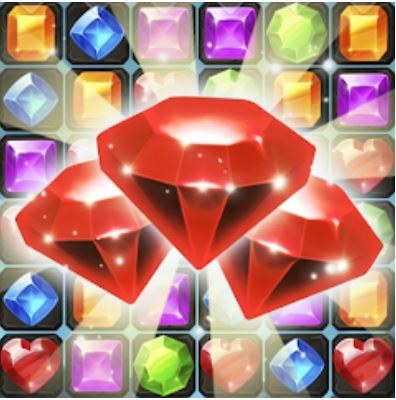
I clicked into Diamond Dungeon expecting some kind of underground treasure vault, but what you actually get is a Match3 grid that looks like it was carved from rough stone. The gems are chunky, almost like hard candy, and the board sits inside a dim cave frame. No characters wave at you. No story pop-up explains why you're matching. The music is a low, looping synth hum that feels more tension than adventure. My first move was swapping two red diamonds near the bottom—standard stuff—but the board already had a few cracked tiles that wouldn't move until I matched over them twice. That caught my attention. This isn't a candy-coated free-for-all. From the first 30 seconds, the game is telling you the board itself is an obstacle, not just a playing field.
What You're Actually Optimizing For
Most Match3 games train you to chase high scores or blast through level goals. Diamond Dungeon bends that instinct. There's no ticking move counter on the main mode I played, but there is a slow-building pressure from locked tiles, stone blocks, and chains that creep across the board if you ignore certain gems for too long. You aren't optimizing for points. You're optimizing for space. Every match clears a little breathing room, but the board fills back with new gems that might not be what you need. The real currency here is open, swappable tiles. Lose too many to stone or chains, and you'll run out of moves even if the game doesn't formally count them.
I started noticing I was making matches not to clear the level goal—which is usually some number of specific gem types—but to keep the board from locking up. The goal becomes secondary. That's a weird mental shift if you're used to games like Candy Crush where the objective sits front and center. Here, the objective is survival. You match to stay alive, and clearing the level goal happens almost by accident if you manage the board well.
Who Should Actually Play This
If you hand this to a kid who loves bright, bouncy Match3 games with animal mascots and explosion animations, they might bounce off in five minutes. Diamond Dungeon is muted. The color palette is deliberately restrained—rubies, sapphires, emeralds, and dull stone. There's no celebration when you make a match of four. You get a small flash and a quiet chime. That's it. Kids who need constant visual rewards will find it boring. But casual players who want something they can chip away at during a commute or while half-watching TV? This fits. The pace is slow enough that you can play without full attention, but the creeping threat of locked tiles means you can't zone out completely.
Actual Match3 fans—people who've played dozens of these and can feel when a board is turning against them—will get the most out of it. There's a tactical layer here that rewards planning three or four moves ahead. You'll start noticing which columns are about to clog and which gem types you're running low on. It's not deep strategy in the way a 4X game is, but for a browser Match3, it asks for more foresight than most. I caught myself staring at the board without touching it, just tracing possible cascades. That doesn't happen to me in lighter match games.
The Loop That Keeps You (or Loses You)
A typical session goes like this: you open the game, the board loads with a mix of normal gems, a few stone blocks, and maybe one or two chained tiles. You make some safe matches near the bottom, hoping to shift the board and trigger a cascade. Cascades feel good here because they clear multiple rows without costing you extra moves. But cascades also drop new gems unpredictably, and sometimes those new gems land in spots you can't reach. If a stone block drops into a corner with no adjacent matches, it stays there forever. That's the loop's tension. You want big chain reactions, but they introduce chaos you have to clean up.
What keeps you playing is the slow, satisfying process of clearing a locked tile. You match next to it once, and a crack appears. Match again, and it shatters. The sound design sells this—a sharp little crack, then a crumbling noise. It's one of the few audio rewards the game offers, and it works. What loses you is getting greedy. I ruined a few runs by chasing a shiny four-match when the board was already half-clogged. By the time I cleared the special gem, three columns had locked up and I was stuck. The game doesn't punish you with a "game over" screen immediately. It just leaves you staring at an unplayable board, which somehow feels worse.
Mistakes That End Runs Early
I lost more runs than I should have before I figured out what I was doing wrong. Here are the concrete mistakes that killed me, and they'll probably kill you too if you're not careful.
Matching at the top of the board. This is Match3 101 in many games—work from the bottom to maximize cascade potential. But in Diamond Dungeon, matching high is especially dangerous because the new gems that drop might land directly onto locked rows. If the bottom of the board is already stiff with stone, those new gems just pile up and create a dead zone you can't reach. I started forcing myself to only touch the bottom three rows unless there was an emergency match higher up.
Ignoring chained gems. Chains appear on random tiles and they spread. If two chained tiles are adjacent, they'll chain together after a few moves and then you need three matches to free them instead of two. I had a run where I thought, "I'll deal with those later," and five moves later, half the right side of the board was a linked mess. You have to break chains within the first two or three moves of them appearing, or they become a permanent problem.
Using special gems wrong. Matching four creates a line-clearing gem; matching five creates a bomb. The instinct is to save these for a big combo. Don't. The board doesn't give you enough open space to set up elaborate combos reliably. I started using specials immediately to clear stone blocks or break chains in hard-to-reach spots. Saving them just meant they sat on the board while other problems multiplied.
Forgetting the level goal exists. I got so focused on board management that I'd clear 90% of the board and realize I hadn't collected enough blue diamonds, which was the actual requirement. Then I'd have a wide-open board but no blue gems because I'd been matching everything indiscriminately. Now I check the goal first, note which gem type is needed, and prioritize keeping those on the board even if it means leaving a stone block alone for a few moves.
Phone vs Desktop: It Matters Here
I played on both. Desktop is the better experience, no question. The gems are larger and easier to distinguish, and the mouse gives you precise swaps. On a phone screen, the stone blocks and chained tiles can be hard to spot against the dark cave background. I mis-swapped several times just because my thumb hit the wrong tile. The game does seem to have been built with touch in mind—the hitboxes are generous—but the visual clarity suffers on smaller screens. If you're playing on a phone, turn your brightness up and maybe zoom in if your browser supports it. The game runs fine in mobile Chrome and Safari, no lag or crashes in my testing, but you'll squint more than you want to.
There's also no pause button that I could find. On desktop, that's fine—you just stop clicking. On mobile, I accidentally triggered moves when I picked my phone back up because the screen registered a touch. Lock your phone screen or be very careful setting it down mid-game.
A Short Practice Plan That Actually Helps
If you want to get competent at this game without burning an afternoon on frustration, here's a focused way to spend your first 20 minutes. I did something like this by accident and it helped a lot.
First five minutes: ignore goals completely. Just match and watch how the board refills. Pay attention to which columns get new gems and where stone blocks tend to land. You'll notice blocks often drop into columns that already have locked tiles. That's not random—the game seems to weight drops toward trouble spots to keep pressure on you.
Next five minutes: focus only on chains. As soon as a chained tile appears, break it. Don't worry about anything else. You'll lose a few times because you ignored the goal, but you'll learn how chains spread and how many moves you really have before they link. It's fewer than you think.
Next ten minutes: play normally but enforce one rule—never match in the top half of the board unless there are no moves in the bottom half. This is hard. Your eyes will drift upward. Resist it. You'll start to develop a sense for when the board is about to tip into unplayable territory, and that instinct is what carries you through longer runs.
After that, you're basically equipped. The game doesn't have complex systems to unlock or power-ups to manage. It's just you, the gems, and a board that wants to strangle you slowly. You can play it free in your browser whenever you have ten quiet minutes. It won't demand your full attention, but it will punish you for giving it none.