First Minute: No Warm-Up, Just Fire Space Shooter War drops you straight into the cockpit without a tutorial pop-up or a gentle on-ramp. The first thing I noticed was the immediate density of enemy fire. Within ten secon
First Minute: No Warm-Up, Just Fire
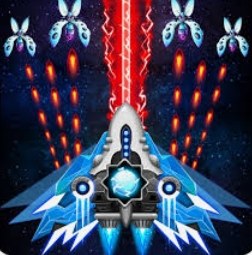
Space Shooter War drops you straight into the cockpit without a tutorial pop-up or a gentle on-ramp. The first thing I noticed was the immediate density of enemy fire. Within ten seconds, three distinct bullet patterns were crisscrossing the screen, and a medium-sized cruiser was drifting downward with a health bar that didn't budge from my default peashooter. You learn fast that standing still isn't a tactic here — it's a death wish. The controls are standard for the genre: drag or tilt to move your ship, auto-fire always on. I played my first three runs on a phone, and my thumb instinctively found a rhythm of small micro-dodges rather than sweeping arcs. The initial ship feels underpowered on purpose, and the game telegraphs that upgrades aren't optional; they're the whole point.
Visually, it's clean but not flashy. Enemy bullets are high-contrast, which is a design choice I appreciated by minute four when the screen started filling up. The first boss-type enemy appeared around wave eight, and it had a spiral attack pattern that punished anyone hugging the bottom edge. I lost that run because I hadn't yet internalized that the safe zone shifts constantly. That first minute sets the tone: this is a bullet-hell lite that expects you to read patterns, not just react.
The Core Loop: Risk Stacking and Upgrade Triage
Space Shooter War is built around a wave-based survival structure. Each wave clears when you destroy a set number of enemy formations, and between waves you're offered a choice of three upgrades. The catalogue doesn't list specific power-ups, so I'll stick to what I observed over about fifteen runs. You'll see options like spread shot, side-mounted cannons, missile pods, attack speed boosts, movement speed increases, and a few defensive pickups like temporary shields or a single-use screen clear. The key is that upgrades stack, and the game clearly wants you to think about synergy rather than just grabbing the shiniest icon.
What you're optimizing for changes as the run deepens. Early on, adding extra projectiles matters more because enemy health is low and you're trying to clear formations before they flood the screen. By wave twenty, I noticed a hard pivot: crowd control and burst damage become essential. A spread shot with high attack speed can wipe smaller enemies, but if you haven't invested in something that chunks down elite units, you'll get boxed in. I died twice because I had a beautiful screen-clearing setup that tickled the mid-boss for fifteen seconds while its escort ships pinned me.
The risk-reward tension comes from the upgrade slot limit. You have a finite number of weapon and utility slots, and the game occasionally offers to replace an existing upgrade rather than add a new one. Saying yes to a shiny new missile system might mean losing your fully-stacked side cannons. I started treating the first ten waves as a scouting phase: grab whatever helps me survive, but don't commit emotionally to any one build until I see what the run is offering. Sometimes the game feeds you nothing but attack speed mods, and you just have to lean into being a glass cannon.
Enemy Patterns You Can't Just Out-Fly
After a dozen runs, I started cataloguing the enemy types in my head, because certain ones demand a response beyond dodging. The small, fast movers that swarm from the sides are predictable but lethal if you're tunnel-visioning on a bigger threat. The stationary turrets that appear behind the front line force you to move forward and take risks. The shielded cruisers require sustained fire on a specific weak point, and they love to park themselves behind a curtain of bullet spam.
The real run-killers are the enemies that fire aimed bursts rather than fixed patterns. These shots lead your movement, which means your instinct to strafe left can fly you straight into a line of projectiles that were calculated two seconds ago. I learned to bait these by twitching one direction, then immediately reversing. It's a small thing, but it saved me more times than any shield pickup. The game also introduces enemies that leave behind lingering hazards — energy pools or slow fields — and those zones force you to control space differently. You can't just retreat to the bottom and wait; the floor becomes unsafe.
Mistakes That End Runs Early
I want to be specific here because these aren't generic "don't get hit" tips. The mistakes I made repeatedly fell into clear categories.
1. Corner camping. The bottom-left and bottom-right corners feel safe because fewer bullets seem to reach there. They aren't. Enemies that fire aimed spreads will bracket the corners, and you have fewer escape vectors. I lost a promising run on wave fourteen because I was tucked into the left corner and a cruiser dropped a spread pattern that left me exactly one pixel of safe space. I didn't find it.
2. Holding onto bombs too long. The screen-clearing consumable — whatever it's officially called — recharges slowly, and my instinct was to save it for a boss. Multiple runs ended with a bomb unused because I died to a dense wave that I could have cleared. Use it when the screen feels unreadable, not when you're already at half health and panicking. The window closes fast.
3. Overvaluing movement speed. Faster ships feel great. You zip around, you dodge with flair. But Space Shooter War has inertia, subtle but present, and high movement speed makes micro-adjustments harder. I stacked three speed boosts once and spent the next two waves overcorrecting into bullets. One or two points is plenty; beyond that, I'd rather have damage.
4. Ignoring the upgrade synergy preview. The game doesn't spell out combos, but you can see your ship's current loadout visually. If you have forward cannons and side shot, your bullet spread changes shape. I didn't notice at first that adding a rear-firing weapon actually weakened my forward concentration because it split the upgrade scaling. Pay attention to how your shot pattern looks after each pick. If it's getting thinner where enemies actually are, you made a wrong turn.
5. Not prioritizing elite enemies. This sounds obvious, but in the heat of a run, it's easy to clear the small ships because they die fast and give you breathing room. The problem is that the elite enemies are the ones spawning the small ships in later waves. Leave them alive, and you're fighting an endless stream. I started marking the elite the second it appeared and committing to it hard, even if it meant taking a riskier position.
Phone vs Desktop: The Feel Is Noticeably Different
I played about two-thirds of my runs on a phone and the rest on a desktop browser. The game is clearly designed for mobile first, but it works on both. On a phone, the touch-drag controls are responsive, and your finger doesn't obscure much of the action if you hold the ship slightly above center. The smaller screen actually helps with peripheral awareness because you can take in the whole field without moving your eyes much. The downside is precision: on later waves with tight bullet weaves, my fingertip occasionally betrayed me, and I wished for a bit more granularity.
On desktop with a mouse, I had much finer control, but I also had to unlearn the drag instinct. Holding the mouse button and moving works, but there's a slight floatiness that's more pronounced with a cursor than with direct touch. Keyboard controls, if they exist, weren't immediately obvious and I didn't find them in the time I spent. I settled on phone as my preferred way to play, simply because the game's rhythms feel calibrated for thumb movement. If you're struggling on desktop, try a shorter mouse travel distance or a trackpad — it mimics the touch feel more closely.
One practical note: on older phones, the later waves with heavy particle effects caused a bit of slowdown. It wasn't unplayable, but the frame drops changed the dodge timing enough that I had to adjust. If your device struggles, stick to shorter runs and focus on burst damage builds that clear enemies before the screen gets crowded.
A Practice Plan That Builds Real Skill
After banging my head against the later waves for an hour, I stepped back and structured my practice. This isn't a grind-it-out game; you improve faster by isolating specific skills. Here's what worked for me.
Phase 1: Pattern reading reps, not win attempts. For five runs, I didn't try to reach a high wave. I focused entirely on watching enemy bullet patterns and moving as little as possible. The goal was to learn which attacks are aimed, which are fixed, and how different enemy types telegraph their shots. I died early a lot, but I started recognizing the spiral pattern from the first boss and the aimed burst from the turret enemies by their sound cue, not just their visual.
Phase 2: One upgrade path commitment. I picked three upgrade types I wanted to specialize in — spread shot, attack speed, and a single defensive option — and for five runs, I only took those when offered. This forced me to learn how that specific build handles different situations. I learned that a pure spread-shot build clears waves efficiently but struggles against single high-health enemies unless you get close, which is risky. Knowing that limitation ahead of time meant I could plan my positioning instead of discovering it mid-fight.
Phase 3: Intentional bomb usage. I did runs where I forced myself to use the screen clear at least once per three waves, even if the screen wasn't overwhelming. This retrained my brain to see the bomb as a tool, not an emergency lever. By the end, I was using it proactively to skip particularly nasty wave compositions, and my survival rate improved noticeably.
Phase 4: Boss study via early death. If I reached a boss and died, I didn't restart immediately. I sat with the death screen and mentally replayed the attack patterns I'd seen. The boss behaviors are consistent; they cycle through a set of moves. Mapping those moves in my head meant that on the next encounter, I was anticipating rather than reacting. The wave eight boss always opens with a spiral, then switches to aimed bursts at half health. Knowing that let me position preemptively.
I'm not saying this plan will get you to wave fifty. I haven't reached wave fifty. But it moved me from consistently dying before wave fifteen to regularly pushing past twenty-five, and the runs felt more controlled rather than frantic. The game rewards pattern knowledge over twitch reflexes, and that's a refreshing change in a genre that often leans on raw speed.
What the Game Doesn't Tell You
There's no story here, no mission briefings, no lore about why you're fighting in space. The catalogue doesn't provide a description, and the game itself doesn't pretend to be anything other than a wave-based shooter. I actually prefer this. It means the design has to stand on its mechanics, and for the most part, it does. The upgrade variety is solid, the enemy patterns are thoughtfully arranged, and the difficulty curve is steep but not unfair. It's a free browser game, so you can jump in without any friction, and that's exactly how this kind of game should work.
One thing I wish existed: a post-run summary showing which enemies killed me and what my upgrade loadout looked like. Without that, you're relying on memory to diagnose your mistakes, and when runs start blending together, it's easy to forget whether it was the aimed bursts or the lingering hazards that ended you. If you're serious about improving, keep a mental note of your last three upgrades and what you died to. It sounds nerdy, but it helps.
Space Shooter War won't reinvent the shooting genre, but it nails the fundamentals and gives you enough strategic depth to keep runs feeling different. The shift from beginner play to advanced play isn't about faster fingers; it's about reading the field, making hard upgrade cuts, and knowing when to spend your panic button. That's a loop worth coming back to.