First Minute, No Timer I opened Spot Differs expecting a countdown bar somewhere—top, bottom, maybe a pulsing circle—but there's nothing. Two nearly identical photographs sit side by side, a quiet prompt floating above t
First Minute, No Timer
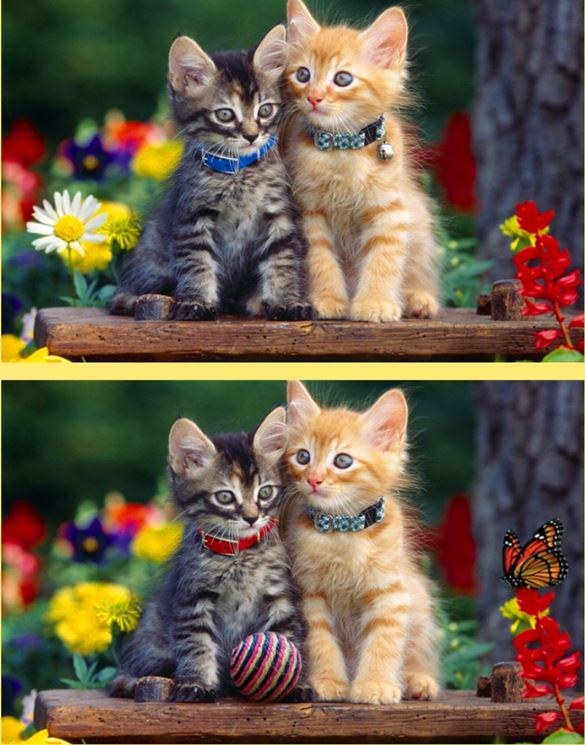
I opened Spot Differs expecting a countdown bar somewhere—top, bottom, maybe a pulsing circle—but there's nothing. Two nearly identical photographs sit side by side, a quiet prompt floating above them, and no ticking clock anywhere on screen. The first image pair was a café scene: same red awning, same wicker chairs, same chalkboard menu. For a solid twenty seconds I just scanned back and forth, letting my eyes drift rather than dart. That's when I noticed a sugar packet on the left table had moved about two inches to the right in the second photo. No buzzer. No penalty flash. Just a soft chime and the circle around the difference filling in with pale green. I sat back in my chair a little. Oh, this one actually wants me to breathe.
That absence of pressure changes everything about how you approach a difference-spotting game. Most entries in this genre train you to flick your eyes between images like a metronome, hunting before some arbitrary meter drains. Spot Differs strips that away completely, and the first minute feels almost suspicious—like someone forgot to wire the urgency module. You keep waiting for the catch. It doesn't come. You're just looking at pictures, finding things at your own speed, and the game quietly rewards you for thoroughness rather than twitch reflexes.
What You're Actually Optimizing For
The loop is straightforward: each level presents two images with a set number of differences—usually five to eight, depending on the scene's complexity. You tap or click any spot where you spot a discrepancy. Correct finds get marked. Wrong taps do nothing except briefly dim the screen, no score deduction, no lost progress. Finish all differences and the level completes. A star rating appears based on accuracy (fewer mis-taps) and, in some level packs, total time taken, but the time element feels more like a personal metric than a gatekeeper. You can ignore it entirely and still unlock the next batch of images.
So if you're not optimizing for speed, what are you optimizing for? Attention bandwidth. The game becomes about how steadily you can hold visual focus without your brain defaulting to its usual pattern-recognition shortcuts. Your eyes want to jump to obvious contrasts—a missing lamp, a color swap on a shirt—but the subtler changes hide in texture shifts, shadow angles, and object overlap. A flowerpot nudged half an inch behind a fence post. A reflection in a window that's slightly dimmer. Those are the ones that teach you to slow your scan rate down to something almost meditative. I found myself treating each quadrant of the image like a small room I was tidying up, checking every surface before moving on.
There's also a quiet strategy around mis-tap discipline. Because the game doesn't punish wrong guesses harshly, it's tempting to start tapping everywhere like a woodpecker, hoping to brute-force the last difference. Resist that. Each mis-tap adds a tiny cognitive static—you lose track of which areas you've already checked methodically. I started keeping a mental grid: top-left, top-right, bottom-left, bottom-right, then the center crossover zones. When I abandoned that and started poking randomly, I'd finish levels thirty seconds slower on average, purely because I'd re-scan the same lamp three times.
The Mistakes That Drain Your Session
After about twenty levels spread across two sittings, I noticed a handful of consistent errors that turned a relaxed ten-minute session into a frustrating stare-fest. These aren't obvious at first because the game is so forgiving, but they compound quietly.
Fixation on a single detail type. Early on, I got really good at spotting color differences—a blue book becoming green, a yellow flower turning white. So my brain started filtering for color exclusively. I'd miss structural changes entirely: a missing chair leg, a window that gained an extra pane, a scarf draped differently. The game mixes change types deliberately. After the third level where I spent two minutes hunting the last difference and it turned out to be a shifted shadow on a wall, I learned to rotate my attention mode. One pass for color, one pass for object presence or absence, one pass for position shifts, one pass for size or perspective tweaks. It sounds mechanical, but it becomes rhythmic after a while.
Edge blindness. Almost every difference-spotting game tucks at least one change near the image border, and Spot Differs is no exception. I'd meticulously comb the central subjects—the people, the tables, the obvious props—and completely ignore the picture frame, the curtain edge, the background wallpaper seam. Now I deliberately trace the outer inch of both images with my eyes before declaring a sweep finished. It's saved me from the "one remaining" purgatory more times than I can count.
Fatigue without realizing it. Because there's no timer shoving you forward, you can play for forty minutes straight without noticing your accuracy crumbling. Around the twenty-five minute mark in my longer session, I started mis-tapping on things I'd already found—my brain registered the green circle marker as a fresh difference and I'd tap it again. The game doesn't penalize this, but it's a clear signal your visual processing is saturated. I've started setting a loose cap of fifteen minutes per sitting, or roughly eight to ten levels, whichever comes first. The game doesn't demand it, but my enjoyment stays higher when I respect that limit.
Zooming out too far. On desktop, I initially shrank the browser window to see both images in full without scrolling. Bad move. The smaller scale compressed fine details—thread textures on clothing, tiny price tags, distant street signs—into indistinguishable blobs. I missed a difference involving a single missing button on a coat for an embarrassing length of time. Play fullscreen or at least large enough that you're not squinting at ant-sized details. On phone, the pinch-to-zoom feels essential rather than optional.
Phone vs Desktop: Two Different Experiences
I tested Spot Differs on both a laptop with a 15-inch screen and a mid-range Android phone, and the difference in play feel surprised me. On desktop, the larger canvas lets you take in both images with peripheral vision. You can sit back, arms crossed, scanning like you're examining a gallery print. Mis-taps are less frequent because the mouse cursor gives you pixel-level precision. The downside: I caught myself slouching into a passive stare, which ironically made me slower at catching small shifts. Something about the physical distance from the screen encouraged a lazier scanning pattern.
On mobile, the experience flipped. Holding the phone closer—naturally, the way you'd read an article—pulled me into the details more aggressively. The touch interface meant my finger occasionally obscured the exact spot I was scrutinizing, which led to a few accidental taps on areas I hadn't finished evaluating. Pinch-zooming became second nature: zoom in on a suspicious shelf, check every object, zoom out, pan to the next zone. It felt more active and almost tactile, like moving a magnifying glass across a physical photograph. Battery drain was negligible, and the game loaded quickly even on spotty Wi-Fi, which matters for a browser title you might pull up during a commute or a waiting room.
One mobile-specific tip: turn off any blue-light filter or "eye comfort" mode while playing. I had mine enabled during an evening session and a difference involving a very pale yellow highlight on a white coffee cup became nearly invisible. The color shift from the filter merged the two tones completely. Discovered that after four minutes of genuinely believing the level was bugged.
A Practice Plan That Actually Feels Like Play
If you want to get better at Spot Differs without turning it into a chore, here's the loose routine I settled into after a week of daily play. It's not a grind—it's more like a warm-up that keeps the frustration low and the satisfaction steady.
Start with a "slow level" as calibration. Pick an image you've already completed, or the first level of any new pack, and deliberately take twice as long as you think you need. Name the differences out loud or in your head as you find them: "shifted vase, missing earring, lighter curtain fold." This verbal anchoring seems to wake up the detail-oriented part of your brain and carries into subsequent levels. I do this for exactly one level and treat it like stretching before a run.
Rotate through three scanning modes per level. First pass: broad structural scan, looking for missing or added objects. Second pass: color and texture scan, comparing hues, patterns, and material details. Third pass: positional scan, checking if objects have moved, rotated, or changed size. You won't need all three passes for every level—sometimes you'll spot all seven differences in the first sweep—but having the sequence prevents the fixation error I mentioned earlier.
Use the "peripheral check" trick for stubborn remainders. When you're down to one unfound difference and it's hiding, stop looking directly at the images. Soften your gaze and let the two pictures blur together in your peripheral vision. Differences sometimes pop as a subtle flicker or a discontinuity in the blended image that your focused scanning missed. It's not foolproof, but it's cracked the last difference for me on at least four occasions where I was completely stuck.
Limit sessions to three level packs or twenty minutes. The game doesn't enforce this—you can play for hours—but I noticed my enjoyment curved downward sharply after the twenty-minute mark. Visual fatigue is real even when you're having fun, and difference-spotting uses a specific kind of attention that drains faster than you'd expect. Short, frequent sessions beat marathon stares.
Replay a favorite level once a week. This sounds pointless since you already know where the differences are, but revisiting a completed level after several days tests whether you've internalized better scanning habits. The first time I replayed an early café level, I found the differences in half the time and with zero mis-taps, purely because I wasn't hunting chaotically anymore. That small proof of improvement felt disproportionately satisfying.
Why It Sticks
Spot Differs doesn't try to be more than it is. There's no story, no character progression, no currency system. The images are pleasant but not spectacular—stock-photo quality scenes of markets, living rooms, parks, and city streets. What makes it work is the deliberate removal of pressure from a genre that usually can't resist adding it. By letting you sit with the images, the game turns a normally frantic activity into something closer to a visual puzzle ritual. I've caught myself opening it not because I want to beat levels, but because I want ten minutes of quiet focus after a noisy work call. That's a rare thing for a free browser game to pull off.
You don't need to be good at it to enjoy it. You just need to be willing to look carefully at ordinary scenes and notice what shifted. The game meets you wherever your patience level is, and that generosity makes it surprisingly hard to close the tab.