First Minute: This Isn't Just Another Match Game I opened Star Boom expecting something breezy — match some colors, watch things pop, kill five minutes. What I got instead was a bomb-crafting puzzle that punishes casual
First Minute: This Isn't Just Another Match Game
I opened Star Boom expecting something breezy — match some colors, watch things pop, kill five minutes. What I got instead was a bomb-crafting puzzle that punishes casual thinking by level 4. The tutorial teaches you how to place single bombs, but it doesn't prepare you for the moment the board starts filling with layered crates, scattered gems, and a move counter that suddenly feels very tight. That first "oh no" moment came around level 6, when I realized I'd been wasting bombs on isolated targets while the real problem was a cluster of locked stones in the corner that I couldn't reach anymore.
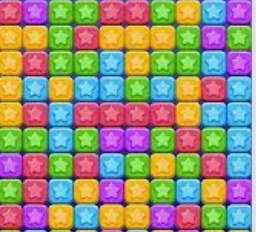
The art style is cheerful — bright gems, bouncy animations, satisfying little explosion rings. But underneath that is a game that expects you to learn its spatial logic or stall out hard. If you're stuck and looking for tips that actually apply to the tough levels, not just the first ten, here's what I figured out after a couple hours of trial, error, and restarting.
How the Loop Actually Works
Star Boom looks like a match-and-blast game, but you're not matching anything. You place bombs directly onto a grid filled with colored targets — gems, stones, crates — and each bomb you place detonates outward in a cross pattern or a radius, depending on the bomb type. The goal is to clear specific target counts, collect stars, and sometimes free trapped objects, all within a limited number of bomb placements.
What you're really optimizing for is chain reactions. A single bomb placed in the right spot can trigger multiple cascading clears if it hits objects that themselves explode or unlock adjacent areas. The game introduces new bomb types gradually: basic bombs, directional blasts, bigger radius bombs, and later, bombs that only affect certain materials. By the time you're into the hard levels — I'd say level 20 and beyond — the board is dense, and the obvious moves are usually trap moves.
The loop tightens around move efficiency. You don't get points for leftover bombs. You don't get bonuses for speed. Every level is a puzzle with one or two efficient solutions, and the rest are wasteful detours. The game knows this, and the level design gets increasingly specific about forcing you to find the one sequence that works.
Mistakes That Wreck Your Run Early
I made the same three mistakes over and over until I started writing them down mentally between attempts. Here's what kills runs on hard levels:
Ignoring the edges first. On most boards, targets near the edges and corners are the hardest to reach later. If you clear the center too aggressively, you end up with stray gems stuck against walls that require a whole bomb just for one or two targets. That's a terrible trade. Scan the perimeter before you place anything and ask: which of these edge pieces can I clear now while I still have cluster options nearby?
Using power bombs as panic buttons. When the board looks crowded, the instinct is to drop the biggest bomb you have. But Star Boom often places special bomb types in limited supply, and using a radius-3 blast to clear three basic gems is a waste you'll regret two moves later when you need it for a shielded crate. I now treat every non-basic bomb as a key, not a weapon. It unlocks a specific section. If I can't name exactly what that bomb is supposed to solve, I don't place it.
Not counting targets before moving. This sounds obvious, but the game doesn't show you a running tally of remaining targets by color or type unless you pause and look. On levels that require clearing, say, 15 red gems and 10 blue stones, I'd clear a bunch of red stuff, feel good, then realize I only had two bombs left and the blues were buried. Now I count before I start, and I check which target type is in the worst position. That's the one I build my first three moves around.
Forgetting that crates block blast paths. Explosions in Star Boom don't pass through solid objects unless the bomb type specifically says it does. I lost a level-17 attempt because I placed a directional bomb behind a wooden crate, expecting it to hit the gem line three tiles away. The crate absorbed the whole blast and didn't break. Now I test sightlines: if I can't draw a clean straight line from bomb center to target without hitting a crate or stone, the blast stops there.
Reading the Board Like a Puzzle, Not a Sandbox
The turning point for me was realizing that Star Boom levels aren't random. Once you accept that someone designed each board with a specific path in mind, you stop treating it like a sandbox and start looking for the designer's clues. Here's what I mean:
Look for the "odd one out" target. In many hard levels, there's one gem or stone that's positioned slightly apart from the main clusters, or it's a different color than everything around it. That outlier is often the intended starting point, because clearing it early opens up a lane or drops a power-up that cascades backward through the level. The first time I tried this consciously, on level 24, I cleared a single red gem in the top-left corner that seemed irrelevant — and it dropped a chain of bombs that cleared half the board without me spending another move.
Another pattern: levels that give you exactly enough bombs to clear the required targets, assuming perfect placement. That means you cannot waste a single blast. When I hit a level like that, I switch to a "minimum viable move" mindset. I ask myself: can this group of three be cleared by one bomb? If not, is there a way to reposition or wait for a cascade? Sometimes the answer is no, and that's when I place the bomb, but only after I've ruled out every cheaper option.
The game also uses a trick I've seen in puzzle design before: it shows you a very obvious, juicy cluster in the center and hides the real problem in the corners. New players bomb the cluster, feel clever, then realize they can't reach the scattered remains. Hard levels punish that with extreme prejudice. I now scan the whole board twice before my first move, and I physically point at the three hardest-to-reach targets with my finger. Those are my real objectives. Everything else is just pathing.
Device Notes: Phone vs Desktop Matters More Than You'd Think
I played Star Boom on both my phone and a desktop browser, and the experience differs in ways that affect performance on harder levels. On phone, the touch controls are direct — you tap the bomb type, then tap the grid. That's fast and intuitive, but on smaller screens, I sometimes mis-tapped and placed a bomb one tile off from where I intended. On levels with very tight move counts, that's a restart. I learned to zoom in when available and to use a stylus for precision on later levels. Not required, but it helped my accuracy noticeably.
On desktop, the mouse gives you pixel-perfect placement, which I preferred for the really unforgiving boards. The tradeoff is that dragging between bomb types feels slightly slower than tapping, and on timed bonus rounds, that half-second matters. I didn't find a clear winner — phone is better for quick restarts and casual play, desktop is better for the methodical, count-every-tile approach that hard levels demand. If you're stuck on a level past 30, try switching to whatever platform gives you more deliberate control. It might sound minor, but when one misclick costs you the run, precision is everything.
A quick note on performance: the browser version ran smoothly on a mid-range laptop without fans kicking in, and the mobile version didn't heat up my phone. No crashes, no lost progress between sessions. The game saves your level automatically, which is a small mercy when you're on attempt twelve of the same board.
What Actually Works on Levels That Feel Unfair
There's a stretch around levels 25–35 where the difficulty spikes and the game stops giving you generous bomb counts. Here's the specific approach that got me through that wall:
First, I stopped trying to clear every target. Some levels have decorative elements or breakable objects that aren't required for star completion. Check the level goals at the top — if it says "clear 20 gems" and there are 25 on the board, five of them are optional. Identify which ones are in awful positions and ignore them. The game doesn't penalize you for leaving non-required objects on the board.
Second, I started treating the first two moves as "scouting." On a fresh board, I'd place a basic bomb in a spot that reveals how things collapse, then restart the level with that knowledge. It's not elegant, but it's effective. The board doesn't randomize between attempts, so scouting gives you perfect information. Once I know which direction the cascade flows, I can reverse-engineer the optimal starting sequence. This felt slightly like cheating until I realized the game's harder levels practically expect you to do this.
Third, I mapped bomb types to roles. Basic bombs are for cluster clearing and triggering chains. Directional bombs are for reaching isolated targets or punching through layered obstacles. Large-radius bombs are for the endgame, when the board is mostly cleared and the remaining targets are scattered. I never use a large-radius bomb before the final third of the move count unless a level specifically demands it early. Keeping that discipline stopped me from burning my best tools on medium-difficulty sections.
A Short Practice Plan That Won't Eat Your Day
If you want to improve without grinding the same level until your eyes glaze over, here's a focused routine that helped me build the right habits:
Spend 15 minutes on levels 1–10 again, but with a constraint: try to clear each level using two fewer bombs than the game gives you. This forces you to find efficient chains instead of overkilling clusters. The early levels are forgiving enough that you can experiment, and you'll start seeing blast radius interactions you missed the first time through.
Then pick one hard level you're stuck on and do three dedicated "scout runs." Don't try to win. Just observe: where do the cascades start? Which objects block what? Which target is the actual bottleneck? Write down the sequence that seems most efficient, then attempt it for real on the fourth try.
Finally, play five levels with the sound on. I normally play muted, but Star Boom's audio cues are actually informative — different bomb types have distinct placement and detonation sounds, and you can hear when a chain reaction is still resolving off-screen. It's subtle, but it helped me avoid placing a second bomb too early and wasting a move on a cascade that hadn't finished yet.
Star Boom won me over by being tougher than it looks. It's a free browser game that doesn't demand anything from you except patience and spatial reasoning, and the satisfaction of cracking a level that seemed impossible five attempts ago is genuine. If you're stuck, the answer is usually simpler than you think — you just haven't found the one tile that changes everything.