I opened Puppy Blast on a whim, expecting maybe thirty seconds of cute before I clicked away. The first board loaded, and I just sat there. Pastel puppies stared up at me from a grid of colored blocks, and the timer in t
I opened Puppy Blast on a whim, expecting maybe thirty seconds of cute before I clicked away. The first board loaded, and I just sat there. Pastel puppies stared up at me from a grid of colored blocks, and the timer in the corner wasn't ticking down. No move counter, no urgent music, just a soft little woof sound when I tapped a group. That first minute felt oddly suspended, like the game was waiting for me to decide what kind of player I wanted to be.
What the opening board teaches you before anything explodes
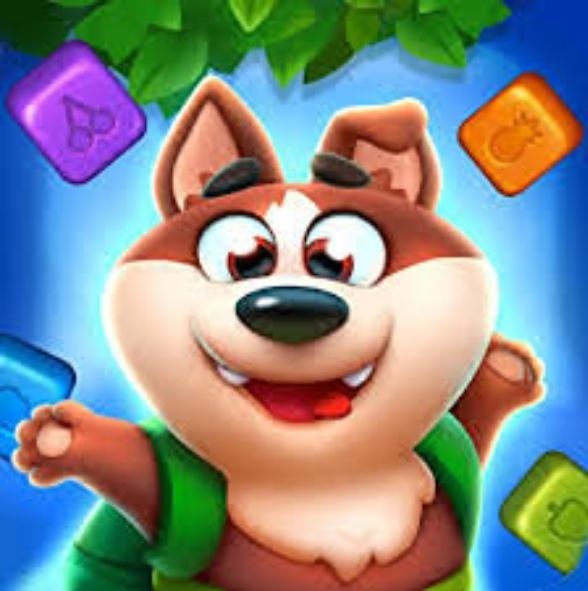
You're looking at a grid filled with blocks, each one stamped with a puppy face in a different color. Tap two or more same-colored blocks that are touching, and they vanish in a small puff. The blocks above drop down, new ones fill in from the top, and you get points. The scoring isn't complicated, but you'll notice something right away: bigger groups pay out disproportionately. A cluster of three gives you a handful of points. A cluster of twelve feels like the board is thanking you personally. The game nudges you toward patience without ever saying it out loud.
There's no countdown clock on the main levels. Some bomb-blast games lean hard into urgency, flashing warnings when you're running out of moves. Puppy Blast just lets you stare at the board. You can take thirty seconds to trace a path through the colors with your eyes, and the only pressure is the one you bring with you. I found myself exhaling more than usual during my first session, which is not what I expected from a genre that usually wants my pulse up.
The loop that keeps you coming back isn't about speed
Each level gives you a target score and a limited number of taps. You're not racing a clock; you're budgeting actions. The core optimization isn't reflexes, it's group size relative to tap count. You want every tap to clear as many blocks as possible, because leftover taps at the end don't roll over and small clears burn through your allowance fast. The strategic layer sneaks up on you. At first you're just matching colors because it feels satisfying. By level ten, you're scanning the board for bottleneck colors, the ones that are scattered in tiny islands and will never form a big group unless you clear the blocks around them first.
The board refills after each tap, which means the puzzle state shifts in ways you can partially predict. Blocks drop straight down, so a column with a gap will pull everything above it lower. New blocks enter from the top in random colors, which injects just enough uncertainty to keep you from perfectly mapping out a sequence. You're always balancing what you can see against what might appear. That tension, between planning and adapting, is what makes the game feel thoughtful rather than mindless.
What you're actually optimizing for, beyond the score
Points are the stated goal, but the real resource is board control. Every tap reshapes the grid. If you clear a vertical stripe, you create a column of empty space that funnels new blocks into a predictable pattern. If you clear a horizontal band, you might split the board into disconnected zones that make future large groups harder to find. I started thinking in terms of connectivity: which colors are clustered, which are stranded, and what happens to the cluster map after I remove a chunk. The game rewards this kind of thinking without ever explaining it. You just notice, after a few levels, that you're doing better when you treat each tap as a small terraforming decision.
There's also a chain reaction mechanic that triggers when a large clear causes falling blocks to form new same-color groups automatically. These chains don't cost extra taps and they pump your score significantly. Setting up chain potential becomes its own mini-game. You might leave a medium-sized group untouched because you see that clearing the column next to it will drop matching blocks into place, creating a much larger cluster on the next board state. That kind of two-step thinking feels deeply satisfying when it works, and it never requires fast fingers.
Mistakes that end runs early, and how to spot them before you tap
The most common error I made in my first fifteen levels was clearing the first big group I saw. A cluster of eight same-colored blocks is tempting, and your instinct says to grab it. But if that cluster is sitting at the bottom of the board and clearing it doesn't open up any new connections, you've just spent a tap for points without improving your position. The next board state might be worse, with all your remaining colors broken into pairs and triples that will each cost a separate tap to clear. I learned to ask myself: does this clear create opportunity, or just spend a resource?
Another trap is neglecting the edges. Blocks on the sides and in the corners have fewer neighbors, which makes them harder to group. If you let a color accumulate along the left wall in small, disconnected patches, you'll eventually run out of ways to combine them without burning multiple taps on tiny clears. Clearing the center first feels natural because that's where the big clusters live, but the edges need attention early, while you still have the tap budget to shape them.
The third mistake is ignoring the target score until you're close to it. Some levels have a score requirement that's easily reachable with a few large clears, but if you waste taps on small groups early, you might find yourself two taps from the end with the score bar only three-quarters full and no large groups left on the board. I started checking the target number before I made my opening move, which helped me gauge how aggressive I needed to be with group size from the jump.
- Don't auto-tap the first big cluster. Pause and scan the whole board.
- Check edge colors early. Stranded blocks multiply your tap costs later.
- Know the score target before you start. It shapes how greedy you need to be.
- Think one tap ahead. What drops where, and does it connect?
How the difficulty curve actually feels, level by level
The early levels are generous. The target scores sit low enough that you can play sloppily and still pass, which I think is intentional. The game is teaching you the rhythm without punishing you for experimenting. Around level twelve or fifteen, the score requirements start creeping up and the board layouts introduce more color variety. Five colors on a small grid means each color appears in smaller clusters, which forces you to be more deliberate about group formation. By level twenty, you're getting boards where two or three colors are dominant and the others are sprinkled in just enough to break up potential mega-groups. That's where the strategy layer really matters.
The game doesn't spike suddenly. There's no wall where you go from breezing through to slamming your head against a level for twenty minutes. Instead, it tightens gradually. You'll notice you're passing levels with fewer taps to spare, then you'll fail one because you got careless with a few early moves. The failure feels fair, not punitive. You can usually trace it back to a specific decision, which makes restarting feel like a learning opportunity rather than a punishment.
Phone versus desktop: the differences that matter
I played on both, and the experience shifts in ways worth mentioning. On a phone, held vertically, the board fills the screen nicely and your thumb can reach every block without stretching. The tap targets are generous enough that I rarely hit the wrong block, even on a smaller display. The portrait orientation feels natural, and the game's pastel palette is easy on the eyes during longer sessions. One-handed play is completely viable, which I appreciated during a commute.
On desktop, the board sits centered in the browser window with some empty space around it. Clicking with a mouse gives you pixel-perfect precision, which matters slightly more on later levels where blocks are smaller relative to the screen and accidental taps could cost you. The bigger screen also makes it easier to scan the entire board at once, which helps with the strategic planning side. I found myself playing more thoughtfully on desktop, not because the game demanded it, but because the larger view invited a more deliberate pace. Neither version is worse; they just encourage slightly different mindsets. If you're looking to really optimize your runs, desktop gives you a better overview. If you want cozy, casual sessions, phone is the way to go.
The sound design and why it's worth leaving on
Most browser puzzle games get muted within ten seconds. Puppy Blast is one of the few where I left the sound on. The pops are soft and rounded, not sharp or tinny. When you clear a large group, there's a gentle ascending chime that feels rewarding without being overstimulating. The puppies make small, satisfied noises that never cross into annoying territory. The background music is a simple looping melody that fades into ambience rather than demanding attention. It's all designed to keep you calm, and it works. I noticed my shoulders dropping after a few minutes, which is not a typical gaming reaction for me.
A practice plan that builds better habits without feeling like work
If you want to improve without grinding the same level over and over, here's a short routine I settled into after about twenty minutes of play. It's not a rigid training regimen, just a way to build the observation skills that make the later levels feel manageable.
First, play three levels where your only rule is that you cannot tap a group smaller than five blocks. Ignore your score. The goal is to retrain your eyes to seek out larger clusters and to get comfortable leaving smaller groups alone even when they're right there begging to be popped. This feels unnatural at first because the game visually highlights every tappable group. You have to override that impulse.
Second, pick one level and play it three times in a row, but each time, start by clearing a different color first. Notice how the board reshapes itself differently depending on your opening choice. This builds an intuitive sense for how clearing one color opens or closes opportunities for the others. You'll start to see patterns in how blocks settle.
Third, try a run where you verbalize your reasoning before each tap, even just whispering to yourself: "I'm clearing the blue group on the left because it'll drop the reds into a chain." This feels silly but it forces you to articulate the strategic layer instead of running on autopilot. After a few levels, that reasoning becomes faster and more automatic.
The whole routine takes maybe fifteen minutes and it shifted how I approached every level afterward. I stopped seeing the board as a collection of tappable groups and started seeing it as a system I could nudge in specific directions.
What the game doesn't tell you, but you'll figure out
There's no tutorial popup explaining chain reactions, no arrow pointing at the score bar, no hint system that interrupts your flow. Puppy Blast trusts you to discover things on your own, which I found refreshing. The tradeoff is that you might miss some nuance for a while. I didn't realize until level eighteen that clearing blocks from the bottom of the board tends to create more chain reactions than clearing from the top, because blocks have further to fall and more opportunities to match on the way down. That's not hidden; it's just not signposted. The game treats you like someone capable of noticing patterns, which fits the relaxed strategy angle perfectly.
You can play Puppy Blast free in your browser, no download or account needed, and the absence of friction matches the unhurried tone of the game itself. It loads fast, doesn't pester you with ads between every level, and remembers where you left off if you close the tab. For a free HTML5 game, that level of restraint is rare and welcome.