First Minute In the Cavern I fired up Diamond Dungeon on a slow Tuesday afternoon and the first thing that hit me was how straightforward the board looks. It’s a standard grid full of colorful gems, and you’re immediatel
First Minute In the Cavern
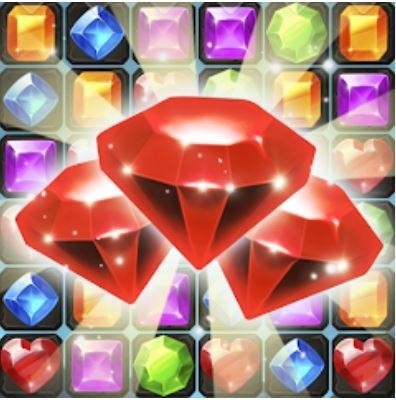
I fired up Diamond Dungeon on a slow Tuesday afternoon and the first thing that hit me was how straightforward the board looks. It’s a standard grid full of colorful gems, and you’re immediately swapping two adjacent ones to make a line of three or more. No opening cutscene, no complicated lore dump. You drag, you match, the gems pop, and new ones tumble down from the top. In those opening seconds, I almost dismissed it as just another match-3 skin. Then I noticed the turn counter in the corner, and that changed the whole mood.
The board feels generous at first. You’ll make a few obvious matches and watch the diamonds and rubies vanish with a satisfying little chime. But around the fourth or fifth move, you realize you aren’t just clearing for points. Some tiles have a faint cracked overlay, others have a chain wrapped around them, and there’s a small key icon buried under three layers of ice blocks on the left side of the screen. The game doesn’t announce what you’re supposed to be doing. It just waits for you to figure out that every level is a constrained puzzle, not a free-scoring sandbox. That quiet pressure is what makes the first minute stick. I felt like I’d walked into a room where everyone already knew the rules except me.
What You’re Actually Trying to Accomplish
Diamond Dungeon belongs to the puzzle-quest side of the match-3 family, not the endless marathon side. Each board is a single screen with a specific objective, and your moves are strictly limited. The core loop isn’t “match until the timer runs out.” It’s “figure out the cheapest path to break every obstacle and collect the target item before you run out of swaps.”
Most levels ask you to do one of three things: clear all the cracked floor tiles by making matches on top of them, free a set number of locked gems or keys by matching adjacent to their cages, or drop a specific treasure off the bottom of the board by clearing the column beneath it. Sometimes you get a mix of two goals, which is where the headache starts. You’re constantly optimizing the board state so that every single move does at least two useful things at once. A match that only clears three plain gems in the corner is basically wasted. You’ll learn to hate those moves.
The game tracks your progress with a star rating at the end. One star means you technically finished. Three stars mean you solved the puzzle efficiently, with moves to spare. I found myself restarting early boards not because I failed, but because I scraped through with one star and felt like I’d learned nothing. The optimization itch is real. You’ll start seeing the grid not as a pretty gem collection but as a tangled series of problems that need to be unwound in the right order.
The Trap That Ends Runs Before You Know It
I lost my first handful of levels to the same subtle mistake: I prioritized big flashy combos over positional cleaning. When you line up four gems, you create a special tile that clears a whole row or column when matched. It feels powerful. I’d chase those setups, burning three or four moves to manufacture a striped gem, then detonate it with a triumphant little fist pump. The problem is that a row-clearing blast doesn’t always hit the one cracked tile tucked in the corner, or the chained chest sitting on an island of unmatchable stone. I’d trigger my big move, watch half the board evaporate, and then stare at the five remaining objectives with zero moves left.
Another early run-killer is ignoring cascades you can’t see yet. The gems fall in from the top in a predictable pattern, but the game doesn’t preview what’s coming. If you clear the bottom of the board aggressively without thinking about what’s stacked above, you can accidentally bury the last key you need under a fresh pile of red diamonds that refuse to match with anything nearby. I started taking a three-second pause before every move to scan the top three rows and guess what would drop. It’s not foolproof, but it stopped me from creating dead columns where no matches are possible.
The third big mistake is treating obstacles as all equal. Cracked tiles just need one match on them. Ice blocks need two matches layered on the same spot. Chains need a match directly adjacent to break a link, and some items are locked inside cages that only open if you detonate a special gem right next to them. I’d squander moves chipping away at ice with regular matches while the turn counter ticked down, when what I really needed was to spend two moves building a bomb that would clear a whole cluster. The game rewards you for reading the board’s hierarchy. Deal with the most restrictive obstacle first, not the closest one.
Special Gems Are Tools, Not Trophies
You’ll discover the special gem combinations pretty quickly through trial and error. Match four in a row gives you a striped gem that clears a line. Match in an L-shape gives you a bomb that clears a small radius. Match five in a line creates a rainbow gem that, when swapped with any color, wipes every gem of that color from the board. The temptation is to pop these the moment they appear. I did that for my first ten levels and wondered why I kept finishing with zero moves and two stars missing.
The real skill is in holding them. The board only gives you so many opportunities to create specials, and if you waste a rainbow gem on clearing a color that wasn’t blocking anything important, you’ve thrown away your best tool. I started forcing myself to leave special gems untouched for two or three turns, even if they were sitting in a tempting spot. Often, the board would shift and suddenly that striped gem was perfectly aligned to slice through a row of ice blocks I couldn’t reach otherwise. Combining two specials—swapping a bomb with a striped gem, or a rainbow with a bomb—creates screen-clearing effects that can rescue a board that looks completely hopeless. But you need to set those up deliberately, not just stumble into them.
One practical thing I noticed: the game seems to spawn new gems with a bias toward colors you already have a lot of on the board. If you’re drowning in blue sapphires and there are no red rubies anywhere, don’t expect a red to magically appear when you clear a column. You might need to use a rainbow gem to manually delete the overpopulated color just to let other colors breathe. It’s a counterintuitive move—deleting gems you could match—but it resets the board’s balance and often opens up plays that were hidden.
Phone Versus Desktop: What Actually Changes
I tested Diamond Dungeon on both a laptop trackpad and a mid-range Android phone. The game runs in any modern browser with no download required, which is nice, but the control feel differs enough that it’s worth mentioning. On desktop, I used a mouse to click and drag gems. The precision is high, and I could hover over a tile for a second to double-check my plan before committing. That hover ability sounds trivial, but it saved me from at least a dozen misclicks where I almost swapped the wrong pair.
On a phone, you’re using your finger to swipe, and the touch targets are generous enough that I rarely grabbed the wrong gem. The tradeoff is that my thumb sometimes covered the exact tile I was trying to inspect. I’d move my finger, squint at the board, and realize I’d just missed seeing a cracked tile hiding under my own hand. Playing on a smaller screen also makes it harder to spot potential L-shaped matches at a glance. I found myself rotating the phone to landscape mode occasionally, which the game supports, just to get a wider view of the columns.
Performance-wise, I didn’t notice any lag on either device. The gem animations are snappy, and the cascade resolves quickly, which matters when you’re impatiently waiting to see if the fall created a lucky extra match. Battery drain is minimal. I played for about forty minutes on my phone and lost maybe six percent charge, so it’s not a hidden resource hog. If you’re stuck on a particularly tight level, I’d recommend desktop for the precision and the ability to physically lean back and study the board like a chess position. For casual clearing of earlier levels, phone is perfectly comfortable.
A Practice Routine That Won’t Burn You Out
After my initial flailing, I settled into a deliberate practice rhythm that helped more than just grinding levels. I started treating the first five levels of a session as a warm-up with a specific rule: I was not allowed to make any match that didn’t touch either an obstacle or the edge of the board. Center-only matches were banned. This forced me to constantly work the perimeter and the problem tiles, which is where the actual level objectives live. It felt unnatural at first—I’d see a beautiful four-in-a-row opportunity in the middle and have to let it go—but it rewired my scanning habits.
Next, I’d pick one level I’d already beaten with two stars and replay it with the goal of three-starring it without using any rainbow gems. Stripping away the most powerful tool made me respect the bomb and striped gem combinations more. I learned that two well-placed bombs on opposite sides of the board can do more targeted work than one rainbow wipe that clears a color indiscriminately. Replaying old levels also removes the pressure of progression. You already know the board is solvable, so your brain can focus on efficiency instead of survival.
For the truly stubborn boards where I kept falling one move short, I adopted a “two-minute stare” rule. Before touching anything, I’d set a timer on my phone and just look at the board for two full minutes. No swapping, no planning out loud, just silent observation. Almost every time, I’d spot a chain reaction I’d missed in my first eager scan—a column that would cascade three times if I just cleared the bottom tile, or a color that was one match away from forming an L-bomb on the left wall. Those two minutes felt agonizingly slow at first, but they probably saved me twenty failed attempts across a dozen levels.
I also recommend keeping a mental note of levels that teach a specific trick. There’s one early board with a single key locked behind three layers of ice in a narrow two-column corridor. That level is basically a tutorial on vertical special gem usage, and I replayed it four times until the lesson stuck. When you hit a wall later in the game, returning to that simpler board and re-solving it can remind your brain of a technique you’ve stopped using. The game doesn’t have a built-in practice mode, but nothing stops you from treating old levels as your personal training ground.
Reading the Board Like a Map
After about an hour of play, I stopped seeing individual gems and started seeing clusters of color as territories. Some sections of the board are “dead zones” where the colors are so mixed that making a match would take three moves of setup. You learn to avoid investing moves there unless absolutely necessary. Other sections are “hot zones” where two colors dominate and matches form almost automatically with each cascade. The smart play is often to trigger a cascade in a hot zone and let the falling gems do free work in the dead zone, rather than manually picking at the dead zone yourself.
You’ll also start noticing that obstacles near the top of the board are more urgent than ones near the bottom, even if the bottom ones look closer to completion. A cracked tile on the top row can ruin cascades for the entire board if left untouched, because every new gem that falls has to pass through that row. Clear it early, and everything below becomes easier to manage. I lost a memorable level because I spent eight moves meticulously clearing ice at the bottom, only to realize the top row was completely frozen and I had no way to get new gems into play. The board just stagnated.
When to Step Away
There’s a particular flavor of frustration that sets in when you’ve restarted the same Diamond Dungeon level eight times and your moves keep coming up one short. I learned to recognize the moment when I was making swaps faster and thinking less. That’s the signal to close the tab and come back in twenty minutes. The game doesn’t punish you for leaving—it saves your level progress automatically in the browser—and I solved three of my hardest boards on the first try after a break. Your brain keeps working on the puzzle in the background, and the board looks fresh when you return.
The game is free to play in any browser, no account needed, which makes it dangerously easy to binge. I’d recommend setting a mental cap of fifteen levels per session. Beyond that, my decision quality dropped noticeably, and I started blaming the random gem spawns for my own sloppy planning. Diamond Dungeon rewards patience more than speed. The players who thrive are the ones who treat each board like a little logic problem, not a slot machine.