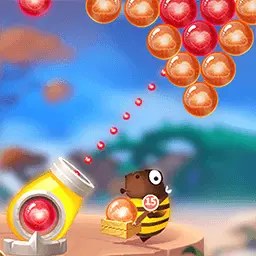
Bubble Legend is a free browser bubble shooter on Minigame, playable on phone, tablet, or desktop with no download or login. The catalogue lists no stages or controls, so this guide offers general genre tips. Best for casual players wanting quick, low-commitment sessions.
Bubble Legend is listed in the Hot Games category at Minigame, and the catalogue blurb is refreshingly short: play the minigame on your mobile, tablet, or computer, with no downloads and no login. That is the whole of the supplied description. There are no stage names, no level counts, no character lore, and no official control notes beyond the fact that it runs in a browser. So this walkthrough is built on what the catalogue actually confirms, plus modest, genre-based advice for bubble shooters in general. Where a tip comes from how these games usually behave rather than from the catalogue, it is labelled as such. Nothing here claims that anyone tested the game or finished it.
What the catalogue does and does not tell us
Confirmed facts first. Bubble Legend is a free browser game in the Hot Games section. It plays on phones, tablets, and computers. It requires no download and no account. That is the extent of the official information.
What the catalogue does not provide: a description of the playfield, a list of stages, the number of colours, a scoring formula, a timer, a move limit, or any official statement of the controls. The published headline promises stage-by-stage tips, and this article delivers that in the honest form: a stage-shaped framework you can apply as you move through the levels, with the caveat that the specific rules of each stage are not documented in the catalogue. If a stage introduces something new, treat the general advice below as your starting point and adjust to what you see on screen.
One more thing worth saying plainly. Bubble shooters are a well-established genre, and the habits that keep a run alive in them are fairly stable. That is the basis for the practical sections that follow. They are suggestions, not verified claims about Bubble Legend's internal rules.
How the loop usually works, and what you are optimising for
The core loop in a bubble shooter is simple to describe: you aim a bubble at a packed field, you fire, and the bubble sticks where it lands. Three or more matching bubbles in contact clear, and anything left hanging without a connection drops. Repeat until the field is cleared or the run ends.
Everything you do in a level is really an answer to one question: which shot gives you the most value? Value comes from three places, and they usually trade off against each other.
- Clearing: removing bubbles, which is the obvious goal and the one most players chase first.
- Structure: weakening the shape of the field so future shots have more to grab onto and more to drop.
- Access: opening a lane to bubbles that are currently shielded, because shielded clusters are what make late stages feel hard.
In the early stages of a typical bubble shooter, clearing and structure point the same way. The field is shallow, the colours are few, and most shots work. Difficulty arrives later, when the field is deeper, the ceiling is more crowded, and a single wasted bubble changes the shape in your favour or against it. That is the point at which the advice below starts to matter.
Early stages: build good habits while it is easy
Early levels are practice, whether or not the game frames them that way. Use them to lock in three habits.
First, aim at the lower part of the field. Low shots are easier to match because the surrounding bubbles are dense and the geometry is simple. High shots into a thin ceiling are where misses go to die.
Second, notice where the field is thin. A cluster that hangs by a single attachment point is a future windfall. You do not have to attack it immediately, but knowing it is there changes which shots you prefer.
Third, watch your own aim. Bubble shooters live and die on the rebound. If a bank shot off a wall is available, even in an easy stage, take a few of them deliberately. The early stages are the cheapest place to learn how the aiming line behaves.
Resist the urge to rush. There is nothing in the catalogue to suggest a reward for speed, and a careful early stage gives you a cushion for the harder ones.
Middle stages: choose targets by what they unlock
As stages get harder, the field stops being a flat wall and starts having pockets. Some bubbles sit behind others. Some clusters dangle. The temptation is to keep clearing the easy front face because it is satisfying and the matches are obvious. That is usually a mistake.
Ask, before each shot, what the shot unlocks. A match in the middle of a solid block is fine, but a match that cuts a support and drops a whole section is better. Look for the narrowest connection between a large cluster and the rest of the field. That is your target. In most bubble shooters, dropping bubbles is worth more than popping them one match at a time, and the shapes that hang by one or two points are the ones worth engineering.
Also start tracking colours. In a crowded field, you will often have a current bubble and a next bubble visible. If you can see both, plan two shots ahead rather than one. If the pair does not work together, spend the first shot on a safe placement that sets up the second.
Late stages: protect the ceiling and stop wasting shots
Late stages in bubble shooters are usually lost by pressure, not by a single bad decision. The ceiling creeps down, the space to aim shrinks, and every missed shot adds to the pile. Two habits help.
First, treat the top of the field as a resource. Shots that land high and stick to nothing useful are expensive. If you cannot make a match, prefer a placement that sits low and stays out of the way over a placement that clutters the ceiling.
Second, when the field is tight, favour shots that clear over shots that set up. A two-shot plan is a luxury when space is short. Take the match in front of you if it exists, and keep the field from growing.
Third, and this is the one players skip: when a stage feels stuck, stop firing for a moment and read the board. Find the bubbles you cannot reach, then work backwards to the shot that would open them. Late-stage puzzles are usually about access, not about matching skill.
Mistakes that end runs early
These are common in the genre, and they are worth naming plainly.
- Firing without a target. A shot with no plan still changes the field, and usually for the worse. If nothing matches, choose the least harmful placement, not the most convenient one.
- Ignoring the next bubble. If the game shows your next bubble, ignoring it wastes half your information. Plan the pair.
- Over-clearing the front face. Stripping the easy layer feels productive but can leave you with nothing to match against in the harder layers behind it.
- Chasing a single colour. Holding out for one perfect match while the field grows is a losing trade in most bubble shooters.
- Panicking at the ceiling. When pressure builds, players fire faster. Faster shots are less accurate. Slow down instead.
- Restarting too quickly. If a stage goes badly, look at the board before you leave it. The shape of the failure tells you what to do differently.
Phone, tablet, or desktop
The catalogue confirms the game runs on mobile, tablet, and computer, with no download and no login. That is all it says about platforms, so the following is general advice rather than a claim about how Bubble Legend performs on any device.
On a phone, aiming precision is the thing to watch. Your finger covers part of the screen, and small aim adjustments are harder than they look. If the game supports drag-to-aim, dragging away from the bubble before releasing usually gives you more control than tapping directly. If it is tap-to-fire, expect to miss more often on narrow gaps and compensate by choosing wider targets.
On a tablet, the larger screen helps with reading the field, but the same finger-occlusion problem applies. Hold the device so the aiming area is not under your hand.
On a desktop, a mouse is generally the most precise aiming tool of the three, and it is a reasonable choice for stages that demand bank shots or tight angles. If a stage keeps beating you on a phone, trying it with a mouse is a practical experiment, not a cheat.
Free browser play means there is nothing to install and no account to manage, so switching devices between attempts costs you nothing.
A short practice plan
You do not need a long session to improve. A focused one works better.
Five minutes on aim. Play an early stage and take only deliberate shots. Aim at specific bubbles rather than at the general area. If a bank shot is available, take it.
Five minutes on structure. In the next stage, ignore easy matches unless they help. Look for the weakest connection in the field and try to cut it. Notice how much drops.
Five minutes on reading. When you get stuck, pause before firing. Name the bubbles you cannot reach out loud, then find the shot that opens them. This is the skill that carries you through harder stages.
Then stop. Short sessions with a clear focus beat long sessions where you fire on autopilot. Come back later with the same plan.
What to expect as you go
The honest summary is this. Bubble Legend is a free browser bubble shooter on Minigame, playable on phones, tablets, and computers with no download or login. The catalogue does not document its stages, so a literal stage-by-stage guide is not possible from the supplied facts. What is possible, and what this article offers, is a stage-shaped way of thinking: build aim and structure habits early, choose targets by what they unlock in the middle, and protect space and access when the field gets tight.
If a stage introduces a rule that contradicts this advice, trust the screen over the article. The general habits, though, tend to hold. Aim with intent, match for value rather than convenience, and treat every shot as a change to the shape of the board. That is the whole walkthrough, and it is enough to start.