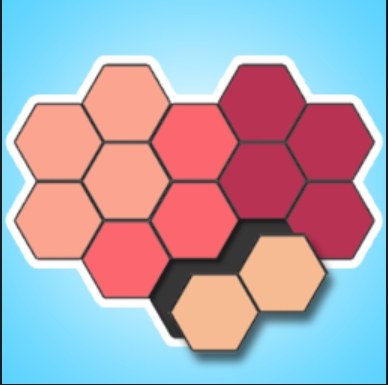

Match Shapes is a free browser shape-matching puzzle with no official description, so this combo guide sticks to general genre logic. Best for casual puzzle fans who want practical chaining tips.
Match Shapes is a shape-matching puzzle game you can play free in a browser. That is the whole of what the catalogue tells us, and it is worth being honest about that up front. There is no supplied description and no instruction sheet to quote, so anything I write about specific screen layouts, named power-ups or level counts would be guesswork dressed up as fact. What I can do is treat Match Shapes as what its name implies: a match-style puzzle built around identifying and clearing shapes, and then talk about how combos tend to work in that family of games.
That distinction matters for a combo guide. The advice below is general play logic for shape and tile matching, the kind of thing that holds across most games in the genre. Treat it as a starting point you test against the actual board in front of you, not as a leak of hidden mechanics.
What a combo actually is in a matching game
A combo is a chain. You clear something, that clear changes the board, and the changed board lets you clear again without the game resetting your progress. The reward for chaining is usually a multiplier or a bonus effect that a single clear would not produce. In most matching games, the value of a combo grows faster than the number of moves you spend on it, which is why chasing chains beats clearing whatever is easiest.
There is a second meaning worth keeping straight. Some games call any quick successive match a combo, measured in seconds rather than in board state. If Match Shapes works that way, the skill is speed and recognition. If it works the board-state way, the skill is planning. You will know within a minute of play which one you are dealing with, because a timer version punishes hesitation and a planning version punishes impulsiveness. Adjust accordingly rather than forcing one style onto the other.
What you are optimizing for
In a matching game, the raw objective is to clear the board conditions the game sets — usually hitting a target, emptying a region, or surviving a move limit. The combo layer sits on top of that as an efficiency tool. You are not optimizing for the biggest single chain in isolation. You are optimizing for chains per move, because moves are the scarce resource in almost every variant of this genre.
That reframing changes your decisions. A four-piece chain that costs one move is worth more than an eight-piece chain that took four moves to set up, unless the long chain also clears an objective you needed anyway. Before you start hunting combos, work out what the game is actually asking you to remove. If you do not know your win condition, you will build impressive-looking chains in the wrong corner of the board.
Once you know the win condition, rank your moves by a simple question: does this clear something the level wants, and does it leave the board better for the next move? Moves that fail both tests are filler. Filler is how runs end.
Where combos usually come from
Without confirmed mechanics I cannot tell you which specific shapes or arrangements pay off in Match Shapes. I can tell you the four sources that combos come from in nearly every matching game, and you can check which ones exist on your board.
- Cascades. Clearing pieces lets others fall or shift into a new match. Cascades are the cheapest combos because you did not plan them, you just left the board in a state that produced them. Setting up a cascade is often better than taking the match in front of you.
- Cluster clears. Removing a large connected group at once usually scores more than the same number of pieces removed in small batches, and it reshapes the board more dramatically, which creates more cascade chances.
- Positional triggers. Corners and edges are harder to reach and often hold the pieces that block the most useful lines. Clearing into a corner can unlock a whole region.
- Sequenced clears. Two clears in the same area, one after the other, often accomplish more than two clears in different areas, because the second one benefits from the space the first one opened.
The practical takeaway: combos are usually a by-product of board shape, not of a special move you unlock. If you want more of them, stop taking the first available match and start asking what the board looks like after you take it.
Mistakes that end runs early
These are the common failure patterns in matching games. Check them against your own play.
Clearing on autopilot. The single biggest run-killer. If you take every match you see, you never build anything, and you burn moves on pieces that were not in your way. Slow down for the first ten moves of a level. Read the board before you touch it.
Ignoring the objective. Plenty of players chase score or combos when the level wants a specific region cleared or a specific target hit. Score is rarely the thing that fails you.
Breaking your own setup. You arrange pieces to set up a chain, then get impatient and clear one of the pieces that was holding the arrangement together. Patience is a mechanic here.
Hoarding. The opposite error. Some players refuse to clear anything until the perfect chain appears, and they run out of moves with a half-built board. A good combo you can actually take beats a perfect one you cannot.
Working the easy side. The accessible area of the board is usually the area with the least useful pieces. If you keep clearing where it is convenient, the difficult region stays difficult until it is the only thing left and you no longer have the moves to deal with it.
Panic-clearing near the end. When moves are low, players start grabbing anything. That is when a planned two-move finish turns into a four-move scramble that does not complete. Plan the ending before you are in it.
Phone versus desktop
Matching games usually come down to how precisely you can select a piece. On a phone, your finger covers part of the board, and on a small grid that matters. Expect to misjudge adjacent pieces more often, especially near the edges where your hand sits over the area you are trying to read.
Desktop play with a mouse or trackpad is generally more precise, and a larger screen makes it easier to scan the whole board at once, which is exactly the skill combos depend on. If you are trying to learn the game's patterns, desktop is the friendlier place to do it. If you are playing on a phone, consider whether the game supports zoom or a larger board view before you blame your planning.
One honest caveat: I cannot confirm what Match Shapes does on either platform. Test it yourself and adjust. The general principle — precision matters more as the board gets denser — holds either way.
A short practice plan
Session one: read, do not score. Play a few rounds where you spend five seconds looking before every move. Your goal is not to win. Your goal is to notice where pieces cluster and which areas of the board are hard to reach.
Session two: plan two moves ahead. Before each move, decide what your next move will be if the board falls the way you expect. If it does not, you have learned something about how the game redistributes pieces. That knowledge is the foundation of every combo.
Session three: hunt cascades. Deliberately leave the board in states that might produce a chain, and take a slightly worse immediate match to see if the cascade pays off. You will get it wrong sometimes. You will also find out whether Match Shapes rewards this at all.
Session four: play for the objective only. Ignore score and combos entirely. Clear only what the level asks for. Compare your results to earlier sessions. If your completion rate improves, your combo hunting had been pulling you off-task.
After four sessions you will know more about Match Shapes than any generic guide can tell you, because you will have tested it against the actual board. That is the only version of this advice that is worth anything.
The short version: combos in a shape-matching game come from leaving the board better than you found it. Take fewer obvious matches, think one move further ahead, and keep your eye on what the level actually wants cleared. Everything else is detail you can only learn by playing.