First Minute on the Field I loaded up Meteorite Shooter expecting a quick dopamine hit, and the first 60 seconds didn't disappoint. You're dropped into a fixed screen with a ship at the bottom, rocks tumbling from above,
First Minute on the Field
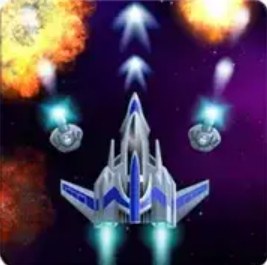
I loaded up Meteorite Shooter expecting a quick dopamine hit, and the first 60 seconds didn't disappoint. You're dropped into a fixed screen with a ship at the bottom, rocks tumbling from above, and a basic cannon that fires when you tap or click. The first thing I noticed was the sound—chunky, satisfying thwacks when shots connect, and a low hum that grows as debris gets thicker. No tutorial pops up, which I actually appreciated. You learn by losing. My first death came at 47 seconds because I backed myself into a corner trying to dodge three mid-sized chunks that split into smaller, faster shards. That's the game's signature move, and you'll see it a lot.
The visual style is clean but not sterile. Meteorites have a subtle glow, and the starfield behind them scrolls slowly, so you always feel like you're drifting forward even though the ship stays put. Your shot pattern starts as a single thin line but widens as you grab power-ups, which float down occasionally—usually right when you're about to get overwhelmed. I found myself talking to the screen by the second run. "Just one more pick-up, come on." That's a good sign for a browser game you can play free during a lunch break.
The Loop That Keeps You Clicking
Meteorite Shooter runs on a simple survival loop, but the thing you're actually optimizing for changes depending on your mood. Officially, you want a high score. The counter ticks up with every rock you destroy, and larger asteroids give more points before they break apart. But after a few rounds, I realized I was playing for something else: control. The game throws waves at you, and each wave introduces slightly denser patterns or faster-moving fragments. Surviving isn't just about reflexes. It's about managing screen space and deciding which threats to erase first.
The weapon upgrades are the real hook. You start with a pea shooter, but soon you'll see icons for spread shots, rapid fire, and a brief shield that pulses outward and clears nearby debris. These don't last forever. You'll lose an upgrade if a rock clips your wing, and that's where the risk-reward thinking creeps in. Do I hug the left edge to funnel asteroids into a tight firing lane, or stay center to grab a power-up that might spawn right under a falling boulder? I lost several good runs because I got greedy for a triple-shot icon, darted forward, and ate a fragment I didn't see coming. The game punishes impatience quietly. You just explode, and the score screen appears with no fanfare.
There's no end boss or level progression. This is a pure arcade-style shooter, and if you're the type of player who needs a narrative or an unlock tree, you'll bounce off fast. But if you like chasing a number and trying to beat your own best, the loop holds. My highest score sat around 4,200 after five runs, and someone on a forum mentioned hitting 8,000, which felt absurd. That gap kept me playing. I wanted to know what wave 8,000 points required, because the difficulty curve ramps smoothly but not cruelly. You get a breath between waves—maybe two or three seconds—and that pause resets your nerves just enough.
Mistakes That End Runs Early
I made every classic mistake in my first ten minutes, so let me save you the frustration. The biggest one is tunnel vision on the largest meteorite. When a big rock slides onto the screen, your instinct is to unload everything on it. That works, but the moment it splits, you now have two medium chunks moving in opposite directions and possibly four small ones after those break. If you didn't clear a path behind you, those fragments will pinch you against the border. I learned to shoot large asteroids early, when they're near the top of the screen, so the children scatter into empty space instead of my flight path.
Another run-killer: ignoring the corners. Your ship moves freely, but the edges of the screen are magnetic death traps. It's easy to drift left while tracking a dense cluster, then realize you've got no room to dodge a stray shard coming from the right. I started keeping my ship roughly in the center third of the screen, even if that meant letting a few rocks pass. You don't get points for dodging, but you lose everything for getting hit. One subtle thing I noticed: the hitbox on your ship is smaller than the sprite suggests. You can graze the edge of a meteorite and survive, which rewards calm movement over panicked juking.
The third common error involves power-up timing. When a weapon upgrade appears, don't immediately chase it. Check the trajectory of any debris already in motion. I died twice snagging a spread-shot icon while a trio of fragments slid in from behind, perfectly timed to arrive as I reversed direction. Also, the shield power-up is more valuable than it looks. I ignored it early on because it doesn't boost your score directly, but popping a shield at the start of a dense wave can let you play aggressively, clear more rocks, and spawn additional pick-ups. I started treating it like a reset button for bad positioning.
Finally, don't underestimate the small fragments. They're fast, hard to see against the starfield, and often arrive in groups. After a big asteroid breaks, I now sweep the area with a few extra shots even if I think I got everything. That habit alone pushed my average survival time up by maybe 20 seconds.
Who Should Actually Play This
Let's be direct. Meteorite Shooter is not for everyone. If you love deep upgrade systems, character builds, or games where you can grind to overpower content, this will feel shallow. There's no meta-progression. Every run starts from zero, and the only thing that carries over is your own muscle memory. That purity is exactly why a certain group of players will adore it.
First, fans of classic arcade shooters like Asteroids or Space Invaders will feel right at home. The controls are responsive, the threat patterns are readable, and the difficulty comes from execution rather than stat checks. You die because you moved wrong, not because your gun wasn't leveled enough. Second, people who only have short play windows. A full run might last three to eight minutes once you're competent, and the game loads instantly in a browser tab. I played between meetings and never felt like I was leaving something unfinished. There's no save state, no checkpoint, just a score and a restart button.
Third, competitive friends. The score counter is front and center, and because the game doesn't rely on random loot, two players with equal skill should get comparable results. I sent my high score to a coworker and he beat it in two tries. We traded the top spot back and forth for a day, and that rivalry added life to a game that has no built-in social features. If you enjoy that kind of low-stakes competition, Meteorite Shooter works as a shared benchmark.
On the flip side, if you need a story, character customization, or a sense of permanent progress, you'll probably close the tab after a few runs. The game doesn't explain itself beyond the title screen, and there's no reward for dying except knowledge. Some players find that meditative. Others find it pointless. Know which camp you're in before you invest the time.
Device Notes: Phone vs Desktop
I tested this on a laptop with a trackpad, a desktop with a mouse, and an Android phone. The experience shifts in ways worth mentioning. On desktop, mouse controls give you precision that feels almost unfair once you're used to it. You can snap to a position instantly, track multiple rocks with your peripheral vision, and fire with a satisfying click. Keyboard arrow keys also work, but I found them slightly mushier for tight dodges. If you have a choice, mouse is the way to go.
On mobile, the game uses touch: drag your finger to move the ship, and firing is automatic. This simplifies things, but it introduces a visibility problem. Your finger blocks the lower portion of the screen, right where your ship lives, and if a stray fragment sneaks in from below, you won't see it until your hand moves. I compensated by holding the phone with one hand and using my index finger to control the ship, keeping my hand higher than usual. It felt awkward for the first few minutes but became natural. The touch response is snappy, no noticeable lag, and the game didn't heat up my phone even after 20 minutes of play. That's a plus for a free browser game you can pull up anywhere.
Tablets probably offer the best mobile experience—more screen real estate means less finger obstruction—but I didn't test one. If you're on a smaller phone screen, expect to die a few times to hidden asteroids before you adjust your grip. One more note: the game runs smoothly on older hardware. My test laptop is a few years old with integrated graphics, and I saw no frame drops even when the screen filled with debris. The developer kept the particle effects modest, which helps performance.
A Short Practice Plan to Get Decent
If you want to break past the 2,000-point wall where most casual players stall, I put together a quick training approach based on my own trial and error. This isn't a formal guide, just what worked for me across maybe 15 runs.
Run 1: No shooting. Spend an entire run without firing a single shot. Focus only on movement, weaving between rocks, and learning the edges of your hitbox. You'll die fast, probably under a minute. That's fine. The goal is to internalize how the ship handles under pressure without the distraction of aiming. I did this twice and immediately noticed I was over-dodging—jerking the ship too far when a small nudge would suffice.
Run 2: Corner control. Play normally, but every 15 seconds, consciously return your ship to the center of the screen, even if it means abandoning a shot. This builds a habit of resetting your position. Most deaths come from drifting into a bad spot and not realizing it until escape is impossible. After this drill, I caught myself auto-correcting without thinking.
Run 3: Power-up priority. For one full run, every time a power-up appears, make it your primary objective—but only after clearing a safe path. Don't grab it immediately. Pause, sweep the area, then move. This teaches you to balance greed and safety. I died a lot during this drill, but the lesson stuck: a power-up collected under fire is worth less than one collected cleanly.
Run 4: Fragment sweep. After destroying any large or medium asteroid, fire two extra shots into the space where it broke apart. Do this consistently, even if you think the fragments are gone. This becomes automatic after a while and drastically reduces surprise deaths from tiny, fast-moving shards.
Run 5: Full attempt. Play to beat your previous high score, applying all the habits from the earlier runs. Don't restart if you die early. Play out every life to build endurance. My score jumped about 1,500 points after this sequence, and the game felt less chaotic. I could see patterns in the meteorite spawns instead of just reacting.
You can repeat this cycle whenever you hit a plateau. The drills isolate specific skills, and because runs are short, you're not losing much time. Five runs might take 20 minutes total, and you'll walk away measurably better.
What Keeps It Installed
I've kept Meteorite Shooter bookmarked because it does one thing well: it respects my time and doesn't pretend to be more than it is. There's no daily reward pop-up, no ad between runs, no currency to manage. In a landscape where free browser games often drown you in interruptions, this one loads fast and lets you play. The score chase is real, and I still haven't cracked 8,000 points. That unfinished business sits in the back of my mind.
The game won't convert someone who dislikes arcade shooters. But if you're even slightly drawn to the genre, or if you need a quick mental reset that demands focus without punishing you for stepping away, it fits. I find myself returning not because I want to unlock something, but because I want to see if I'm sharper than I was yesterday. That's a quiet, honest appeal, and it works.