Bubble Up is a straightforward puzzle game where you match colored bubbles to clear the board, offering a quick, no-frills session for casual players. It suits anyone seeking a simple pattern-recognition challenge without story or progression systems. This guide covers the core loop, common mistakes, and a practice plan to help beginners improve.
Bubble Up is a straightforward puzzle game, and that is exactly what makes it a good candidate for a quick session when you have a few minutes to spare. The core premise is simple: you are matching bubbles to clear them from the board. There is no elaborate storyline to follow, no character progression to manage, and no hidden lore to uncover. What you get is a clean, direct challenge about pattern recognition and planning.
Because the catalogue entry does not include a detailed feature list or an official instruction manual, this guide sticks to the fundamentals that apply to the genre. We will cover the basic loop, the common mistakes that end runs early, and a practical practice plan to help you get past the opening stages without frustration.
The Core Loop: Match, Clear, Repeat
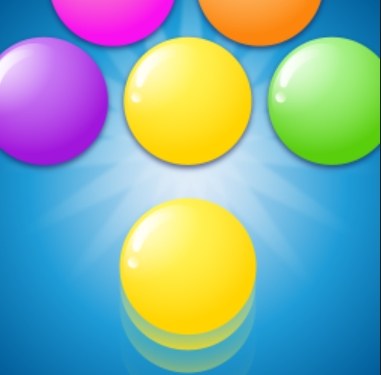
If you have played any bubble-shooter style game before, the rhythm is familiar. A grid or field is populated with colored bubbles. You are given a single bubble at the bottom of the screen, and your job is to aim and fire it upward. When your fired bubble makes contact with a group of two or more bubbles of the same color, that group pops and disappears from the board. The bubbles above the cleared group may fall if they lose their anchor, and the game continues until you clear the field or the board fills up to a danger line.
In Bubble Up, the objective is not complicated. You are optimizing for board clearance. Each shot should be evaluated not just on whether it makes a match, but on whether that match destabilizes the rest of the layout. A single well-placed shot can cause a chain reaction that clears a third of the board, while a careless shot can leave a floating cluster that becomes impossible to reach cleanly.
The key metric you are managing is space. The bubbles at the top of the screen are static, but your available space shrinks with every shot that fails to create a match. This means every shot is a cost. You are not just popping bubbles; you are managing a budget of safe moves before the ceiling drops down on you.
What You Are Really Optimizing For
Early levels in any bubble game are usually forgiving. The designers give you a small board with a limited color palette, maybe three or four distinct bubble colors. This is not an accident. With fewer colors, matches are easier to find, and the layout is sparse enough that you can make a few mistakes without immediate punishment.
What you are optimizing for in these early stages is angle economy. You want to find shots that do double duty. A single bubble fired into a gap that separates two clusters of the same color can clear both sides in one shot. Look for those shared walls. If you see a red bubble sitting directly below another red bubble, but they are separated by a single blue bubble, your shot should target the blue bubble from an angle that causes the reds to touch.
You are also optimizing for drops. In most bubble games, when you clear a cluster, any bubbles that were hanging on to that cluster from below will detach and fall. Those falling bubbles count as cleared, even if they do not match anything. This is a free bonus. A smart shot is one that clears a cluster at the edge of the board, causing a cascade of unrelated bubbles to tumble down. That cascade does not require aiming, just timing and placement.
Finally, you are optimizing for color management. The game will feed you a sequence of bubbles, and you cannot control which color comes next. Early on, you might get a run of three red bubbles in a row. If you use them immediately on the first red cluster you see, you might waste the next red shot on a board that has no red clusters left. Instead, hold your fire. Look at the upcoming bubble in the queue, and if it is the same color as your current shot, plan a shot that sets up a larger cluster for the follow-up.
Mistakes That End Runs Early
Most failed attempts in the opening levels are not caused by a lack of aiming skill. They are caused by a handful of recurring judgment errors. Here are the concrete ones to watch for.
Shooting at the top row immediately. It is tempting to take the easy shot, especially when a cluster is sitting right at the top of the board. But clearing the top row often leaves a wide open space underneath a second row of bubbles. That second row becomes harder to reach because you now have to arc your shot over empty space, and arcing shots are less predictable. Instead, work from the bottom of the cluster upward. Clear the lower anchors first, and let the upper bubbles fall on their own.
Ignoring the side walls. The left and right edges of the board are your friends. A bubble fired at a steep angle will bounce off the side wall and change its trajectory. This is not a bug; it is a tool. Use the walls to reach bubbles that are tucked into corners. A straight vertical shot will miss a bubble that is only slightly off-center, but a wall bounce can hit it dead on. In early levels, you will rarely need this, but practicing the wall bounce early will save you later when the board gets crowded.
Chasing a single color for too long. If you have a red bubble in your queue and the board has no red clusters within reach, do not force it. Fire it at a neutral spot, maybe near a cluster of another color, to set up a future match or simply to get it off the board. Holding onto a useless bubble while the ceiling drops is a slow death. Sometimes the best shot is a throwaway shot that buys you a better angle on the next turn.
Forgetting to check the next bubble. Most bubble games show you the upcoming bubble in the queue, sometimes two or three ahead. Glance at that preview before every shot. If your current bubble is blue and the next one is also blue, you have a two-shot combo available. Use the first shot to create a bridge between two blue clusters, then the second shot to trigger a massive clear. If you ignore the queue, you will frequently waste a combo opportunity.
Firing too fast. The game does not penalize you for taking ten seconds to aim. There is no timer on individual shots in most levels. The only timer is the descending ceiling, which moves after each shot. So take your time. Line up the trajectory, check the walls, check the queue, and then fire. A rushed shot is the most common cause of a dead run.
Device Notes: Phone vs. Desktop
Since Bubble Up is a browser-based game, you have the option to play on either a phone or a desktop computer, and the experience differs meaningfully.
On a phone, you are using touch input. This gives you a direct line of sight to the exact bubble you want to hit. You drag your finger to set the trajectory, and the game usually shows a dotted line indicating the predicted path. The downside is that your finger covers part of the screen, particularly the lower portion where your current bubble sits. To compensate, aim with the edge of your finger or use a stylus if you have one. Also, be mindful of screen glare. A bright window behind you can wash out the color distinctions, and color matching is the entire game. Adjust your screen brightness or angle the device until the colors are vivid and clearly distinct.
On desktop, you have a mouse, which offers finer control for precise angle adjustments. The dotted trajectory line is easier to see, and your hand does not obscure the board. The trade-off is that you might be tempted to use keyboard shortcuts if they exist, but without confirmed catalogue details, assume mouse-only controls. The larger monitor also makes it easier to scan the whole board at a glance, which helps with planning chain reactions.
If you are struggling on one device, try the other. Some players find the touch interface more intuitive for this genre, while others prefer the precision of a mouse. Neither is objectively better, but one will likely feel more comfortable to you personally.
A Short Practical Practice Plan
If you want to improve quickly, do not just replay the same level over and over. Instead, run a focused drill session for about fifteen minutes.
Start with ten minutes of deliberate aiming. Do not try to win. Just fire shots at different angles and watch how the bubbles bounce. Pay attention to the wall rebound. Fire a shot at a 45-degree angle into a corner and note where it lands. Then fire one at a 30-degree angle. Build a mental map of how the angle changes the final position. This is boring, but it is the foundation of every good shot.
Next, spend five minutes on the queue drill. Before every shot, say out loud what color the next bubble is. Then say out loud whether your current shot sets up a match for that next color. If it does not, adjust your aim. This forces you to stop tunnel-visioning on the immediate match and start thinking one move ahead.
Finally, spend two minutes on the drop drill. Look for clusters that are positioned above a gap. Fire at the lowest bubble in that cluster, not the highest. Watch how many bubbles fall as a result. Count the free clears you earn from a single shot. If you get more than three falling bubbles, that was a great shot. If you get zero, the cluster was too stable, and you need to look for a better entry point.
After that fifteen-minute drill, go back to playing normally. You will notice that you are firing slower, checking the queue more often, and using the walls naturally. That is the goal. Do not rush the process. The early levels are there to teach you these habits, and if you build them now, the later boards will feel far less chaotic.
Bubble Up rewards patience and observation, not speed. Keep your shots deliberate, watch the whole board, and let the cascades do the work for you. The bubbles will pop, the board will clear, and the next level will be waiting.