Bubble Spinner is a free browser action game where you clear bubbles around a rotating spinner. No download or login needed on phone, tablet, or desktop. Suits casual players who prefer tidy, thoughtful runs over reflexes.
Bubble Spinner is listed in the Minigame catalogue under Action, and the supplied description is refreshingly short: play it at Minigame, on mobile, tablet, or computer, with no downloads and no login. That's the whole official brief. There is no lore, no character roster, no release history in the notes, and no control scheme spelled out. What we can say with confidence is narrow but useful: the game is free to open in a browser, it runs on the three device types the catalogue names, and the automated check confirms it loaded on desktop, with a load time of roughly ten seconds and no controls recorded in the metadata.
That last detail matters more than it looks. A ten-second load on desktop is a real wait, not an instant one. If you're sitting down for a quick run, budget for that pause before the board appears. And the empty controls field doesn't mean there are no controls. It means the automated check didn't capture any. So the practical advice below is built on the one thing the name and category do establish: a spinner. Something rotates, bubbles are involved, and the action label tells you the pace is likely brisk rather than turn-based. Everything beyond that is a working assumption you should test in your first minute of play, not a fact handed down from the catalogue.
What the loop is probably asking of you
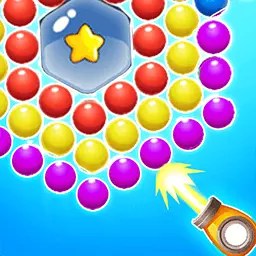
A spinner sits at the centre of the play space. Bubbles gather around it, and your job is to clear them before the arrangement gets out of hand. That's the shape the title implies, and it lines up with the Action category, which on a free browser site usually means continuous motion, a score that climbs, and a run that ends when something fills up or gets missed.
If that's the shape, then the thing you're optimising for isn't speed. It's placement. In most spinner-style games, every shot has two jobs: remove what's in front of you, and avoid setting up a worse position behind it. Players who only do the first job hit a wall fast. The board doesn't get harder because the game speeds up. It gets harder because your own earlier shots left awkward gaps and dangling clusters that you now have to work around.
So the mental target is control, not aggression. You want the board to look tidy after your move, not just smaller. A tidy board gives you options. A messy one forces your hand.
Where casual runs fall apart
These are the failure patterns that show up again and again in rotation-based bubble games. Treat them as things to watch for in your own play, and confirm which ones actually apply once you've seen the board.
- Shooting the nearest bubble instead of the useful one. The closest target is almost never the best target. Before you fire, glance at the whole ring and ask which removal opens up the most space.
- Ignoring the rotation. If the spinner turns, the gap you're aiming at will move. Players who line up a shot and then wait lose the angle. Decide, then fire.
- Stacking colour in one sector. Clustering similar bubbles together feels efficient in the moment. It usually creates a dense block that's hard to break later, because you can't reach the interior.
- Chasing a big clear over a safe one. A four-bubble pop that leaves the board balanced beats a six-bubble pop that leaves a spike hanging.
- Panicking when the pace rises. Speed pressure makes you fire faster, not better. If the board is getting tight, slow your decision by half a second, not your click.
- Playing past the point of focus. Short sessions beat long grinds. When your accuracy drops, stop, reset, and come back. That's not a cop-out; it's how you build the pattern recognition the game rewards.
Notice that none of these are about reflexes. Reflexes matter, but they're the last thing to fail. Decision quality fails first, and it fails quietly, one lazy shot at a time, until the board is unplayable and you're not sure how it got there.
Phone, tablet, or desktop
The catalogue says Bubble Spinner runs on all three. That's a genuine convenience, and it changes how you should approach a session.
On desktop, you get the largest view of the board, which makes it easier to read the whole ring at once and spot the shot that opens space rather than just clears it. The trade-off is the load time the automated check recorded: about ten seconds. That's fine if you're settling in for a handful of runs, less fine if you wanted a thirty-second break.
On a phone or tablet, the game is right there with no download and no login, which is the whole appeal of a browser game. The constraint is screen size. A smaller view makes it harder to track the full arrangement, so you'll naturally focus on the near bubbles, which is exactly the habit that ends runs early. If you play on mobile, make a deliberate effort to scan the outer edge before each shot. It costs a beat and saves a lot of boards.
One more note on the missing controls data. Because the automated check didn't record a control scheme, don't assume touch and mouse behave identically. Test both if you switch devices. The first minute of a session is the right time to figure out how aiming and firing feel, before the board gets busy.
A short practice plan
You don't need a long regimen. Fifteen minutes, structured, beats an hour of unfocused tapping.
First five minutes: read, don't score. Open the game and play slowly on purpose. Your only goal is to understand the board. Where does new material appear? Does the spinner change direction? What happens when a cluster gets too dense? You're not chasing a number here. You're building a map.
Next five minutes: one rule. Pick a single constraint and hold it for every shot. Good options: never fire at the closest bubble, or always clear from the outside in. One rule at a time. If you try to fix everything at once, you fix nothing.
Last five minutes: full speed, no regret. Play normally. When a run ends, spend ten seconds identifying the shot that actually killed it. Not the last shot, necessarily. The one two or three moves earlier that boxed you in. That's the habit that transfers between sessions.
Then close the tab. The catalogue's no-login setup means there's nothing to manage, no daily streak to protect, no account to check. That's a feature. It means you can treat Bubble Spinner as a short, repeatable exercise rather than a commitment, and short repeatable sessions are how casual strategy actually improves.
Keeping expectations honest
Everything specific above about how the board behaves is inference from the title and the Action category, not from the catalogue notes. The notes tell us the game exists, it's free, it loads in a browser on phone, tablet, or computer, and it needs no download or login. The desktop load took about ten seconds in the automated check. No controls were recorded.
So the honest position is this: the strategy principles here are sound for rotation-and-bubble games generally, and you should verify them against the actual board within your first couple of runs. If the spinner works differently than expected, adjust. The core advice survives either way, because it isn't about a specific trick. It's about slow decisions, tidy boards, and stopping before your accuracy falls off a cliff.
That's the whole approach. Open it in a browser, play a few short runs, watch what your own shots do to the space around them, and let the game teach you the rest.