First Minute In: Quiet Panic I opened Meteorite Shooter expecting something breezy, maybe a few rocks to blast while I waited for coffee. What I got was thirty seconds of calm, then a screen full of glowing death. The ve
First Minute In: Quiet Panic
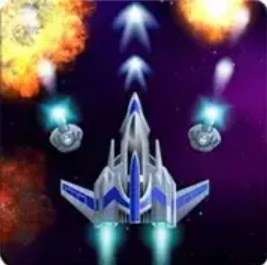
I opened Meteorite Shooter expecting something breezy, maybe a few rocks to blast while I waited for coffee. What I got was thirty seconds of calm, then a screen full of glowing death. The very first wave feels like a tutorial the game forgot to code. A handful of slow-moving meteorites drift down. You tap or click to destroy them, and for a moment you think you've got this. Then the second wave spawns before the first is even cleared. Chunks split into smaller, faster fragments. By the one-minute mark I had already lost a ship and my palms were slightly damp. That’s the real introduction: this game is not here to ease you in.
What struck me most was the audio. The sound design is minimal, but the low hum that builds as the screen fills up does something to your heart rate. You don't realize you're holding your breath until a fragment slips past and the explosion sound rips through the quiet. I played my first five runs with the volume too low and missed half the early warning cues. Don't do that. The game tells you things with sound that it never bothers to put on screen.
How the Loop Actually Works
Meteorite Shooter looks like a simple arcade shooter, but the loop is a survival efficiency puzzle. You’re not really optimizing for score, at least not at first. You're optimizing for screen real estate and movement economy. Every meteorite you let drift to the bottom edge costs you a chunk of shield or a life, depending on the mode. But blasting everything the moment it appears is a trap, because destroyed rocks split into smaller pieces that move faster and in erratic directions. A single large meteorite is manageable. Six small shards bouncing off the walls at different angles are a nightmare.
The core tradeoff becomes clear after a few runs: do you clear threats early and deal with the chaos of fragments now, or do you let the big rocks float closer and risk a miss while you handle something else? Good players learn to stagger their kills. You want to break the large meteorites when you have a clear line to immediately sweep up the fragments before they scatter. Positioning your ship near the center of the screen helps, but it also makes you a bigger target. I found that hugging the bottom third gave me slightly more reaction time for the fast shards, but it limited my angles on the upper spawns. There's no perfect spot, just a series of uncomfortable compromises.
The points system feels almost secondary. You get more points for destroying fragments than whole rocks, which nudges you toward the risky playstyle. But chasing points before you've stabilized a stage is how most runs end. I started treating score as a nice bonus, not a goal, and my survival rate jumped noticeably.
Stage-by-Stage: Where the Difficulty Bites
The game doesn't announce stage transitions with big banners or cutscenes. You just notice the spawn pattern shift. Here's what I mapped out across maybe twenty full runs, though I'll admit I never made it past what I think is stage seven.
Stages 1–3: The Learning Trap. Big, slow meteorites. Plenty of time to aim. You can one-tap most of them if you're quick on the draw. This is where bad habits form. I spent my first few runs just holding down the fire button and sweeping the screen. That works here. It will get you killed later. Use these stages to practice single-tap accuracy and fragment cleanup. If you're not deliberately practicing trigger discipline by stage three, you're building muscle memory that will betray you when the screen gets crowded.
Stages 4–5: The Fragment Gauntlet. Around here, meteorites start spawning in pairs or trios from opposite sides. The real threat isn't the big rocks anymore, it's the shards from rocks you broke ten seconds ago that are still ricocheting around. I started dying to fragments I had completely forgotten about. The game also introduces slightly faster meteorites that arc instead of falling straight. These are deceptive because they look like the slow ones, but they cover horizontal distance much quicker. I learned to prioritize anything moving diagonally, even if it meant letting a straight-falling rock get uncomfortably close.
Stage 6 and Beyond: Screen Saturation. This is where I hit the wall. The spawn rate ramps to the point where you can't kill everything. You have to choose what to let through. Small fragments do less damage than large rocks, so sometimes eating a shard to buy time for a bigger threat is the correct play. But the shield indicator is tiny and easy to ignore in the heat of things. I lost count of how many runs ended because I thought I had one more hit left and didn't. Glance at your shield bar between waves, even if it feels like there's no time. There is time. You just have to steal it.
Common Mistakes That Delete Runs
I made every one of these repeatedly before I figured out what was going wrong. They're not obvious until you watch your own replay in your head while staring at the death screen.
- Over-shooting the fragments. When a large rock splits, your instinct is to keep firing at the general area. But the fragments burst outward in a star pattern, and spraying shots just creates a mess of near-misses. Pause for a quarter-second, track the two or three fragments heading toward your ship, and pick them off individually. The ones flying away from you can wait.
- Ignoring the edges. Meteorites that hug the left and right walls are easy to lose track of because your focus is usually on the center mass. I died to side-hugging fragments more than any other single cause. Train yourself to flick your eyes to the edges every few seconds, even when the middle of the screen is on fire.
- Panic movement. The ship moves fast, but not instantly. Jamming the controls left and right when things get hairy usually sends you directly into a fragment you could have dodged by staying still. Smooth, deliberate repositioning beats frantic dodging every time. I started saying "move with purpose" out loud like an idiot, and it actually helped.
- Forgetting the respawn invincibility window. After you lose a ship and respawn, you get a brief flash of invulnerability. I wasted this window dozens of times by retreating to safety instead of using those precious seconds to clear the most threatening cluster. You're invincible for maybe two seconds. Use them to fly directly into the densest part of the screen and thin the herd.
Phone vs Desktop: A Genuine Difference
I played about half my runs on a laptop with a mouse and half on a phone with touch controls. The game is playable on both, but the experience isn't the same.
On desktop, the mouse gives you precision that feels almost unfair in the early stages. You can snap to targets instantly, and the hit detection is generous enough that you don't need pixel-perfect aim. The downside is that your hand can get lazy. I caught myself just circling the cursor in the general area of meteorites instead of actively targeting them, which leads to missed fragments and unnecessary chaos.
On mobile, your finger covers part of the screen, which is a real problem when fragments are small and fast. I found myself losing track of threats in the lower left quadrant constantly because that's where my thumb rested. The workaround is to play with the phone propped up and use your index finger instead of your thumb, which feels ridiculous in public but gives you way more visibility. Touch controls also introduce a tiny input delay that isn't there with a mouse. It's maybe a tenth of a second, but when fragments are moving at speed, that's the difference between a kill and a shield hit.
If you're struggling on mobile, try lowering the screen brightness slightly. It sounds counterintuitive, but the meteorites have a subtle glow that's easier to track against a slightly dimmer background. I stumbled on this by accident when my battery was low and suddenly I could read the fragment trajectories much better.
You can play Meteorite Shooter for free in any browser, no download required, which makes it easy to hop between devices. Just know that your skills won't transfer one-to-one. The timing is different enough that I'd recommend picking one platform and sticking with it for a while before switching.
A Practice Plan That Doesn't Feel Like Homework
I'm not going to tell you to grind for hours. The game is free in your browser, and it respects your time in a way that makes short sessions worthwhile. Here's the routine I settled into after my first frustrating evening, and it got me to stage six consistently within a few days.
Session one: Fragment school. Play three runs where you don't care about score or survival. Your only goal is to break one large meteorite and then destroy every single fragment it spawns before any of them touch the bottom. Do this in stage one, where the rock density is low. If a fragment escapes, restart. Do this until you can clear a split three times in a row without losing a shard. This drills the tracking and tap discipline that later stages demand. It took me about fifteen minutes before it clicked.
Session two: Edge awareness. Play until stage three and focus entirely on the left and right borders. Ignore your score. Every time a meteorite drifts to the edge of the screen, call it out in your head. "Left side, halfway up." Sounds silly, but verbalizing it forces your brain to register threats you'd normally filter out. I did this for five runs and noticed a huge improvement in my peripheral pickup.
Session three: Shield management. Play normally until you take your first hit, then immediately glance at your shield bar and say the number out loud. Do this every time you get hit. The goal is to build the habit of checking your remaining health under pressure. Most of my deaths came from not knowing I was on my last hit. After a few runs of this, checking the bar became automatic.
Beyond that: Mix in full runs where you try to apply everything, but don't grind them back to back. The game is mentally draining in a way that sneaks up on you. I played better after taking a ten-minute break than I did after banging my head against stage six for an hour straight. Your brain needs time to internalize the fragment patterns.
Something I noticed around my thirtieth run: the game stops feeling chaotic and starts feeling readable. You begin to see the spawn patterns before they fully develop. You predict splits instead of reacting to them. That shift in perception is the real progression system. There's no upgrade tree or power-up that gets you there, just time and attention. And honestly, that's what keeps me coming back. Meteorite Shooter doesn't hand you anything. You have to earn the calm.