I fired up Power Pop Blast expecting a quick five-minute distraction. Forty minutes later, I was still squinting at a grid of colorful balloons, muttering about one stubborn cluster of purple bubbles that refused to clea
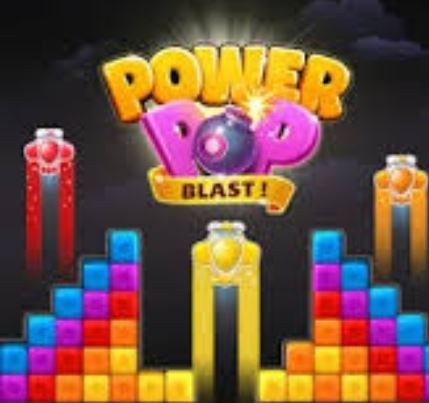
I fired up Power Pop Blast expecting a quick five-minute distraction. Forty minutes later, I was still squinting at a grid of colorful balloons, muttering about one stubborn cluster of purple bubbles that refused to clear. That's the quiet trap here. The first minute feels breezy. You tap a group of same-colored balloons, they pop with a satisfying little puff, and the remaining pieces shuffle downward. No timers, no lives ticking away. Just you and a board that slowly gets stingier with good moves. The art style is cheerful enough — think glossy candy-wrapper colors — but underneath that sweetness is a puzzle game that punishes sloppy tapping about as hard as anything in the match-3 neighborhood.
What You're Actually Optimizing For
At first glance, you'd think Power Pop Blast is about clearing the board. It's not. What you're really managing is a cascading chain system, and the game grades you silently on how many pieces you remove per tap. Every time you pop a group, the remaining balloons slide down to fill gaps. New columns might form. Sometimes a single well-placed pop will trigger three or four unintended pops in a row because you collapsed the right cluster into a waiting match. Those chain reactions are where the score multiplier lives. The game doesn't explain this well, but I noticed after a few rounds that my star rating at level end was almost entirely driven by how often I set off chains, not by how clean the board looked.
Sticky stages — the ones the headline hints at — tend to involve irregular board shapes. Instead of a tidy rectangle, you'll get L-shapes, diagonal barriers, or little isolated pockets of balloons that can't easily connect to anything else. On those levels, the loop becomes: scout the board for the largest single-color group you can reach, pop it, then immediately scan what new adjacency formed. If nothing good appeared, you probably wasted a move. The game gives you a move counter on most stages, and running out before you hit the target score means restarting. That counter is generous on early levels and absolutely brutal later.
The Mistake That Ended Half My Runs
I'll admit I developed a bad habit in the first dozen levels: I popped small groups of three or four just because they were available. Feels productive. You hear the pop noise, see a little progress bar creep up, and your brain says "good job." But in Power Pop Blast, popping a tiny group when there's a group of eight or more on the board is almost always a strategic error. Here's why. Larger groups give you more score per balloon popped, and they also leave bigger gaps when they vanish, which increases the odds of a useful cascade. Small pops nibble at the board without reshaping it meaningfully, and you'll find yourself five moves from the limit with half the balloons still sitting stubbornly in corners.
Another thing that tripped me up repeatedly: ignoring the color distribution. The game doesn't tell you what colors are coming, but you can count what's currently visible. If you have twelve red balloons scattered across the board and only three blue ones, popping the blues first seems tempting because they're a small, tidy group. Don't do it. Removing a color entirely from the board — even a sparse one — actually simplifies the remaining field and makes larger groups of other colors more likely to form. I started treating minority colors as a cleanup priority, and my star ratings jumped noticeably.
The third mistake is tunnel vision on one corner. When a stage has that weird L-shape, it's easy to fixate on the little isolated leg of the L, chipping away at it while the fat part of the board stagnates. I lost several runs where the isolated section eventually cleared, but I'd burned so many moves that the main cluster was still half-intact with two moves left. Now I alternate: one pop in the tricky zone, one pop in the dense zone. Keeps the board's possibilities open.
How the Difficulty Curves (Quietly)
Power Pop Blast doesn't have a sharp difficulty cliff, but there's a steady creep I noticed around what I'd guess is stage 30 or 40. The game stops giving you those nice, juicy clusters of twelve identical balloons. Instead, you get a checkerboard-ish spread where no single color touches more than two of its own kind. On those boards, the first five moves feel awful because you're forced to pop small groups just to create any adjacency at all. The key on those stages — and I only figured this out after replaying one level six times — is to target the center of the board first. Popping center groups lets gravity pull outer balloons inward and across each other, which naturally creates larger matches. Popping from the edges inward just tightens the remaining pieces against a wall where they can't cross-pollinate.
What surprised me is the game never introduces new mechanics beyond the basic pop-and-drop. No power-ups to collect, no special bombs, no locked tiles that need a key. I kept waiting for some new element to appear, and it just… didn't. That simplicity is either a strength or a limitation depending on your taste. For me, it meant the puzzle relied purely on spatial reasoning, which I respect. But I can see some players hitting a wall where they wish they had a hammer power-up to smash a stubborn single balloon that's blocking progress.
Phone vs Desktop: It Actually Matters Here
I tested Power Pop Blast on both an iPhone and a laptop browser. The difference is more significant than you'd expect for a simple tap-to-pop game. On mobile, the balloon clusters are small enough that my thumb occasionally hit the wrong group, especially on boards with tight, interlocking colors. The game doesn't have an undo button — there's no confirmation tap, either — so a single sloppy finger press can waste a move and sometimes ruin a chain setup you'd been nursing for three turns. I learned to use my index finger and slow down on phone, which felt unnatural at first.
On desktop with a mouse, precision is much higher. You can hover over a group, see exactly how many balloons are highlighted, and click deliberately. That alone probably saved me ten or fifteen misclicks across an hour of play. The tradeoff is that the game's vertical orientation looks slightly awkward on a wide monitor, with big empty margins on the sides. It's clearly designed for portrait-mode phone screens. If you're stuck on a particularly stingy stage, I'd recommend switching to desktop if you've been playing mobile. The precision advantage is real, and the game runs smoothly in any modern browser without needing a download — just find it on a free HTML5 games site and you're in.
Reading the Board Ahead (Without Overthinking)
After enough time with Power Pop Blast, I started seeing patterns in how pieces settle. Gravity always pulls straight down. That's obvious. But what's less obvious is that a pop on the left side of the board never affects the rightmost column unless there's a diagonal cascade across the middle. I began mentally dividing the board into zones and asking: if I pop this group, which columns will actually shift? If the answer is "only the two columns I'm touching," I might look for a different move that disturbs four or five columns and creates more chain potential.
A practical trick I used on sticky stages: before tapping anything, I count how many distinct color groups exist on the board. If I see twelve separate groups, the board is too fragmented and my first goal is consolidation, not scoring. I'll pop a small group strategically just to merge two other groups of the same color. That often means taking a low-score move now to set up a high-score move two turns later. The game's scoring system rewards this patience, but it takes discipline because the immediate feedback for a small pop is underwhelming.
What the Game Doesn't Tell You About Scoring
I ran a few informal experiments by replaying the same stage with different strategies. Popping a group of three gives you a base score. Popping a group of ten gives you significantly more than three times that base — there's a nonlinear multiplier at work. Chained pops, where one pop triggers another without you tapping again, seem to add a bonus on top of that. The exact formula isn't displayed anywhere, and I'm not going to pretend I reverse-engineered it, but the practical takeaway is clear: prioritize size over frequency. One giant pop followed by a natural cascade will outscore four separate small pops every time, even if the total number of balloons cleared is the same.
Star thresholds vary by level. On some stages, two stars feels generous for a mediocre clear. On others, I scraped by with the bare minimum score and got one star, which gates progress if you need a certain star count to unlock later stages. I never hit a hard paywall or lockout — this is a free browser game with no energy system that I encountered — but low-star clears meant I had to replay earlier levels to earn enough stars to advance. That's where the practice plan comes in.
A Short Practice Plan That Actually Helped
After bouncing off a few levels repeatedly, I stepped back and spent fifteen minutes doing something structured instead of just bashing my head against the same stage. Here's what worked for me:
First, I replayed three early levels I'd already cleared, but with a constraint: I was only allowed to pop groups of six or larger. If no group of six existed, I had to pop the smallest group I could find that would create a six-group on the next turn. This forced me to think two steps ahead and broke the habit of sniping small groups just because they were available.
Second, I picked one mid-difficulty stage and played it five times in a row, each time trying a different opening move. I noted which starting pop led to the best board state after three turns. This sounds tedious, but it trained my eye to spot high-leverage clusters quickly. The difference between my first run and fifth run on that stage was about a 40% score improvement.
Third, I practiced "color elimination" rounds where my goal wasn't the target score but rather removing one entire color from the board as efficiently as possible. This sharpened my ability to track minority colors and use them strategically, which paid off on the checkerboard-style levels that had been giving me trouble.
Is this overkill for a casual balloon-popping game? Maybe. But if you're stuck on a sticky stage and frustrated enough to look up tips, fifteen minutes of deliberate practice will do more for you than another hour of blind attempts. The skills transfer across levels because the core mechanic never changes — you just get better at reading the board.
When to Walk Away (And Come Back)
One thing I noticed about Power Pop Blast is that fatigue sets in faster than you'd expect. Because there's no timer and no pressure, you can play for an hour without realizing you're making progressively worse decisions. Around the forty-minute mark, I'd start popping groups just to see something happen, completely abandoning the chain-strategy mindset I'd built up. My star ratings tanked. Now I set a mental timer: I play for twenty minutes, then close the tab. When I come back fresh, I consistently clear stages on the first or second try that had seemed impossible at the end of a long session. The game isn't going anywhere — it's free in your browser, no login required — so there's zero penalty for pacing yourself.
If you're the type who likes pure spatial puzzles without gimmicks, Power Pop Blast scratches that itch cleanly. It doesn't try to dazzle you with lore or distract you with upgrade trees. It just places a board in front of you and asks whether you can spot the sequence. Some stages will feel unfair because the random color layout didn't give you enough big groups to work with, and on those, I just accept the low star rating and move on. Replaying for a perfect score is there if you want it, but the game doesn't demand perfection — it just quietly rewards the players who learn to think in cascades.