What Happens the Moment You Tap Start I loaded up Space Attack on a Tuesday afternoon with a cup of coffee that went cold way faster than I expected. The first thirty seconds are deceptively calm. You're a small ship nea
What Happens the Moment You Tap Start
I loaded up Space Attack on a Tuesday afternoon with a cup of coffee that went cold way faster than I expected. The first thirty seconds are deceptively calm. You're a small ship near the bottom of the screen, and a few stray asteroids or enemy fighters drift down from the top. The movement feels responsive right away — a light touch on the arrow keys or a thumb drag on mobile, and your ship zips left and right with almost no lag. I remember thinking, "Okay, this is manageable." Then the screen started to fill with projectiles, and I was dead about forty seconds later. That short, brutal arc pretty much sets the tone.
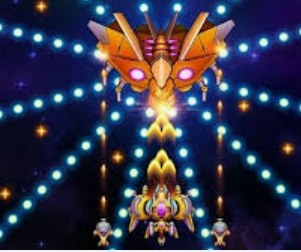
You'll notice the background isn't just static black. There's a subtle starfield scrolling behind you, and the enemy ships have just enough variation in shape and color that you learn to read threats at a glance. The sound design is minimal — no blaring music, just sharp little pops when you fire and a satisfying crackle when something explodes. It's the kind of game that doesn't waste time on tutorials. You figure out the rhythm by failing, and honestly, those first few failures are oddly enjoyable because the controls never feel like they betrayed you.
The Core Loop and What You're Really Chasing
Space Attack follows the classic wave-based shooter format, but there's a scrappiness to it that kept me restarting. You destroy enemies, collect small floating power-ups, and try to survive until the next wave indicator pops up. The loop tightens around one question: how long can you stretch a single life while keeping your multiplier intact? Each enemy you destroy without getting hit adds to a combo counter, and that counter directly feeds your score. Miss a shot or let an enemy slip past, and the multiplier resets. It's not just about survival. It's about threading through patterns without hesitating.
What you're optimizing for shifts as you play. Early on, it's pure survival. By your tenth or twelfth run, you start caring about efficiency — positioning yourself early for incoming waves, saving a screen-clearing bomb for the exact moment a cluster of fast-moving drones appears, and deciding whether to grab a weapon upgrade that might disrupt your current firing rhythm. I found myself making tiny, obsessive adjustments. Do I want the spread shot that covers more area but feels slower, or the concentrated laser that punches through lines of enemies but demands precise aim? The game never forces a choice. You just learn which pickups to avoid.
Playstyle Personalities: Who Clicks with This
Not every shooter fan will settle into Space Attack comfortably. After about twenty runs and a few longer sessions where I actually got into a groove, I'd say the game rewards a specific kind of player. If you love chasing high scores and treat each run like a puzzle where positioning matters more than reflexes, this will feel like home. The enemy patterns are learnable. You'll start to memorize that the third wave always spawns two flanking ships on the left, or that the small orange fighters in wave five move in a zigzag you can bait. It's less about twitch reaction and more about pattern recognition.
Players who enjoy incremental progress and don't mind dying repeatedly while piecing together a mental map of threats will have the best time. I'd recommend it for someone who likes shmups but finds bullet-hell density exhausting. The screen never becomes an impassable wall of glowing dots. Instead, the challenge comes from enemy variety and how combinations of attackers overlap. One wave might pair slow-moving tanks that soak up damage with quick, fragile drones that dive straight at you. Learning to prioritize targets without losing your combo is the real game.
On the flip side, if you need a story hook or character progression to stay engaged, Space Attack might not hold your attention. There's no narrative, no upgrades between runs, no currency to grind. You start fresh every single time. That purity is what I liked about it, but I can see it feeling sparse for someone who wants a sense of long-term growth. This is a game you play for twenty minutes, put down, and come back to later because you thought of a slightly better way to handle wave four.
The Mistakes That Cut Your Run Short
I kept a mental list of the dumb ways I died, and most of them came down to three habits that took me a while to shake. The first is hugging the bottom edge. It feels safe because you have maximum reaction time, but enemies that swoop in diagonally will corner you against the border where you can only dodge in one direction. The second mistake is tunnel vision on your own ship. I'd stare at my sprite instead of scanning the upper half of the screen where threats spawn. By the time a projectile entered my peripheral vision, I'd already committed to a movement that put me right in its path.
The third mistake, and the one that ended more of my runs than anything else, is grabbing every power-up without thinking. Some weapon upgrades change your fire rate or spread pattern in ways that feel worse against certain enemies. I'd snatch a wide-shot upgrade right before a wave of fast, single-file ships, and suddenly I couldn't punch through them fast enough. Learning to let power-ups float off the screen felt counterintuitive but necessary. You'll also want to resist the urge to use your limited bombs the moment things look messy. Save them for when the screen is genuinely clogged, not just moderately busy.
Playing on Phone vs Desktop: A Quick Honest Take
I tested Space Attack across both setups because I figured browser games tend to lean one way or the other. On desktop with a keyboard, the arrow keys give you precise, stutter-free movement. It's the ideal way to play if you're trying to weave through tight gaps. You can tap the fire key rapidly without worrying about your finger drifting, and the bomb button is easy to reach. On a phone, the game uses a touch-and-drag system. Your ship follows your thumb, which means you're constantly covering a portion of the screen. I had to adjust my grip a few times because my hand would obscure an enemy sneaking in from the right.
Mobile play works fine for casual runs — sitting on the couch, killing a few minutes — but I wouldn't chase a personal best on a phone. The screen size can make smaller projectiles hard to track, especially if you're outdoors or dealing with glare. There's no controller support as far as I could tell, so it's keyboard or touch. Both are responsive, but the desktop version gives you a cleaner view and slightly more control. If you're going to play seriously, I'd stick to a laptop or desktop. The fact that it's free to play in a browser means you can pull it up on either without any setup, which I appreciated.
What the Game Doesn't Tell You (But You'll Figure Out)
There are a few unspoken mechanics that became clear after extended play. Enemy shots aren't aimed directly at your position with perfect accuracy. They lead slightly, which means if you change direction the moment a shot fires, it'll miss you by a wider margin than you'd expect. You can also let enemies drift partially off the bottom of the screen without penalty. I assumed letting anything through would cost a life, but only direct collisions or shots hitting you matter. That knowledge changes how you handle swarms — you can ignore a few stragglers if you're overwhelmed up top.
The scoring system also has a quirk. Destroying enemies while your multiplier is active doesn't just add points. It charges a secondary meter that eventually grants an extra bomb. This means aggressive play that maintains a combo actually gives you more safety tools, which creates a nice risk-reward loop. I spent my first dozen runs playing cautiously, trying to survive, and I'd always run out of bombs at the worst moment. When I switched to a more aggressive style that prioritized keeping the multiplier alive, I ended up with more bombs overall. The game subtly rewards confidence.
A Practical Practice Plan for Getting Comfortable
If you want to move past the dying-every-forty-seconds phase, I put together a small routine based on what worked for me. It's not a rigid training regimen, just a way to focus your early runs so you're not mindlessly restarting.
- Run 1 through 5: Don't even try to score well. Just focus on moving your ship to different parts of the screen and watching how enemies enter. Notice which ones fire immediately and which ones pause. Die on purpose a few times to see how late-wave patterns change.
- Run 6 through 10: Pick one weapon type and stick with it for a full run. Learn how it handles against early, middle, and late waves. Avoid all other weapon pickups, even if they flash temptingly. This builds consistency.
- Run 11 through 15: Practice saving your bombs. Let yourself die with bombs unused once or twice just to break the panic-bomb habit. You'll start to see which wave sections truly warrant a screen clear.
- Run 16 onward: Now focus on the combo meter. Try to reach a specific score threshold, not a specific wave. This shifts your brain from survival mode to optimization mode, which is where the game gets addictive.
I found that after about thirty total runs, the muscle memory started to lock in. The game stopped feeling chaotic and became almost meditative. I'd notice a tricky enemy formation and my hands would react before my brain fully registered the threat. That's when Space Attack went from a fun distraction to something I genuinely wanted to master.
Who Should Skip This One
As much as I enjoyed my time with it, Space Attack isn't for everyone. If you're looking for a game with progression unlocks, character skins, or a feeling of persistent growth, this will probably feel thin. It's a score-chasing arcade game in the most traditional sense. You get a leaderboard and your own stubbornness, and that's the entire motivational engine. I also wouldn't recommend it for someone who finds repetitive failure demoralizing. You will die a lot, and while the restarts are instant, the lack of any checkpoint or mid-run save means a single mistake at wave twelve sends you back to zero.
But if you're the type of person who loves refining a skill through repetition, who gets a small thrill from seeing your name climb a few spots on a high score table, and who appreciates games that feel fair even when they're punishing, Space Attack fits. It's a clean, focused shooter that doesn't pretend to be anything else. I closed the browser tab after my last run feeling genuinely satisfied, and I'll probably open it again tomorrow just to see if I can finally crack wave fifteen.