What Hits You in the First Minute I opened Merge Heroes Fix expecting a standard idle merge game, and the first thing I noticed was how cramped the board gets. You're tossed onto a small grid with two broken catapults, a
What Hits You in the First Minute
I opened Merge Heroes Fix expecting a standard idle merge game, and the first thing I noticed was how cramped the board gets. You're tossed onto a small grid with two broken catapults, a couple of archers, and three slimes creeping toward a cracked castle wall. There's no hand-holding arrow. No "drag here" popup. You either merge two matching units by dragging them on top of each other, or the slimes eat through your defenses while you're still figuring out the UI. I lost my first run in under 90 seconds, and honestly, it felt fair — I just didn't respect how little time the game gives you to stabilize.
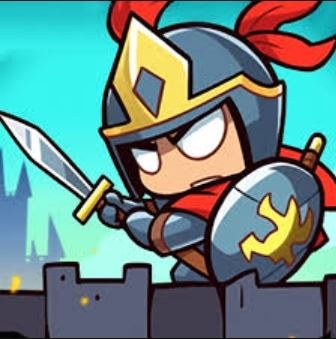
The art style is bright and slightly chunky, like a Saturday morning cartoon that doesn't take itself too seriously. Units wobble when idle. Merged heroes flash white for a split second and then pop into a bigger, slightly angrier version of themselves. The audio cues are minimal: a squish when you merge, a sad little crunch when an enemy hits your wall. Nothing flashy, but it communicates urgency without screaming at you.
What You're Actually Optimizing For
The loop is simple on the surface: drag identical units together to merge them into a stronger tier, position them on the board to block enemy paths, and survive waves long enough to repair the castle. But the real optimization puzzle isn't just merging — it's board space management. Every unit you create takes up a tile, and tiles are a desperately scarce resource. I kept making the mistake of merging too eagerly, filling my grid with mid-tier archers that couldn't reach the slimes scuttling along the bottom lane. By the time I realized I needed to reposition, I had no empty tiles left to drop new spawns onto.
You're also managing a hidden tempo meter. Enemies spawn in escalating waves, and the jump from wave three to wave four on hard levels is where most of my attempts crumbled. If you haven't got at least one tier-three damage dealer by wave four, you're effectively playing catch-up with a broken net. The game doesn't show you wave numbers explicitly — you learn to read the enemy composition instead. Two shield slimes plus a ranged caster means you're in the danger zone.
One thing I only figured out around my eighth run: merging doesn't just create a stronger unit, it also refreshes that unit's attack cooldown. So if you have a knight who just swung and is sitting there for two seconds, merging him into a new knight instantly resets his swing timer. This is huge for bursting down a high-health enemy that's two hits away from your wall. The tutorial never mentions it, and I'm half-convinced it's an unintentional mechanic the developers left in, but it works consistently.
Mistakes That End Runs Early
The most common way I died in my first ten runs wasn't from strong enemies — it was from clogging my own board with useless units. Here's what I see players doing wrong, because I did all of it:
Merging everything you see immediately. Two tier-one archers appear, and your instinct screams "merge them!" But a tier-two archer still only attacks one lane, and now you've used two tiles to create one unit that covers the same width. On hard levels where enemies split into three lanes by wave two, you need width more than height early on. Hold low-tier units in separate lanes until you have coverage, then merge the leftovers.
Ignoring the repair hammer. There's a small hammer icon in the corner that lets you spend merge energy to repair one wall segment. I ignored it for my first five runs because I assumed it was a premium currency sink. It's not. The hammer costs the same energy you generate from merging, and on hard levels, repairing even one wall segment before wave four can buy you the extra ten seconds you need to build a tier-three catapult. Use it early, not as a panic button when the wall is already at 10%.
Stacking ranged units on the back row. Catapults and archers feel safe tucked behind your wall, but their projectiles have travel time. If a fast slime is already chewing on the front wall, a back-row archer's arrow might arrive after the slime's third bite. Move ranged units one tile forward when enemies are close — the projectile travel time shortens noticeably, and they'll still outrange most melee attackers.
Underestimating slime shields. On hard levels, shielded slimes show up around wave three. They absorb the first two hits completely, which means your tier-one archers are effectively doing zero damage for the first four seconds of engagement. You need either a tier-three unit that punches through shields in one hit, or two units attacking the same shielded slime from different angles to strip the shield faster. If you let a shielded slime reach your wall while your only attacker is a single tier-two archer, that wall segment is gone.
Forgetting you can sell units. There's a tiny trash icon when you tap a unit. Selling gives back a fraction of the merge energy, but more importantly, it frees up a tile. I've salvaged runs by selling a poorly placed tier-two knight to make room for two tier-one catapults that actually covered the lane getting pressured. It feels bad to delete a merged unit, but board space is more valuable than sunk cost.
What Works on Hard Levels Specifically
Hard levels in Merge Heroes Fix aren't just "more enemies with more health." The spawn patterns change. On normal difficulty, enemies mostly come down the center lane with occasional flankers. On hard, wave two often hits all three lanes simultaneously, and if you've been funneling all your merges into one super-unit in the middle, your side walls crumble while you're patting yourself on the back for your tier-four knight.
I started surviving hard levels consistently when I adopted a "two-lane minimum" rule: by the end of wave one, I need at least one damage dealer covering the left or right lane, plus something in the center. That usually means resisting the urge to merge my starting archers and instead placing them on opposite sides of the board. It feels suboptimal because you're staring at two mergeable units not being merged, but the game punishes greed on hard difficulty.
Another hard-level specific tip: the enemy caster that appears around wave five doesn't attack your wall. It buffs nearby slimes, giving them a speed aura that turns fast slimes into blurs. If you see a caster, it becomes priority target number one — even over a shielded slime that's closer to your wall. A buffed slime covers the last three tiles of the lane in under a second, and no amount of repair hammering saves you from that. Drag a ranged unit into the same row as the caster if you have to. Losing one archer to melee slimes is worth killing the buffer before it snowballs the wave.
I also noticed that hard levels give slightly more merge energy per merge. It's not documented anywhere, but I tracked it across three runs: normal mode gives about 12-15 energy per tier-one merge, while hard gives closer to 18-22. This means you can afford to use the repair hammer more liberally on hard, which is counterintuitive — you'd expect harder difficulty to be stingier. Use that extra energy. Repair walls preemptively when they hit 60%, not 20%.
Phone vs Desktop: It Actually Matters Here
I played on both my phone and a laptop browser, and the experience differs in ways that affect hard-level performance. On desktop, dragging units is precise. You can quickly merge two archers on opposite ends of the board in one smooth motion. On a phone screen, especially if your thumbs are average adult size, I kept accidentally dragging the wrong unit or dropping merges onto adjacent tiles. This isn't just annoying — on hard levels, a mis-drag during wave four can mean losing a wall segment while you fumble to correct it.
If you're on mobile, I recommend using a stylus or playing with your index finger rather than your thumb. It sounds fussy, but the hitbox for dragging feels about 20% smaller than the visual unit sprite, and the game doesn't give you an undo. I also turned off my phone's "reachability" gesture shortcuts because swiping from the bottom edge sometimes triggered my OS's app switcher mid-drag. Desktop is definitely the easier platform for this game, but mobile is playable if you slow down your drags by half a beat.
One odd thing I discovered on mobile: the repair hammer button is easier to tap accidentally when you're reaching for a unit near the bottom-right corner of the board. I wasted merge energy twice by brushing the hammer while trying to drag a catapult. If the developer ever reads this, please add a confirm step for hammer usage, or move it further from the grid.
A Practice Plan That Builds Good Habits
If you're stuck on a specific hard level, grinding it repeatedly without changing your approach just reinforces the same mistakes. Here's a short practice routine I used to break through my own plateau. It takes about 25 minutes and forces you to build the skills that hard levels actually test.
First ten minutes: play three runs where you never merge until you have four units on the board. This feels wrong. You'll be staring at two identical archers and your brain will itch. But the point is to learn how much coverage low-tier units provide and where the early pressure actually comes from. You'll probably lose two of these runs by wave four. That's fine. Pay attention to which lane breaks first and whether an early merge would have actually saved it, or just left another lane exposed.
Next ten minutes: play two runs where you only merge units that are in the same row as an enemy currently attacking your wall. This teaches you to merge reactively instead of proactively. You'll end up with a weirder, more spread-out board, but you'll also start noticing which merges actually matter in the moment versus which ones just feel productive. I learned that merging two archers on an empty lane while slimes hammer my right wall is active busywork, not defense.
Last five minutes: one run where you use the repair hammer before wave three, even if your walls are above 80%. The goal is to build the muscle memory of checking wall health between waves. By hard level standards, 80% is one bad wave away from 30%. Using the hammer early feels wasteful until you survive a wave-five caster rush with two walls at 15% and realize that early repair gave you exactly that margin.
After this practice block, go back to your stuck level. You'll probably still lose the first attempt, but you'll lose later and with a cleaner board. The run after that tends to click. It did for me around attempt twelve on the third hard level, which had been stonewalling me for two days.
Merge Heroes Fix isn't a long game — there aren't endless levels or a meta-progression system that stretches for months. But the hard levels are genuinely satisfying puzzles once you stop treating it like a casual merge game and start treating it like a spatial resource management problem with cute graphics. The moment you see a tier-four knight cleave through two shielded slimes because you positioned him perfectly three waves earlier, you understand why the game is worth the frustration.