
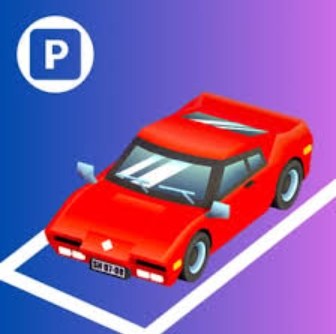
The First Minute: Deceptively Smooth Asphalt I spent my first 60 seconds in Parkmania feeling like a driving god. The opening stage is a wide-open lot with generous yellow lines, and the little sedan responds to your arr
The First Minute: Deceptively Smooth Asphalt
I spent my first 60 seconds in Parkmania feeling like a driving god. The opening stage is a wide-open lot with generous yellow lines, and the little sedan responds to your arrow keys with a kind of lazy obedience that makes you think you've got this. You angle in, straighten out, and the "PERFECT" badge pops up with a satisfying little chime. Easy. Then stage 2 gives you a compact spot between two vans, and you realize the car's turning radius isn't quite what you thought it was. By stage 5, I was sweating through a parallel parking attempt with a timer ticking down and a growing respect for anyone who's ever maneuvered a real vehicle into a tight space without insurance claims.
That shift is what makes Parkmania interesting. It doesn't throw you into chaos immediately. It lets you build a small cushion of confidence, then starts tightening the screws one variable at a time. You'll notice the tutorial never really ends — the game just stops explaining and starts expecting. If you're playing on a phone, the tilt controls or on-screen steering wheel add a layer of physical awkwardness that keyboard players won't deal with. I tried both, and honestly, the phone version demands a steadier hand and more patience. On desktop, you can tap-tap-tap the keys for micro-adjustments. On mobile, you're committing to every degree of rotation, and overcorrection is the thing that'll kill your streak most often.
What You're Actually Optimizing For
Parkmania doesn't just want you to park. It wants you to park clean, fast, and without touching anything you're not supposed to touch. Each stage has a three-star rating system, and the difference between one star and three usually comes down to a few pixels and a couple of seconds. You can scrape through a level with a messy, multi-point turn that takes 45 seconds and clips a cone, but the game lets you know, gently at first and then more pointedly, that you're not really playing it the way it's meant to be played.
The loop is simple: drive from point A to the designated spot, align your vehicle within the lines, and stop. But the scoring layers on conditions that change how you approach every stage. Time is always a factor. Damage — even light taps against barriers or other cars — docks your final score. Some stages introduce traffic moving through the lot, and others have pedestrians who will absolutely walk behind you mid-reverse if you're not checking your surroundings. There's no "hit a person" fail state I've seen, but the near-miss sound effect is jarring enough that you'll start treating the little pixel people with genuine caution.
The thing I found myself optimizing for, without really deciding to, was flow. Parkmania feels best when you stop thinking about the controls and start reading the angles. You'll catch yourself lining up a reverse park in one smooth arc, and for three seconds you forget you're playing a browser game. Those moments are what keep you clicking "next stage" even after a frustrating wipe.
When the Difficulty Curve Gets Teeth
Around stage 10, the game stops being polite. The lots get smaller, the obstacles multiply, and the timer suddenly feels less like a suggestion and more like a threat. I hit a wall on a stage that required parallel parking on a narrow one-way street with cars coming from behind me every 15 seconds. The first attempt, I panicked and gunned it forward, clipping a parked motorcycle. Second attempt, I took too long lining up and the timer ran out. Third attempt, I backed in perfectly but was slightly crooked, and the game gave me one star and a "GOOD" that felt more insulting than a fail.
What I learned from that stage, and the dozen that followed, is that Parkmania punishes hesitation but also punishes rushing. It's a game about commitment. Once you start your turn, you're better off following through and adjusting at the end than trying to correct mid-swing. The physics aren't hyper-realistic, but they're consistent enough that you can build muscle memory. The cars have a weight to them — heavier vehicles like the delivery van unlock later and handle like boats, which is a whole new learning curve when you've spent an hour mastering the compact hatchback.
One thing the game doesn't tell you explicitly: the camera angle matters more than you think. On some stages, the default top-down view is perfect. On others, especially the multi-level parking garages that show up in later stages, the isometric angle hides the exact position of your rear bumper. I lost a perfect run because I thought I had six inches of clearance and actually had about one. Switching views with the camera button (or tapping the screen on mobile) isn't just a cosmetic option — it's a tool you should be using constantly, especially when you're backing into a spot with pillars on both sides.
Mistakes That End Runs Early
After logging a solid 20 minutes of play, I started noticing patterns in my own failures. Here's what kept tripping me up, and what you'll probably run into as well:
- The one-more-tap syndrome. You're 95% in the spot, nearly perfect, but you think "just a tiny adjustment" and end up overcorrecting. The car swings wide, you clip the line, and suddenly "PERFECT" becomes "GOOD" or worse. Sometimes the best move is to stop while you're ahead. The difference between a slightly imperfect three-star run and a ruined two-star run is usually one unnecessary input.
- Ignoring the rear end. This sounds obvious, but in a game about parking, you'd be surprised how easy it is to fixate on your front bumper while your rear swings into a pillar or another car. The game's damage model is unforgiving — even a light scrape drops your score significantly. I started checking the rear camera view every single time before reversing, even for short distances.
- Misjudging the approach angle for parallel parking. The standard advice for parallel parking — pull up alongside the front car, crank the wheel, reverse until you're at 45 degrees, then straighten — works in Parkmania, but the timing is tighter than real life. Start your turn too early and you'll end up too far from the curb. Too late and you'll clip the rear car. I found that lining up my side mirror (roughly) with the front car's rear bumper gave me the most consistent results, but this varies slightly by vehicle type.
- Tunnel vision on the timer. The countdown sits in the corner of the screen, and when it starts flashing red, your brain does this unhelpful thing where it stops processing spatial relationships and just wants you to GO FASTER. Every single time I let the timer stress me out, I made dumber mistakes. The stages with strict time limits are designed to be tight but fair — you usually have enough seconds if you don't waste them on corrections. Plan your approach for two seconds before moving, execute in one smooth sequence, and you'll beat the clock more often than not.
Phone vs Desktop: A Tale of Two Steering Methods
I played about 60% of my time on desktop with keyboard controls and 40% on a phone with tilt steering. The experiences are different enough that it's worth mentioning separately. On desktop, the arrow keys give you precise, digital inputs — you press left, the wheels turn left at a fixed rate, you release, they straighten. This makes it easier to hold a consistent turning radius, which is crucial for the later stages where you're threading between obstacles. The downside is that you can't do partial turns; it's all or nothing on the steering angle.
On mobile, tilt controls let you hold a partial turn, which theoretically gives you more finesse. In practice, I found it harder to be consistent. Your hands move slightly, the phone's gyroscope isn't perfectly calibrated, and what felt like a 30-degree turn last time is a 35-degree turn this time. The on-screen buttons are an alternative, but they take up screen real estate and I kept missing the reverse button with my thumb. If you're going for high scores, desktop is the way to go. If you're just killing time on a commute, the mobile version works fine, but accept that you'll probably need a few extra attempts on the harder stages.
One mobile-specific tip: turn off auto-rotate for your phone's display before playing. The game doesn't handle orientation changes gracefully, and you'll lose whatever run you were on if your phone decides to flip mid-maneuver.
A Short Practice Plan (That Doesn't Feel Like Practice)
If you're stuck on a particular stage or just want to get better without grinding the same level until you hate it, here's a loose routine that helped me. It's not a formal training regimen — it's more of a mindset shift that takes about 10 minutes.
First, go back to an early stage you've already three-starred and play it again, but this time with a restriction: no reverse gear. You can only move forward. This forces you to think about your entry angle before you commit, because you can't back up and fix it. You'll fail a lot, but the goal isn't to beat the stage — it's to train your eye for approach angles. Do this three or four times on different easy stages.
Second, pick a medium-difficulty stage that has parallel parking and play it three times in a row. First run, go for speed. Ignore damage, ignore precision, just get in the spot as fast as possible. Second run, go for precision. Ignore the timer completely and aim for the cleanest possible park, even if it takes two minutes. Third run, try to blend both. You'll start to feel where the balance point is, and that balance point is different for every stage. The act of deliberately swinging between extremes helps you find the middle ground faster than just repeating the stage normally.
Finally, spend three minutes in the first-person camera view on a stage you know well. It's disorienting at first, and you'll probably hate it. But it forces you to use the side mirrors and check your blind spots, which are habits that carry over even when you switch back to top-down view. You'll catch yourself glancing at the edges of the screen for obstacles you used to miss.
Parkmania isn't a game that demands hundreds of hours, but it rewards players who pay attention to the small things. The difference between a frustrating session and a satisfying one often comes down to whether you're reacting to mistakes or anticipating them. Once you start reading the lot before you touch the accelerator — spotting the light pole on your left, the curb on your right, the pedestrian walking toward your rear bumper — the game opens up. It's free in your browser, so there's no barrier to entry beyond a few minutes of your time. Just don't blame me when you're on attempt 15 of a parallel park and seriously considering whether you could do better in a real car.