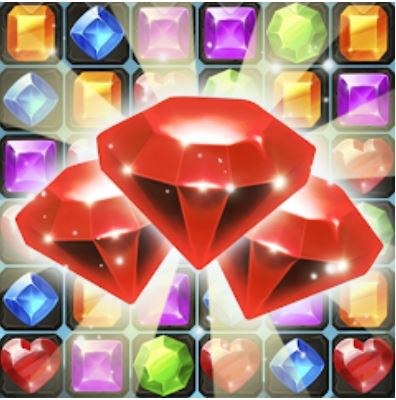
I fired up Diamond Dungeon expecting a breezy gem-matching jaunt, and for about the first minute I actually got one. Glowing jewels drop into a cramped underground grid, and matching three feels snappy and satisfying. Th
I fired up Diamond Dungeon expecting a breezy gem-matching jaunt, and for about the first minute I actually got one. Glowing jewels drop into a cramped underground grid, and matching three feels snappy and satisfying. Then the board locks down, a spiked wall nudges closer, and a pair of armoured beetles skitter onto the tiles with tiny health bars over their heads. That first minute is a gentle handshake; minute two is the game quietly asking if you've been paying attention.
The Loop That Keeps You Cursing and Clicking
At its core Diamond Dungeon is a match‑3 with a lightweight dungeon‑crawler strapped to its back. You aren't just clearing jewels for points. Each match fuels a small action economy: matching red gems builds a sword strike against the nearest enemy, blue gems restore a sliver of shield, green nudges a healing potion closer to being full, and yellow charges a special ability that varies depending on which character bust you've got sitting in the corner of the screen. The board itself is also a dungeon floor, so obstacles like cracked stone blocks and locked chains eat up tiles you'd normally match across. You are constantly juggling two layers: the colour grid in front of you and the turn‑based threat clock ticking on the enemy row.
What you're really optimising for is momentum. Every match you make pushes back the room's danger level by one notch, but the enemies only need two or three turns to swing. If you spend three moves fishing for a blue match to top off your shield, the spiked wall advances and a skeleton archer draws a bead on your health. I lost my third run because I got greedy, trying to set up a five‑match cascade while completely ignoring the bat that had been flapping toward my avatar for four turns. The game doesn't scold you with a tutorial pop‑up for that. It just hands you a defeat screen and sends you back to the entrance.
Because there's no explicit story dumped in dialogue boxes, the tension comes entirely from the board state. You'll notice small environmental clues: a cracked tile that flashes when you match next to it, a locked chest that only opens if you detonate a bomb gem on its row. Nothing is explained with words, which I appreciated after the first few dungeons. The game trusts you to prod at things.
The Mistakes That End Runs Early
After a few hours poking at Diamond Dungeon on both a laptop and a phone, I started noticing the same three or four blunders showing up in my defeated runs. None of them are the game's fault, which makes them extra annoying.
1. Treating it like a high‑score chaser. In a standard match‑3 you might drag out a board, setting up elaborate cascades just to watch the points pile up. Here, stalling is lethal. Every extra swap you make without dealing damage or generating shield pips is a gift to the enemy turn counter. I once stacked a beautiful six‑chain that cleared half the board, only to realise the golem at the end of the row had charged a room‑wide stomp. My health bar vanished before the gems stopped falling. Prioritise function over flash. A humble three‑match that stabs the closest enemy is worth more than a screen‑wide explosion that leaves you open.
2. Ignoring the "dungeon geometry" tiles. Cracked stone, locked chains, and those infuriating iron cages that trap a single gem aren't just decoration. They shrink your usable board and funnel matches into narrow columns. If you don't chip away at them early, you'll find yourself stuck with a board that has only four possible swaps while two enemies are winding up heavy attacks. Breaking a chain usually takes two matches adjacent to it, so I started treating those as mandatory side objectives the moment a room loads. A run that ignores board obstacles for the first five turns almost always ends with me frantically tapping a grid that has no valid moves left.
3. Hoarding special gems for the "perfect" moment. Diamond Dungeon hands out bomb gems, lightning orbs, and colour‑wild crystals fairly often, and my instinct was to save them for boss encounters. The problem is that a bomb gem sitting unused in the corner of the board for six turns is a dead tile. It blocks normal matches and gives you no benefit. Meanwhile, using that bomb to crack a locked row on turn two might reveal a cascade that fills your special bar and puts an enemy on its back foot. I started firing off specials the moment they could solve two problems at once: clear an obstacle and damage an enemy, or break a chain and set up a shield match. The game rewards that kind of pragmatic scrappiness far more than it rewards a big cinematic finish.
4. Neglecting the character bust's rhythm. In the corner sits a stone bust of whichever hero you've chosen (the default is a knight with a cracked helmet, though you can unlock a rogue and a mage later). The bust has an ability that charges based on matching its linked colour, but the ability only fires when you tap the bust itself. I spaced on this entirely for my first ten runs. I'd watch the little glow fill up and assume it was a passive buff. It's not. Tapping the bust at the right moment—say, when an enemy is about to land a killing blow—can throw up a last‑second barrier or deliver a board‑wide stun. Forgetting it exists is like playing with one hand behind your back.
Phone vs Desktop: A Surprising Divide
I played roughly half my runs on a desktop browser with a mouse and half on a mid‑range Android phone using Chrome. The game is the same HTML5 build, but the feel diverges more than I expected. On desktop, the larger screen makes the board state instantly legible. I can glance at enemy health bars, obstacle placement, and gem distribution in one sweep, which helps with planning two or three moves ahead. The mouse click is precise, and I rarely made accidental swaps.
On a phone, the portrait‑oriented board fills the screen nicely, but my thumb occasionally dragged the wrong gem when things got tense. The game does that little haptic buzz on successful matches, which helps, but I still fat‑fingered a critical move during a boss fight and ate a full damage hit because I swapped two greens instead of the reds I was aiming for. The bigger issue is that the character bust's tap target feels slightly cramped on a 6‑inch screen. I missed the activation tap twice in one dungeon, which cost me a run. If you're playing on a phone, I'd recommend using your index finger rather than your thumb for precision, especially in the later dungeons where one wrong move cascades into a wipe.
The game does not require a constant internet connection once loaded, which is a quiet blessing. I played a full dungeon on a train with spotty Wi‑Fi and didn't hit any reload interruptions. That said, closing the browser tab wipes your current run, so there's no mid‑dungeon save. You either finish the floor or you start over from the dungeon entrance.
Reading the Room When There's No Tutorial
Diamond Dungeon doesn't hold your hand past the first three rooms, which I genuinely respect but which also means you need to learn its visual shorthand fast. Enemies telegraph their next action with small icons that float above their heads: a sword means a single‑target strike, a cracked shield means they're guarding, a swirl means a special ability is charging. The icons appear one turn before the action fires, so you get exactly one move to respond. I missed these entirely during my first session because I was staring at the gem grid. Train yourself to flick your eyes to the enemy row after every match. That half‑second glance tells you whether you need to prioritise a shield match, burst down a specific enemy, or brace for unavoidable damage.
Boss rooms add a second layer of visual cues. The floor will have glowing runes that pulse in a sequence, or chains that connect the boss to specific tiles. Breaking those tiles weakens the boss's next attack. The game never explains this with text; you just notice that matching near a glowing rune makes the boss's health bar flicker. I stumbled onto the mechanic by accident and then felt clever for the rest of the evening.
A Practice Plan That Won't Make You Hate the Game
After burning through a dozen failed runs, I settled into a practice rhythm that actually stuck. It's not a grinding regimen, just a way to build the right habits without replaying the first dungeon until your eyes glaze over.
Start with three runs where your only goal is to keep your shield above half. Ignore damage output, ignore special gems, ignore score. Just match blue gems and watch how the enemy turn order interacts with your defensive cadence. You'll lose these runs, probably to the first boss, but you'll internalise the rhythm of threat and response that underpins every encounter.
Next, do two runs where you break every obstacle before touching an enemy. Cracked stones, chains, cages—clear them all. This teaches you how the board opens up and reveals cascading opportunities you'd otherwise miss while tunnel‑visioned on combat. You'll also notice that some obstacles hide bonus gems or charge‑orbs underneath, which the game rewards you for uncovering.
Then do one run where you fire every special gem the moment it appears, no saving. This feels wrong, but it forces you to see bombs and lightning orbs as tactical tools rather than treasure. You'll likely clear more rooms than you expect because the constant board disruption keeps enemies off‑balance.
Finally, string it all together in a real run where you consciously rotate your focus: shield check, enemy icon scan, obstacle triage, special gem use, bust ability tap. Saying the steps in your head sounds silly, but it prevented me from slipping back into mindless gem‑swapping. My first successful dungeon clear came on the run after I started doing this mental checklist, and the victory felt earned in a way that pure luck could never replicate.
When the Game Turns the Tables on You
Around the fourth dungeon, Diamond Dungeon introduces rooms that mess with your gem economy directly. A curse icon appears on the board and randomly transforms one colour of gem into locked stone for a few turns. Another room type floods the bottom three rows with slime that creeps upward each turn, swallowing matches unless you clear it with adjacent explosions. These modifiers don't feel cheap because they follow the same turn‑based logic as everything else, but they do demand you rethink your priorities on the fly. A slime‑flooded room means your usual "build up the special bar" strategy goes out the window; you need to clear the bottom rows immediately or lose half your board.
I won't spoil the later dungeon gimmicks, but I will say that the game is good at introducing a twist, letting you stumble against it once, and then giving you the tools to solve it on the next attempt. Nothing requires outside knowledge or a wiki dive. The answer is always somewhere on the board you're staring at.
The game is free in your browser, so there's nothing to lose except maybe twenty minutes of your lunch break while you figure out whether the knight's shield bash or the rogue's poison dart fits your rhythm better. I ended up sticking with the knight because I'm a sucker for a well‑timed block, but your mileage will vary.