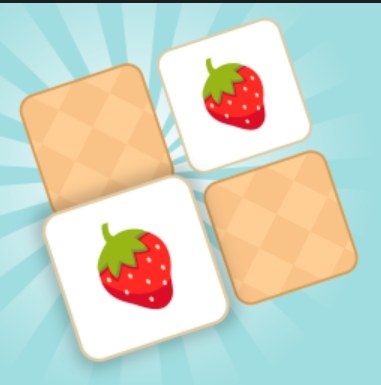
Wild Memory Match is a browser-based memory matching game for phone and desktop. No instructions are listed, so expect the genre standard: flip cards, remember positions, clear the board.
Wild Memory Match sits in the New category, and the catalogue entry for it is thin. There's no description to quote and no instructions to paraphrase, so anything about story, characters, or special modes would be guesswork. What the listing does establish is the genre: a memory match game, and one that apparently runs in a browser on both phones and desktop. That's the honest starting point. Everything below is either a direct consequence of how memory matching works or practical advice that applies to any game of this type. Treat the specifics as conventions rather than confirmed features of this particular title.
What the catalogue does and doesn't tell us
The entry lists the game name, the category, and nothing else in the way of mechanics. No control scheme is documented. No level count, no timer rules, no scoring formula, no mention of power-ups or difficulty settings. That matters, because a lot of memory match games differ wildly in exactly those areas. Some give you unlimited time and count your moves. Some run a countdown and end the round when it hits zero. Some shuffle the remaining cards after every failed pair. Some don't. Without the instructions, we can't say which camp Wild Memory Match falls into.
What we can say is that the headline for this piece is about controls, and controls in a browser memory game are almost always one of two things: a pointer or a finger. There's no controller mapping to learn, no keyboard layout to memorise. The interaction is tapping or clicking a card to flip it. That's the whole input vocabulary in the overwhelming majority of games in this genre, and there's no reason from the catalogue to assume Wild Memory Match deviates.
The loop, and what you're actually optimising for
A memory match game has a simple loop. You flip a card, you see what's on it, you flip a second card, and you either get a match or you don't. Matched pairs leave the board or stay face up. Unmatched pairs flip back. You repeat until the board is clear or the round ends.
What you're optimising for depends on how the game scores you, and that's the part we can't confirm here. But the underlying skill is the same either way: you're trying to hold the position and identity of cards in your head while you keep turning over new ones. The game is testing working memory, and it's testing it under whatever pressure the rules apply.
If there's a move counter, you're optimising for efficiency. Every flip you make that isn't the second half of a known pair is a cost. If there's a timer, you're optimising for speed, which changes the trade-off — a quick guess at a card you're unsure about can be better than a long pause to think. If the board shuffles after a miss, the game is actively punishing memory, and you're optimising for luck as much as recall. Most browser memory games use one of these three, sometimes two at once.
The one thing that's constant: information you gather early in a round is worth more than information you gather late, because you get to use it for longer. A card you identify on your third flip is a card you can pair on your thirtieth. A card you identify on your twenty-eighth flip is nearly worthless.
Mistakes that end rounds early
The most common failure in memory match isn't forgetting where a card is. It's flipping a card you already know the location of, purely because you saw it and reacted. This is a real problem on touchscreens, where the card you want to flip is under your thumb and the card you should flip is somewhere else on the board. Your hand goes to the nearest option. That's a wasted flip if the game counts moves, and a wasted second if it runs a clock.
The second mistake is failing to commit. You see a card, you half-register it, you move on. Two turns later you're not sure whether it was the shell or the anchor. Vague memories are worse than no memory, because they make you confident enough to guess. Slow down for a beat when a new card comes up. Name it in your head. Position matters too — "top left, third row" sticks better than "somewhere on the left".
Third: chasing the last pair too early. When you're down to four or six cards, it's tempting to flip the two you think match and hope. That's fine if the clock is tight. It's bad if it isn't, because flipping a known-mismatched pair tells you nothing new, and if the board shuffles on a miss you've just scrambled everything you had. When the board is small, flip one unknown card at a time and build from there.
Fourth, and this one is easy to miss: losing track of which cards are already matched. On a busy board with a lot of similar-looking symbols, it's possible to flip a card that's already been paired and removed, or to reach for a card that isn't there anymore. This mostly happens when the layout shifts as cards disappear. Keep your eye on the shape of the remaining grid, not just the symbols.
Phone versus desktop
The catalogue gives no control details, so this is genre-level advice rather than a description of Wild Memory Match specifically.
On a phone, the whole board is usually visible at once on a portrait screen, which is genuinely good for memory games — you can see every card without moving your head or scrolling. The downside is that your thumb covers a chunk of the screen, and it's usually the chunk you're about to tap. If the game lets you, use a lighter touch and keep your hand lower. If the layout is cramped, flipping the phone to landscape may spread the cards out, though it may also introduce a scroll. Check whether the board fits before you start committing to a layout.
On desktop, you get precision. A mouse cursor is a much finer instrument than a fingertip, so mis-taps are rarer and you can move between distant cards quickly. If the game responds to hover, you may get a small cue about which card is live. The trade-off is that a mouse takes longer to travel across a large board than a thumb takes to reach across a small one, so on a big grid a timer can actually be tighter on desktop than on mobile.
Touchscreen specifics worth knowing: tap targets in memory games are usually large, because the card itself is the button. That's forgiving. But double-tap zoom can bite you if you tap the same card twice in quick succession on a page that isn't locked to a fixed scale. If you notice the page zooming when you flip cards, zoom out and reset before your next round.
One more device note that applies to both: playing in a browser means the game is competing with everything else on the device. Notifications, other tabs, a phone call mid-round. Memory games punish interruption more than most genres, because the interruption wipes the working memory you'd built up. If you're chasing a good score, close what you don't need.
A short practice plan
You don't need hours. Memory match improves quickly with deliberate repetition, and fifteen minutes a day for a week will do more than a single long session.
- First few rounds: no goals. Just play and pay attention to how you're remembering things. Are you using position, or colour, or the shape of the symbol? Find out which one your brain reaches for.
- Next: narrate. Say the card's position and identity to yourself as you flip it. This feels slow. It is slow. It also roughly doubles how much you retain, and after a few rounds it becomes automatic.
- Then: work in corners. Pick a corner and clear it before moving on. This gives the board a structure and reduces the number of positions you have to track at once.
- Finally: push the pace. Once you're clearing boards without much thought, add speed. If the game has a timer, race it. If it doesn't, race yourself.
If the game has difficulty settings, start below your comfort level. A board you can clear reliably teaches you patterns faster than a board you fail. Move up once you're winning consistently, not once you're bored.
And if you want to try it on both devices, do a round on each. The controls are simple enough that the real difference is screen size and how much your hand blocks your view. That's worth knowing before you decide where to play.