
First Minute, First Impression I opened Buildingahouse expecting something gentle. The Match3 category is full of soft color palettes and soothing chime sounds, and the name made me picture a cozy cottage builder. Ten se
First Minute, First Impression
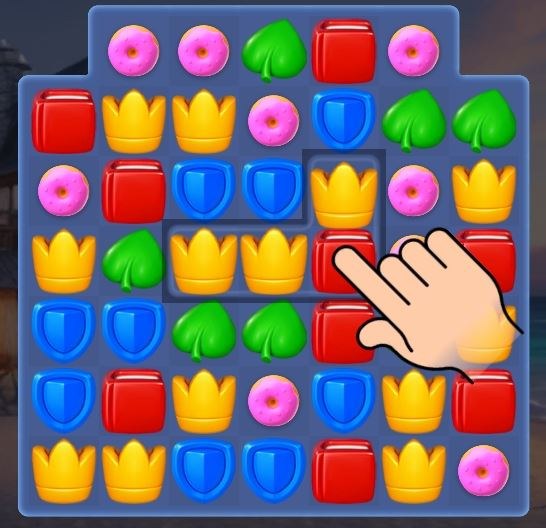
I opened Buildingahouse expecting something gentle. The Match3 category is full of soft color palettes and soothing chime sounds, and the name made me picture a cozy cottage builder. Ten seconds in, I realized this one doesn't cradle you. The grid is tight, the colors are a bit muted but functional, and the first few swaps already make you think two moves ahead. By the end of the first minute, I'd failed the third objective without fully understanding why. That's a good sign, actually — it means the difficulty isn't just cosmetic.
You don't get a long narrative intro. The board appears, a small house frame sits to the side with a progress bar segmented into stages, and you start matching. The timer isn't ticking like a countdown clock, but you feel pressure from the limited number of moves displayed at the top. I noticed my shoulders tensing up before I hit stage two. That physical reaction tells you something about how the game paces its demands.
What the Loop Actually Wants From You
Most Match3 games let you drift. You match whatever looks obvious, occasionally set off a chain reaction, and feel clever. Buildingahouse punishes that drifting. Every level is a single house construction project broken into stages — foundation, framing, walls, roof, finishing. Each stage asks for a specific resource: wood planks, bricks, tiles, nails. Those resources only drop when you match tiles of a certain color in large enough clusters or in specific patterns adjacent to the house's "delivery zone" on the board.
So your real job isn't just clearing the board. You're optimizing for targeted collection. That red cluster in the corner might be satisfying to pop, but if the stage needs blue bricks and you spend three moves on red, you've effectively wasted turns. I learned this the hard way on stage four of my third attempt, staring at a roof requirement with zero shingles generated and four moves left.
The loop tightens around a simple but unforgiving formula: scan the current resource demand, identify the two or three board areas where that color clusters, and prioritize cascades that will funnel those specific tiles toward the bottom or toward the collection zone. Cascades matter more here than in candy-matching cousins because a single well-placed match can trigger a chain that gathers multiple resources in one turn. Bad matches don't just waste a move — they rearrange the board in ways that might bury the color you urgently need.
Where I Kept Dying (And Probably You Will Too)
I restarted more times than I want to admit before the patterns clicked. The first run-killer was ignoring the transition between stages. When a stage completes, the resource requirement flips instantly. I'd be deep in a rhythm of gathering bricks, finish the walls, and then waste three moves still chasing bricks while the roof required tiles. Those three dead moves snowball. By stage five or six, the margin for error shrinks to almost nothing, and those early wasted turns come back to haunt you.
The second mistake was overvaluing big flashy combos. A five-match that clears half the board feels powerful, but if it doesn't deliver the specific resource you need, it's just noise. Worse, it reshuffles the board unpredictably. Sometimes a massive cascade would leave me with a scattered mess and no adjacent pairs of the color I actually needed. I'd sit there staring at a board full of options that were all wrong.
The third trap was forgetting to look at the next stage preview. The game shows a small icon of what's coming after the current stage — a tiny roof or window symbol. I ignored it for my first half-dozen attempts. When I started checking it, I could prepare by positioning tiles of the upcoming color near the delivery zone while finishing the current stage. That buffer saved me on stage six repeatedly.
One more subtle killer: corner clumping. The board edges become dead zones quickly if you're not deliberate. Matches along the top or sides tend to leave lonely tiles trapped where nothing can reach them. If your target color ends up stranded in a corner, you'll burn moves trying to bring it down. I started treating the bottom three rows as the "active zone" and avoided making matches higher than necessary unless it served a clear purpose.
Stage-by-Stage Temperament Shift
The early stages — foundation and framing — feel generous. Requirements are low, and the board gives you obvious matches. You'll breeze through if you're even mildly focused. This generosity is a trick. It lulls you into thinking you can play casually, and you carry that energy into stage three or four where the requirements spike and the board tightens.
Around the walls stage (usually stage three), the game starts asking for two resources simultaneously or demands a resource that spawns less frequently from the current board layout. This is where I started noticing a tactical shift: you need to create your own opportunities. If the board isn't giving you clusters of the right color, you have to manufacture them by clearing adjacent columns to force a cascade that refills from the top. That refill mechanic became my lifeline. Whenever I felt stuck, I'd pick a column near the delivery zone and clear it deliberately to cycle new tiles in.
The roof stage is consistently where my runs lived or died. It demands precision, and the board by that point is often cluttered with remnants of earlier matches. I'd find myself with a board half-full of colors that no longer mattered and desperately fishing for the one color still needed. My best runs happened when I spent the walls stage doing board cleanup — deliberately clearing irrelevant colors from the lower half so that when the roof demand hit, the board was lean and the right colors could appear.
The finishing stage sounds like it should be a victory lap. It's not. The final push usually requires a mix of everything, and your move count is at its thinnest. I lost three runs at the finishing stage before I learned to hoard a special power-up (earned by large same-color chains) and deploy it only here. Saving that power-up through the roof stage felt risky every time, but it paid off.
Desktop vs Phone — Real Differences
I played on both and the experience diverges more than I expected. On desktop with a mouse, I had better precision for selecting specific tiles quickly. The larger screen meant I could scan the full board in one glance, which matters when you're tracking three colors across a grid that feels increasingly hostile. My desktop runs averaged two to three stages further than phone runs initially.
On phone, the touch controls work fine — responsive, no real input lag — but the smaller screen meant I missed edge tiles occasionally. I'd drag the wrong direction and waste a move. That's partly my fingers, partly the tile size at certain zoom levels. You can zoom on mobile by pinching, but I found the default view just slightly too tight. The bigger phone issue was distraction. The game's free browser format meant I played it in short bursts between other things, and this game punishes divided attention. A run requires maybe five to eight minutes of focused play. On phone, I'd start, get interrupted, come back, and immediately make a dumb move because I'd lost my mental map of the board state.
If you have the choice, desktop gives you a cleaner shot at completing a house. But phone is perfectly playable if you commit to finishing a run in one sitting. Just resize once at the start to a comfortable zoom level and don't touch it again.
A Short Practice Plan That Actually Helped
I stopped trying to beat the whole game and spent a few runs just practicing specific skills. Here's what I'd recommend if you're hitting a wall:
- Run one: Don't try to progress. Just practice identifying the delivery zone and tracking how matches above it cascade resources downward. Watch where tiles go after a match. This sounds obvious but most people never observe it deliberately.
- Run two: Focus exclusively on stage transitions. Play normally but the second the stage completes, stop and reassess the board for the new requirement before making another move. Build the pause reflex.
- Run three: Hoard a power-up. Earn one by mid-game and sit on it no matter how tempting the board looks. Use it only at the finishing stage. See if that changes your outcome.
- Run four: Play a full attempt with the rule that you never match a color that isn't currently needed or previewed for the next stage. This will feel wrong at first. It trains discipline.
After four focused runs, the game felt different. I wasn't reacting anymore. I was steering the board, sometimes subtly, sometimes with aggressive column clears. The house completion rate went from zero to roughly every other attempt. That's satisfying for a browser game that costs nothing and asks only for your attention.
What the Game Doesn't Tell You (But Should)
There's no tutorial pop-up explaining that the house's visual state actually reflects your progress. The frame literally builds as you complete stages. I didn't notice until my third run because I was so locked onto the grid. When I finally looked up and saw a half-framed house with actual walls going up, it clicked that this was the reward mechanic. No cutscenes, no fanfare — just a building taking shape because you made good matching decisions. That quiet feedback loop is more effective than any progress bar.
Also worth knowing: the color-to-resource mapping isn't random. Each color consistently produces one resource type across all runs. Learning which color means bricks versus which means planks eliminates a layer of mental translation. By run six or seven, I wasn't thinking "I need bricks" — I was thinking "I need more yellow clusters near the bottom." That speed improvement alone saved moves.
The free browser format means no install, no account, just load and play. I appreciate that more after a game that respects my time enough to be hard rather than padded. It's the kind of difficulty that comes from tight design, not from grinding or artificial gates.
Buildingahouse won't charm you with characters or story. It'll frustrate you until you learn its language, and then it'll make you feel like you earned every plank and shingle. For a Match3 game playable right in a browser tab, that's a rare thing.