First Minute: More Satisfying Than Expected I loaded Power Pop Blast expecting another match-three clone, and the first thing I noticed was the sound. The pops have this crisp, almost fizzy quality that makes clearing a
First Minute: More Satisfying Than Expected
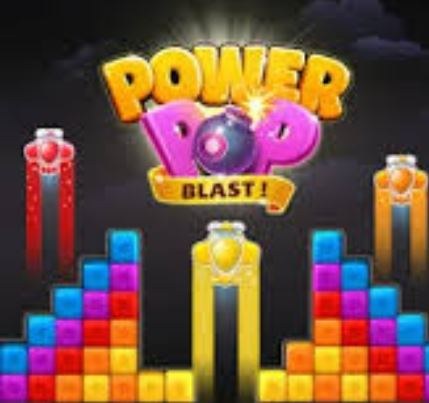
I loaded Power Pop Blast expecting another match-three clone, and the first thing I noticed was the sound. The pops have this crisp, almost fizzy quality that makes clearing a cluster feel strangely rewarding before you even know what you're doing. You're looking at a grid packed with colorful bubble-like shapes, and your job is to tap groups of two or more matching pieces to clear them. The board doesn't shift down or cascade in the way you might expect—it's more static, which immediately signals that this isn't a frantic speed game. You've got time to scan, think, and actually plan your taps.
Within that first minute, I caught myself doing something I don't normally do in free browser puzzle games: I paused. I started looking for the biggest clusters first, then scanning the edges to see if clearing one group would accidentally merge two other colors in a way I didn't want. That's when the word "calm" from the editorial angle clicked. There's no timer ticking down, no enemies moving toward you, just a clean board and a satisfying pop. If you're playing on desktop, the mouse clicks feel precise. On mobile, the tap targets are generous enough that I wasn't fat-fingering wrong groups, which is a small mercy.
What You're Actually Optimizing For
The core loop is deceptively simple but gets its hooks in once you understand the scoring rhythm. You're not just clearing groups—you're trying to leave as few pieces behind as possible, ideally zero. Every group you pop adds to a multiplier that builds as long as you keep making valid moves. The moment you're stuck with only single, isolated pieces, the round ends and your score locks in. So the optimization isn't about speed; it's about sequencing. You're playing a quiet game of resource management where the "resource" is having at least two adjacent same-color bubbles to keep the chain alive.
What surprised me after a few rounds was how much the board layout shapes strategy. Some grids have colors distributed evenly, others clump one color in a corner while scattering the rest. You start learning to read the board before your first tap: identify the color with the fewest total pieces, because that's the one most likely to strand you. If you can clear all of one color early, you simplify the board dramatically. But the multiplier tempts you to go for the biggest groups first, and sometimes that's a trap—clearing a huge orange cluster when orange is already sparse might leave you with nothing but isolated green and blue singles two moves later.
The game doesn't explain any of this explicitly. There's no tutorial pop-up about color scarcity or endgame planning. You figure it out through failure, which I respect. Around my fifth or sixth run, I started mentally grouping pieces into "safe" colors I could rely on for later moves and "problem" colors I wanted to eliminate fast. That shift from reactive tapping to proactive thinning is where the strategy lives.
Mistakes That End Your Run Early
I made plenty of these so you don't have to. The most common one: tapping a group of two when a group of three or four of the same color is sitting right next to it. It sounds obvious, but when you're scanning a busy board, your eye catches the closest cluster, not necessarily the optimal one. On more than one occasion I popped a pair, then immediately saw the larger group I'd just broken apart by removing that connecting piece. The board doesn't undo, so that stings.
Another mistake is ignoring corner pieces. The edges and especially the four corners are where isolated singles love to hide. If you clear everything around a corner piece early, you've effectively guaranteed it'll be a leftover. I started training myself to check corners within the first three moves and ask: can I pull this piece into a group now, or is it doomed? If it's doomed, I adjust my expectations for a perfect clear and focus on maximizing the multiplier before the board locks up.
The third big one is chasing the multiplier too aggressively. I had a run where I was so fixated on keeping the chain going that I burned through all my "bridge" pieces—those medium-sized groups that connect larger clusters—and ended up with a board full of scattered singles. The multiplier was high, but the round ended with twelve pieces left and the final score was mediocre. Sometimes it's better to cash out a decent chain and reset mentally for the next round rather than overextend and crash.
Oh, and one weird thing I noticed: sometimes two groups of the same color are separated by just one piece of a different color. If you can clear that single blocker first, you merge them into a much bigger group. I missed this constantly in my first ten runs because I was thinking in terms of "what can I pop right now" instead of "what can I set up for two moves from now." Once you start seeing the board as a puzzle to manipulate rather than just consume, the game shifts.
Phone vs Desktop: It Actually Matters Here
Most browser puzzle games play fine on both, but Power Pop Blast has a few quirks worth mentioning. On desktop with a mouse, you get pixel-perfect precision. This matters more than you'd think when pieces are tightly packed and you're trying to tap a specific two-piece group on the edge without accidentally triggering the larger group behind it. The hover state also gives you a subtle visual cue—the group highlights before you click—which gives you a split-second to confirm you're targeting the right cluster.
On mobile, the game is fully playable and the tap targets are sized reasonably, but I found myself zooming in slightly on denser boards just to avoid mis-taps. The lack of hover preview means you commit faster, which isn't necessarily bad—it forces a more decisive playstyle. One advantage mobile has: I found it easier to scan the whole board on a smaller screen because my eyes didn't have to travel as far. On a large monitor, I sometimes missed clusters in the far corners simply because they were outside my focal range. Not a dealbreaker either way, just something to know going in.
Performance-wise, no complaints on either platform. This is a lightweight HTML5 game, so it loads fast and doesn't heat up your phone. I played on a mid-range Android device and an aging laptop, both handled it smoothly. If you're the type who plays these games in short bursts during commutes or breaks, the mobile version is perfectly serviceable, though I'd recommend desktop for sessions where you're genuinely trying to beat your high score and want that extra precision.
A Practice Plan That Won't Waste Your Time
If you want to get genuinely good at Power Pop Blast without grinding aimlessly, here's the approach I settled into after about twenty minutes of play. It's not a rigid training regimen, more of a mental checklist that helped my scores climb noticeably.
Phase one: just observe. Spend your first three to five runs not caring about score at all. Instead, focus entirely on reading the board before your first tap. Count how many pieces of each color exist. Note which colors are clustered and which are scattered. See if you can predict which color will be the first to run out. You'll be wrong a lot at first, but you're building pattern recognition that pays off later.
Phase two: practice color elimination. For the next several runs, make it your explicit goal to fully clear one color as early as possible, even if it means ignoring a juicy multiplier chain. See what happens to the board when a color disappears. Notice how much easier it is to plan when you reduce the palette from five or six colors down to four. This teaches you the value of simplification over greed.
Phase three: corner discipline. Dedicate a handful of runs to obsessive corner management. Before every move, check all four corners. If a corner piece is isolated, ask whether your current move will make it more or less isolatable. Try to pull corner pieces into groups within your first five moves. This habit alone cut my average leftover count in half.
Phase four: put it together. Now play normally, but keep a running mental tally: which color is endangered, what's happening in the corners, and whether your current move is setting up a merge or just burning a group. You won't get it right every time, but you'll start seeing the board differently. My best runs came when I stopped trying to maximize every single tap and instead thought two or three moves ahead.
The nice thing about this game is that failure is fast. A run lasts maybe two or three minutes if you're being thoughtful, less if you're rushing. You can iterate through all four phases in a single lunch break and come out the other side with a genuinely improved approach.
I should mention that the game doesn't have a progression system or levels in the traditional sense—at least not in the version I played. It's score-chasing in its purest form. Your only metric is the number at the top of the screen and your own sense of whether you played a clean round. For some people, that's a turnoff; they want unlocks, skins, daily challenges. But if you're the type who finds satisfaction in optimizing a simple system, the lack of extrinsic rewards is almost refreshing. You're playing because the puzzle itself is engaging, not because you're chasing a battle pass.
One last thing: don't sleep on the audio. I mentioned the pops earlier, but there's also a subtle ascending tone when your multiplier climbs, and a deflating little sound when you're down to your last possible move. It's not essential, but it adds texture to the experience. I played a few rounds muted and the game felt flatter, more abstract. With sound on, the feedback loop tightens and each successful clear lands with a little more weight.
For a free browser game, Power Pop Blast punches above its weight in the strategy department. It won't replace your deep Steam library or your favorite mobile time-killer with a thousand levels, but for a focused twenty-minute session of calm, methodical puzzle-solving, it delivers exactly what the headline promises. Just don't blame me when you start seeing colored bubbles when you close your eyes.