
What That First Minute Actually Feels Like I opened Hexagon Block Sort expecting something meditative and maybe a little boring. It's not. The board fills up fast, and within about forty seconds I had already painted mys
What That First Minute Actually Feels Like
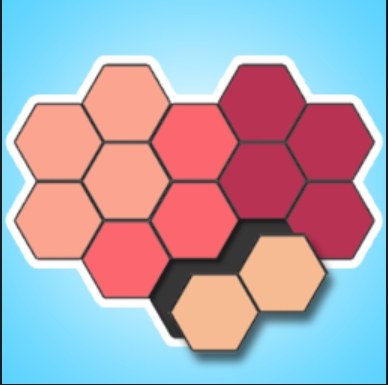
I opened Hexagon Block Sort expecting something meditative and maybe a little boring. It's not. The board fills up fast, and within about forty seconds I had already painted myself into a corner with three mismatched hex stacks and nowhere useful to put the next piece. You get a hex grid, a handful of colored stacks, and a deceptively simple rule: tap a stack, tap a destination. Same color only. The pieces are chunky, the colors are distinct, and there's a soft little snap when a block lands. It's pleasant right up until you realize you've made a terrible decision three moves ago and now the undo button is your only friend.
The first minute teaches you something important: this isn't a slow puzzle where you can endlessly deliberate. New rows arrive on a timer, or after a certain number of moves depending on the mode you're in. I found myself glancing at the incoming queue, then back at the board, then back at the queue, and still messing up. The pressure isn't frantic like a match-three with a countdown bar, but it's persistent. You'll notice your shoulders tense up slightly around level four or five when the board starts looking crowded and the obvious moves have dried up.
How the Loop Really Works
On the surface you're sorting colored hex blocks into matching stacks. The optimization layer underneath is what separates a ten-minute run from a thirty-minute session where you actually clear stages. Every time you move a block, you're not just tidying up — you're managing a limited number of open columns and trying to keep at least one or two of them flexible. The game doesn't tell you this outright, but empty columns are a resource. Once all your columns have at least one stack in them, your ability to shuffle pieces around drops dramatically.
What you're optimizing for isn't speed or even high scores in the traditional sense. You're optimizing for board elasticity. Can you still respond when the game throws three different colors at you in quick succession? If the answer is no, the stage is already effectively over even if there are still empty hexes on the grid. I started tracking my losses and noticed a pattern: I wasn't dying because the board filled up. I was dying because I lost access to the one column I needed for a specific color, and that cascaded into a clogged board within four moves.
The game also rewards consolidation. When you complete a full stack of a single color, it usually clears or locks in place depending on the variant you're playing. In the standard sort mode, clearing a stack frees up that column for anything. The relief is real. I found myself making suboptimal short-term moves just to finish a stack and get that column back, and honestly, that's often the right call. A clean column is worth more than a perfectly placed single block.
Mistakes That End Your Run Early
Let me walk through the specific ways I kept losing before I figured things out. These aren't theoretical — I made every single one of these repeatedly during my first few sessions.
Placing a block on the only available column of that color without checking what's coming next. The queue shows you upcoming pieces. I ignored it for probably my first ten games. You'll see one, sometimes two upcoming hex blocks. If you commit your only red column to a block and the next piece in the queue is also red, you now have a problem. Either you start a new red stack somewhere else, eating up a column, or you scramble to clear space. Check the queue before every placement. It sounds obvious but under pressure it's easy to skip.
Spreading colors across too many columns too early. In the first few levels, it's tempting to just place blocks wherever they fit. By level six you'll have five partially-filled columns and nowhere to put the sixth color that just appeared. I started forcing myself to consolidate early, even if it meant stacking blocks in a way that looked messy. Two tall stacks of the same color on one column is better than two short stacks on separate columns. You can always split them later if the game mechanics allow it, but you can't un-split them once the board gets tight.
Hoarding the undo button for "real" mistakes. The undo is generous in Hexagon Block Sort — usually you get several per stage. I was stingy with them at first, saving them for catastrophic misclicks. That's backwards. Use undo aggressively for small positioning errors, especially in the mid-game when a single misplaced block cascades. The undo isn't a limited resource you need to conserve for emergencies; it's a tool for maintaining board health. I started undoing any move where I immediately thought "eh, that wasn't ideal" and my run lengths nearly doubled.
Forgetting that the edges of the hex grid behave differently. The hexagonal layout means each cell has six neighbors, but edge cells have fewer. A block on the edge is harder to maneuver around if you need to reorganize later. I try to keep my most flexible or highest-count color stacks toward the center of the board where they have maximum adjacency options. Edge columns are better for colors you're about to complete or colors that rarely appear in the current stage.
Tunnel vision on one color. I'd get fixated on finishing a blue stack because it was almost done, ignoring that my yellow and green columns were becoming unmanageable. The game punishes this hard. You need to scan the whole board every three or four moves and ask: which color is closest to becoming a problem? Solve that one first, even if it delays completing the stack you were excited about.
Sticky Stages and How to Approach Them
Somewhere around stage eight or nine, the difficulty curve stops being linear and starts throwing genuinely mean configurations at you. These are the sticky stages the title mentions. The game introduces more colors simultaneously, or the incoming queue starts delivering blocks in an order that feels almost intentionally unhelpful. I hit a wall on stage twelve for a solid twenty minutes of attempts.
What eventually worked was changing how I evaluated the opening. In the first three moves of a sticky stage, I'm not trying to sort anything. I'm reading the board like a map. Which colors am I being asked to manage? How many columns are available? Is there a color that only appears once or twice in the initial layout? That rare color is a trap — the game will almost certainly send more of it, and if you've buried its only stack under other blocks, you're done. I started identifying the "problem child" color on turn one and dedicating a column to it preemptively, even if that column sat empty for a while. Having a reserved lane for a trouble color saved me more times than I can count.
Another thing about sticky stages: the mid-game plateau is where most runs die. The board looks manageable, you've got three or four columns with decent stacks, and then the game sends a wave of new colors that don't match anything you've prepared for. The counterintuitive move that helped me was deliberately leaving one column totally empty for as long as possible. Not mostly empty — completely empty. That empty column is your panic button. When the game surprises you with an unexpected color, you can start a fresh stack there without disrupting your existing organization. It feels wasteful to have a column doing nothing, but it's the single most effective buffer against the randomness of the queue.
Phone vs Desktop: It Actually Matters Here
I played Hexagon Block Sort on both my phone and my laptop, and the experience is different enough to mention. On a phone, the hex tiles are larger relative to your finger, so mis-taps are rare. The portrait orientation gives you a nice tall view of the board, and the incoming queue sits naturally at the top where your eyes already go. Thumb reach is comfortable for most hand sizes since the grid is centered. The downside: on smaller screens, seeing the full board state at a glance is harder. I caught myself missing edge-stack details on a 6.1-inch screen that were obvious on a larger display.
On desktop, the mouse gives you precision but also a weird temptation to play faster than you should. Clicking is faster than tapping, and I found my error rate went up on desktop not because the controls were worse, but because I stopped pausing between moves. The larger screen real estate is genuinely helpful for scanning the board, especially on sticky stages where you're tracking five or six colors. If you have the choice, I'd recommend desktop for learning the game and phone for when you've internalized the patterns and want quick sessions. The browser version loads fine either way — no install, no account, just the game in a tab.
A Short Practice Plan That Actually Helps
I'm not going to give you a generic "play every day" suggestion. Here's what I did that measurably improved my stage completion rate over about a week of casual play:
Session one: play five runs where your only goal is to keep one column empty for the entire game. Don't worry about score or stage progression. If you fill that column, restart. This builds the muscle memory of treating empty space as a resource, not a void to fill. It felt wrong every single time, but by run four I started seeing the board differently. The empty column is a safety net, and knowing it's there reduces the panicked decisions that cause most losses.
Session two: verbalize your next move and the move after it. Out loud, even if you feel silly. "I'm putting blue on column three, then if the queue shows red I'll use column five." This forces you to check the queue and commit to a two-move plan. I was shocked at how often I couldn't articulate the second move, which meant I was playing reactively. Reactive play works for the first few stages and falls apart completely on sticky ones.
Session three: play the same sticky stage three times in a row with a focus on the opening five moves. Most stages have a seed or a pattern to the initial layout. By attempt three, you'll recognize the trap colors and the dangerous placements. Treat it like learning a level in a platformer. The goal isn't to memorize — it's to train your eye to spot the structural problems before they become emergencies.
Session four: impose a "no undo" challenge on early stages. This sounds counterproductive given what I said earlier about using undo aggressively, but doing a few no-undo runs on stages one through five teaches you to commit to decisions and live with the consequences. You'll make mistakes, you'll lose runs you could have saved, and you'll learn which types of errors are truly unrecoverable. Then go back to using undo freely — but now you'll have better instincts about which moves need undoing and which ones just feel uncomfortable but are actually fine.
After a week of this, I was consistently reaching stages I'd never seen before, and more importantly, I was enjoying the game more. The frustration of feeling like the game was cheating me (it wasn't) gave way to a genuine appreciation for how the systems interact. Hexagon Block Sort is one of those free browser games that seems slight until you realize you've been playing for forty minutes and your tea has gone cold. It doesn't need a tutorial full of pop-ups because the design teaches you through failure, and the failures are almost always fair. Almost.