What the First Minute Actually Feels Like I opened Hexagon Block Sort expecting a slow, meditative puzzle. Instead, the first sixty seconds hit me with a quiet kind of panic. The board fills from the center outward, hexa
What the First Minute Actually Feels Like
I opened Hexagon Block Sort expecting a slow, meditative puzzle. Instead, the first sixty seconds hit me with a quiet kind of panic. The board fills from the center outward, hexagons stacking in clusters of three or four colors. There's no dramatic countdown timer, but the space disappears faster than you think. You'll grab a block, squint at the available slots, and realize the obvious move you saw two seconds ago is now blocked by the piece you just dropped somewhere else. It's not frantic in a loud way—the music is calm, the animations are smooth—but your brain starts working overtime immediately.
What surprised me most was how quickly I developed little superstitions. I started avoiding certain corners. I convinced myself the game was feeding me too many purple hexagons out of spite. By the end of my first session, I'd failed three times in under two minutes each, and I was genuinely annoyed at myself, not at the game. That's a good sign. The frustration came from seeing where I messed up, not from random nonsense.
How the Loop Works and What You're Really Optimizing For
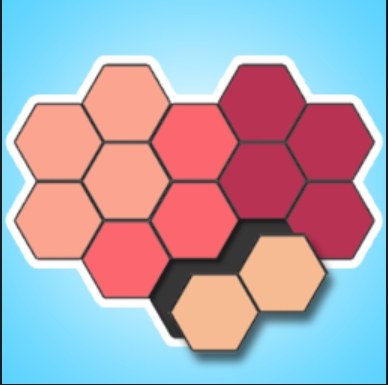
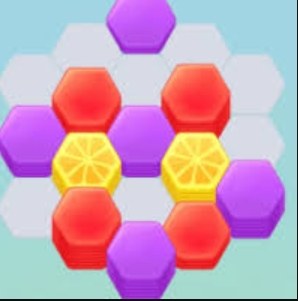
If you've played any sort-puzzle game in a browser, the core idea here will feel familiar. You get a board peppered with colored hexagonal blocks. Your job is to clear them by grouping same-colored pieces together. When a group reaches a certain size—usually six, sometimes more depending on the level structure—it pops and awards points while freeing up precious board real estate. New blocks keep arriving, either from a queue at the bottom or spawning directly onto the board, and the game ends when there's no space left to place something.
But Hexagon Block Sort has a specific rhythm that sets it apart from square-tile sorters. The hexagonal grid means every piece touches up to six neighbors instead of four. Early on, this feels like an advantage. You have more angles to slide pieces into. Later, it becomes a trap. A misplaced hexagon blocks potential connections in multiple directions at once, and you'll suddenly find yourself with three half-formed color groups that can't reach each other because of one stubborn orange piece you dropped three turns ago.
What you're really optimizing for isn't just clearing groups. It's keeping the board porous. You want little channels of empty space running between color clusters so that future pieces can snake through. The moment your board becomes a solid mass with no gaps, you're dead. It might take thirty more seconds to actually lose, but the run ended the second you lost those breathing lanes. I started thinking of empty hexes as a resource, not just the absence of a problem.
Mistakes I Kept Making Until I Stopped
Let me save you some frustration. Here are the specific errors that crashed my runs repeatedly during my first hour of testing.
Chasing the first match you see. The game presents you with a piece, and there's an obvious spot where it fits near two same-colored blocks. You drop it. Feels productive. But that spot was actually your only access route to a much larger cluster forming on the other side of the board. Now that route is clogged, and the big group will never complete. Slow down. Check if the obvious placement cuts off something more important before you commit.
Treating the board edges as safe zones. In square-grid games, corners and edges are often low-risk dumping grounds. Hex grids don't work that way. An edge hex still has four neighbors, and if you pack the perimeter with mixed colors, you'll create a crust that's nearly impossible to break through. I lost a promising run where I'd neatly filled the outer ring with "temporary" pieces, planning to clear them later. Later never came. The center filled up, and my tidy border became an unbreakable shell.
Ignoring the piece queue. Hexagon Block Sort shows you the next two or three incoming pieces, depending on the mode. For my first several attempts, I completely ignored this. I played reactively, dealing with whatever landed in my hand. Once I started glancing at the queue and planning two moves ahead, my average survival time doubled. You don't need to map out some grand strategy. Just knowing whether the next piece will help or hurt your current plan is enough.
Over-clearing early. This sounds counterintuitive. Clearing groups is the point, right? But popping a group too early—especially a central one—can leave you with a board full of scattered singles and pairs that don't connect to anything. Sometimes it's better to let a completed group sit for a turn or two while you build supporting structures around it. The pop clears space, but it also removes pieces that were holding the shape of your board together.
Phone Versus Desktop: It Matters More Than You'd Think
I tested Hexagon Block Sort on both a desktop browser and a mid-range Android phone. The experience isn't identical, and your device choice changes how you should approach the game.
On desktop, I used a mouse, and the precision felt great. You can hover over the board, trace potential paths with your eyes while the cursor rests on a target hex, and click with confidence. The larger screen means you see the whole board without scrolling or pinching. If you're trying to beat a personal high score or just want the most relaxed experience, desktop is the way to go. Your wrist might get a little stiff after a long session, but that's about it for downsides.
On mobile, the touch controls are responsive but introduce a small physical problem: your finger covers the hex you're aiming at. I fat-fingered several placements in my first phone session, dropping pieces one hex off from where I intended. You'll adapt after a few games—I started aiming slightly above my target and letting the piece snap into place—but expect a brief adjustment period. The portrait orientation works nicely for one-handed play, and this is genuinely a good game to pull up while waiting in line somewhere. Just know that your accuracy will be slightly lower than on desktop, and plan your moves with that margin of error in mind.
One weird thing I noticed: the game felt slightly faster on mobile, but I think that's an illusion. The smaller screen makes the board feel more compressed, so the same spawn rate seems more aggressive. The actual timing is identical as far as I could tell. It's purely a perception thing, but perception affects how you play. On my phone, I caught myself rushing more.
Browser Tabs, Zoom, and Staying Focused
Since you're playing this as a free browser game—no download, no install, just open a tab and go—there are some practical things worth mentioning that most reviews skip.
First, browser zoom level matters. I accidentally had my tab zoomed to 110% for my first few games and didn't realize it. The hexagons were slightly larger than intended, which sounds nice, but it meant I had to scroll a tiny bit to see the full board. That half-second scroll was enough to break my flow and occasionally misplace a piece. Set your zoom to 100% or whatever fits the full game area in your window without scrolling. It's a small thing that makes a real difference over a twenty-minute session.
Second, tabs. If you're the kind of person who keeps thirty browser tabs open (I am), close some before playing. Hexagon Block Sort isn't particularly heavy, but it's a real-time puzzle that suffers from even tiny stutters. I had one run end because a background tab decided to auto-refresh and caused a half-second lag spike right as I was placing a critical piece. Is that the game's fault? No. But it happened, and it will happen to you if your browser is choking on memory. Give the game a clean tab environment.
Third, notifications. Put your phone on Do Not Disturb or close your desktop messaging apps. This sounds like generic advice, but Hexagon Block Sort punishes divided attention more than most puzzle games. You can't pause mid-placement and come back without losing your mental map of the board state. A single text notification pulling your eyes away for three seconds is often enough to wreck a run that was building nicely.
A Short Practice Plan That Actually Helped Me
After bouncing off the game a few times, I decided to stop trying to win and instead run some focused practice. This turned out to be way more useful than just grinding attempts. Here's what I did over about an hour of total playtime.
First, I played five games where I wasn't allowed to pop any groups at all. The goal was just to survive as long as possible by placing pieces cleanly and keeping channels open. I lasted less than two minutes per attempt, but it forced me to care about piece placement without the crutch of clearing space. By the end, I had a much better instinct for which hexes were dangerous to fill.
Second, I played three games where I only focused on the piece queue. I ignored score entirely and made every decision based on what was coming next, not what was on the board right now. This felt awkward at first, like trying to pat your head and rub your stomach, but it clicked around the middle of the second game. My board management got noticeably tighter.
Finally, I played normal games but with a self-imposed rule: I had to verbalize why I was placing each piece before I dropped it. Out loud, to an empty room. "This blue goes here because it connects to the two blues on the left and leaves the center lane open for the green coming next." Saying it forced me to have an actual reason, and that cut out a ton of mindless placements. My average score jumped about 40% after just a handful of games using this method.
None of this is complicated. You could do the whole practice plan in a single lunch break. The point is structured attention, not grinding. Hexagon Block Sort is simple enough that you can brute-force your way to improvement, but targeted practice gets you there much faster and with less frustration.
The Satisfying Parts Worth Sticking Around For
Once you get past the initial learning curve, there's a specific kind of satisfaction here that keeps you coming back. It's the moment when a piece slots into a gap you created three turns ago, completing a group you've been nursing along, and the resulting pop cascades into a chain clear that opens up half the board. You didn't plan the whole chain—no one can plan that far ahead in a game with random piece draws—but you set up the conditions for it, and it paid off.
The hexagonal geometry makes these moments feel more earned than in square-based sorters. A four-direction grid gives you obvious, straight-line connections. Hex grids make you work for your patterns. When a clear happens diagonally across a hex field, it feels like you outsmarted the shape itself.
I also appreciate that the game doesn't try to sell me anything or gate content behind timers. It's a free browser game that just lets you play. No energy systems, no ad breaks between levels, no pop-ups begging for five-star ratings. You open the tab, you sort hexagons, you close the tab. In a world where every casual game seems desperate to extract something from you, that restraint is genuinely refreshing.
When to Walk Away
Some practical honesty: Hexagon Block Sort can tip from engaging to aggravating if you're not careful. The randomness means you'll occasionally get piece sequences that feel unwinnable. Maybe they are unwinnable. I can't prove it either way, but I had runs where three colors I desperately needed simply never appeared, and my board collapsed through no obvious fault of my own.
When that happens twice in a row, close the tab. Come back later. The game will still be there, and your next run will probably go better. Tilting in a puzzle game is real, and it makes you play worse, which makes you tilt more. I learned to recognize the tightness in my shoulders that meant I was blaming the RNG instead of thinking clearly, and that was my cue to stop.
Hexagon Block Sort is at its best in fifteen-to-twenty-minute sessions. Longer than that, and I started making lazy mistakes. Shorter, and I didn't have time to get into a groove. Your mileage will vary, but if you're someone who tends to marathon puzzle games, consider setting a loose time limit. Your scores will probably improve for it.