First Minute, Hot Engine I fired up Space Shooter War on my laptop, and the first thing that hit me wasn’t the lasers but the sheer screen clutter. In the opening thirty seconds, you’re dropped into a scrolling starfield
First Minute, Hot Engine
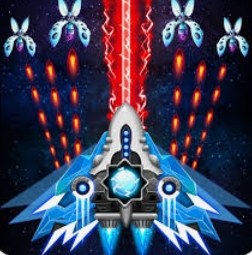
I fired up Space Shooter War on my laptop, and the first thing that hit me wasn’t the lasers but the sheer screen clutter. In the opening thirty seconds, you’re dropped into a scrolling starfield with three enemy fighters already angling toward your nose. No tutorial overlay, no friendly voice telling you where to put your hands. Just a blinking "WASD to move, click to shoot" in the corner. I panicked, mashed the spacebar, and died before I could exhale. Reload. Second try, I calmed down, started weaving through the early bullet streams, and noticed something odd: the enemies don’t just spawn in waves like a classic arcade shooter. They drift in from the sides in loose packs, and if you’re not aggressive, they’ll bunch up and box you in against the bottom edge. The screen feels tight, even on a 15-inch display. The audio is chunky—bass-heavy thuds for explosions, a tinny laser chirp that never gets old—but the music loop is about 40 seconds long and you’ll be sick of it by the third run. What you feel in that first minute is a game that wants you to be constantly moving, not a corner-camper. If you try to sit back and pick off stragglers, the game punishes you with bullet density that escalates faster than you’d expect.
What You’re Actually Optimizing For
Strip away the flashy explosions and the enemy fighters that look like rejected concept art from a 90s shareware disc, and Space Shooter War is a survival score-chaser. The loop goes: survive a wave, grab the floating power-up orb, spend it between waves on one of three upgrades—usually fire rate, damage, or shield regen—then get thrown back in. You aren’t building a persistent ship. Every run is from zero. That’s the core tension. You’re not farming currency for a permanent boost, so your only real goal is a higher number on the local leaderboard. For me, that meant I stopped caring about reaching "the end" (spoiler: I never found one) and started obsessing over how long I could keep a single shield charge alive.
The upgrade choices feel meaningful for about four waves. After that, I noticed the costs scale in a way that makes spreading your points too thin a death sentence. If you try to be a generalist—a little fire rate, a little damage, a shield point here and there—you’ll hit a wall around wave eight where the enemy health outpaces your damage output and your shield can’t absorb more than a graze. The game rewards commitment. By my tenth run, I was dumping everything into raw damage and ignoring shields entirely, which felt suicidal until I realized that dead enemies don’t shoot back. The power-up economy is stingy, and you’ll often finish a wave with barely enough currency to buy one low-tier upgrade. The game doesn’t tell you this, but you can skip buying anything and bank the orbs for the next shop. I only figured that out by accident when I clicked the "exit shop" button in frustration.
The enemy variety is modest. You’ve got your basic zippy fighters, slow-moving tanks that soak up shots, and a rare minelayer that drops stationary hazards. The minelayer is the only enemy that forces you to change your movement pattern dramatically. Everything else you can handle by strafing in wide circles, but the mines create temporary no-go zones that funnel you into predictable paths—right into a stream of bullets from the fighters you were ignoring. That’s the game’s best trick, and it only plays it once every few runs.
Mistakes That End Runs Early (and How I Kept Making Them)
I lost at least a dozen runs to the same three blunders. The first is hugging the bottom edge. It feels safe down there because you have a moment to react to bullets coming from above, but Space Shooter War spawns enemies from the sides and occasionally from behind if you’re too low. I got clipped more times than I’d like to admit by a fighter that zipped in from the left corner while I was focused on the top of the screen. After a while, I forced myself to stay in the middle third of the screen, which felt wrong for a shooter, but it gave me escape routes in every direction.
Second mistake: tunnel vision on the power-up orb. When an enemy explodes, the orb hangs in space for about five seconds before fading. In the chaos of a wave, I routinely dove through crossfire to snag one, only to eat a bullet on the exit. The orb isn’t worth your shield. If it drops in a bad spot, let it go. The game tightens the upgrade bottlenecks anyway, so missing one orb in wave five isn’t going to crater your run.
Third, and this one was the hardest to unlearn, I kept treating the shield like a health bar. It’s not. It’s a time buffer. The shield recharges after a few seconds of not taking damage, but if you get hit once, the recharge timer resets. So taking a stray bullet and then immediately taking another because you panicked and dodged into a cluster wipes you out. What I eventually learned: when the shield breaks, stop shooting for a second and just focus entirely on weaving. Your damage output can wait. The enemies don’t get more aggressive when you stop firing, and the shield recharge window is shorter than I initially thought—maybe three seconds of clean movement. Once I started treating the shield as a cooldown to manage rather than a resource to spend, my average wave count jumped from six to twelve.
Phone vs. Desktop: A Different Beast
I played about a third of my time on an Android phone, and it’s almost a different game. On desktop, the mouse-aim gives you precision that lets you lead targets and sweep across the screen in a smooth arc. On mobile, the virtual joystick is serviceable but floaty. Your thumb will drift off the stick’s center point during tense moments, and suddenly your ship is drifting into a bullet you saw coming. The auto-fire helps—you don’t have to manage a shoot button—but the auto-aim is aggressive in a way that feels sloppy. It snaps to the nearest enemy, which sounds helpful, but often it locks onto a tank at the back while a fighter is buzzing right toward your face. I had to manually override the aim constantly by dragging my right thumb across the screen, which created an odd two-thumb tango: left thumb dodging, right thumb aiming, brain frying.
Smaller screens compound the clutter problem. On a phone, the enemy bullets are just a few pixels wide, and against a scrolling starfield, I lost track of them more than once. I wouldn’t say the mobile version is unplayable, but it demands a level of focus that’s hard to sustain on a bus or a couch. Desktop is the way to go if you care about pushing for high scores. If you only have a phone, dial down your expectations and maybe treat it as a time-killer for short sessions rather than a score-chase.
Who This Game Really Suits
Space Shooter War is not a chill game. It doesn’t respect your time in the way a casual match-three does. It wants your full attention for stretches of five to ten minutes, and if you blink during wave transitions, you’ll miss the shop. I think it suits two types of players. First, the score-chaser who already has a shooter they love—maybe something like Skyforce or a classic arcade shmup—and wants a stripped-down version that loads in a browser tab and doesn’t ask for much. You’ll find the upgrade system familiar, the enemy patterns learnable, and the lack of story or progression refreshing. You’re here for the raw mechanics, and Space Shooter War delivers those without fuss.
Second, and this is a narrower group, it suits someone who wants to practice bullet-dodging fundamentals. The patterns aren’t as dense or intricate as a bullet hell, but they’re erratic enough that you’ll train your peripheral vision. I actually found myself getting better at reading enemy movement queues in other shooters after a few sessions with this one. The game’s simplicity becomes a strength here: no screen-clearing bombs to bail you out, no continues, no mercy. You either dodge or you die. That’s a useful teacher, if a frustrating one.
It does not suit players who need a sense of progression or permanent unlocks. There’s no hangar full of ships to buy, no cosmetic skins, no daily challenges that give you a reason to come back tomorrow. The only record of your effort is a high score that sits in your browser’s local storage. If you clear your cache, you wipe your legacy. For some, that’s liberating. For most, I suspect it’ll feel hollow after a few days.
A Practice Plan if You’re Stuck
After I died in wave five for what felt like the twentieth time, I stopped trying to win and started training specific skills. Here’s what worked, and you can adapt it to your own frustration level.
First session: don’t shoot at all. Just dodge. Load up the first wave and weave through the bullets without clicking. The enemies won’t die, but the bullet density caps at a manageable level for the first three waves. Do this five times in a row, focusing on keeping your ship in the middle third of the screen. The goal is to internalize the movement speed of your ship without the distraction of aiming.
Second session: play normally but skip every upgrade that isn’t damage. Force yourself to commit. You’ll die early a few times because you’re fragile, but you’ll learn what it feels like to kill enemies before they can fill the screen with bullets. The difference in wave pacing is dramatic.
Third session: practice the mine layer wave. When you see that slow-moving enemy that drops the stationary hazards, your instinct will be to flee to a corner. Don’t. Instead, circle the perimeter of the screen in a wide oval, shooting inward. The mines will clump in the center where they’re less dangerous, and the fighters will chase you in a line that’s easier to pick off.
After those three focused sessions, my runs felt less reactive and more controlled. I still never cracked the top of the leaderboard—my best was wave 14—but the deaths stopped feeling cheap. I could usually trace a death to a specific greedy decision, not to the game throwing an unreadable pattern at me.
The Unspoken Grind
There’s a subtle frustration baked into Space Shooter War that I only noticed after a few hours. The early waves become tedious once you’re competent. Waves one through five are trivially easy after you’ve put in the practice, but you still have to slog through them every single run to get to the waves that actually test you. There’s no skip mechanic, no way to start at wave six with a basic kit. You spend three minutes bored, then three minutes engaged, then you die and do it again. That pacing gap wore me down faster than the difficulty spikes. If you’re the type of player who hates repetitive early-game grind in roguelikes, this will grate on you.
I also noticed a small thing with the hitbox. Your ship’s collision zone feels slightly larger than the sprite. There were at least three deaths where I watched a bullet sail past my wing only for the game to register a hit. It might be lag on the browser version, or it might be a deliberate design choice to keep the tension high. Either way, it’s something to account for: give bullets a wider berth than your eyes tell you to.
Final Call on Time Investment
Space Shooter War sits in an awkward spot. It’s too demanding to be a casual idle game, but it lacks the depth and polish to compete with premium shooters. What it does well—tight survival loops, meaningful upgrade commitment, solid keyboard controls on desktop—is enough for a specific kind of free browser game session. I’d say it’s worth your time if you have 20 minutes to kill and a craving for something that demands reflexes without a tutorial holding your hand. Play it in a quiet room, on a desktop, with the music muted and your own playlist on. Treat it like an arcade cabinet in a corner of your browser. Don’t expect it to change your life, but if you’re the right kind of player, you’ll click "retry" more times than you planned.