
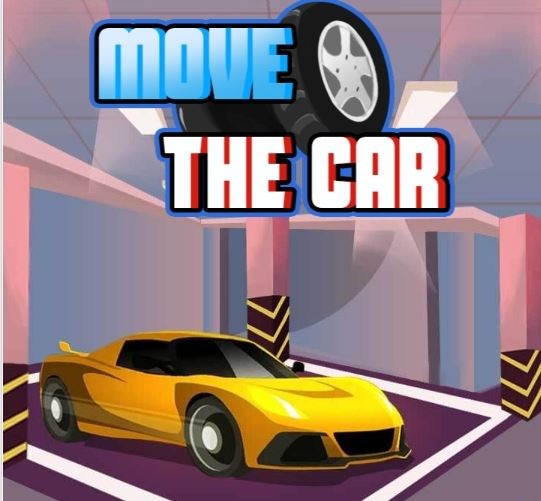
First Minute on the Asphalt I loaded up Move The Car and immediately felt that familiar low-poly parking lot stillness. No timer ticking, no dramatic music cue — just a top-down view of a few sedans, some concrete barrie
First Minute on the Asphalt
I loaded up Move The Car and immediately felt that familiar low-poly parking lot stillness. No timer ticking, no dramatic music cue — just a top-down view of a few sedans, some concrete barriers, and a marked space glowing faintly at the edge of the screen. The first car I touched with my finger lurched forward way faster than I expected. I scraped a red compact against a pillar within eight seconds and had to restart. That's the thing: the game doesn't hold your hand, but it also doesn't punish you with a score penalty or a life system. You just tap the reset arrow and the puzzle resets, exactly as it was. That immediate reset loop is what hooked me. No menus, no "Are you sure?" pop-up. You mess up, you're back in. By the third attempt I was creeping the same car forward one pixel-wide nudge at a time, holding my breath.
The visual language is clean to the point of being sparse. Flat-shaded rectangles, pastel body panels, shadowless environments. It reads instantly. You won't find lens flare or particle effects here, but that restraint works in a genre where judging clearance is everything. The sound design is equally minimal — a soft tire-scuff noise when you move, a satisfying low thunk when a car slots perfectly into its outline. If you're someone who gets antsy during flashy menu animations, you'll appreciate how fast you go from browser tab to actual play.
What You're Actually Optimizing For
Move The Car belongs to the "unblock parking" puzzle subset, where the goal isn't just to park one vehicle but to extract a specific car from a tangled grid by shifting others out of the way. Think of it as a sliding block puzzle with wheeled pieces. Each level gives you a cluster of vehicles — some parallel-parked, some angled, some boxed in by concrete bollards — and a target car that needs to reach the exit arrow. You can only move cars along their primary axis: forward or backward. No turning, no three-point maneuvers mid-puzzle. That restriction is the whole game.
The loop works like this: you scan the arrangement, identify which cars are blocking your target's path, then figure out the exact sequence of moves that creates a gap wide enough to slide the target free. Sometimes the solution requires moving a car just one grid unit to let another car pass, which then lets a third car shift, which finally frees your target. It's a chain of dependencies, and the satisfaction comes from seeing that chain click into place without wasted moves. The game tracks your move count, and while it doesn't scream at you for inefficiency, I found myself restarting levels just to shave off three or four unnecessary nudges. That self-imposed optimization is where the depth lives. You can brute-force a level with 40 moves and feel fine, or you can solve it in 12 and feel clever.
There's no star rating system visible during my session, no currency, no unlockable car skins. The progression is purely level-based: solve puzzle 12, get puzzle 13. That's refreshing if you're tired of battle passes, but it also means your motivation has to come from the puzzles themselves. If you need external rewards to stay engaged, this might feel bare after a dozen levels.
The Specific Ways Runs Fall Apart
I restarted levels for three main reasons, and they're worth naming because avoiding them is the whole skillset. First: moving a car too far in one direction and trapping it against a wall or another vehicle, creating a new blockage that's worse than the original problem. This happens when you get excited about a solution path and slide a car to its maximum range without checking what space you're closing off behind it. I did this constantly in levels 7 through 9, where the layouts start introducing L-shaped barriers that limit travel distance asymmetrically.
Second: solving the wrong bottleneck. There's a specific level — maybe it was 14 — where a blue van blocks the exit, but a green coupe three rows away looks like the obvious first move. I moved the coupe, freed up space nobody needed, and stared at the screen realizing I'd just burned five moves on a decoy. The puzzle deliberately presents a visually loud obstruction while the real key is a small hatchback tucked in a corner that, once shifted two units, cascades the whole solution. Learning to distrust your first visual instinct is the turning point between fumbling and flowing.
Third, and this one's mechanical: on phone touchscreens, I occasionally triggered the wrong car when two vehicles overlapped at a diagonal in my view. The hit detection seems prioritised by proximity to your tap point, but on a compact screen with chubby fingers, I'd accidentally grab the car behind the one I wanted. This never broke a run permanently — again, instant reset — but it added a layer of physical friction that made me more cautious. More on that in a moment.
Phone vs. Desktop: A Noticeable Gap
I tested Move The Car on a mid-range Android phone and a standard 15-inch laptop with a trackpad. The difference was stark enough that I changed how I played depending on the device. On desktop, using a mouse, the precision is perfect. You click a car, drag in a straight line, and the car moves exactly as far as you pull. Releasing the mouse button commits the move. This feels natural and lets you make micro-adjustments — that one-unit nudge I mentioned — reliably. The cursor also acts as a visual pointer, so there's zero ambiguity about which vehicle you're selecting.
On a phone, the game uses touch-drag controls. You put a finger on a car and slide up or down. It works fine for broad movements, but those delicate one-unit shifts become finicky. My fingertip would occasionally slip off the car's hitbox mid-drag, which the game interprets as a release, committing a half-finished move. I learned to compensate by using the side of my thumb and dragging slower, but there's an inherent tension between the puzzle's demand for precision and the imprecision of a glass surface. The phone experience isn't broken — I completed most levels on mobile — but if you have access to a desktop or a tablet with a stylus, you'll have a smoother time. The game also runs entirely in a mobile browser without any "install our app" nagging, which I appreciated. No weird viewport scaling issues either; the puzzle area resized cleanly on both orientations.
One thing I noticed: there's no undo button. On desktop, where misclicks are rare, this barely matters. On mobile, where I'd accidentally drag the wrong car every three or four levels, the absence of undo meant a full reset and sequence replay. Not a dealbreaker given the short level length, but worth knowing if you're a perfectionist who plays on a smaller screen.
Who This Game Actually Suits
After about 40 minutes across two sittings, I'd say Move The Car is laser-targeted at a specific player temperament. If you enjoy spatial reasoning puzzles where the challenge is logical rather than dexterity-based, you'll sink right in. The difficulty curve is gentle for the first eight or so levels — mostly teaching you the movement rules and basic blocking patterns — then it spikes around level 12 when multi-step dependencies become mandatory. That spike is where the game filters its audience. People who like untangling knots (literal or metaphorical) will push through. People who want a relaxing idle experience will bounce off hard at that point, because the puzzles stop being solvable through casual tinkering and start requiring you to hold a four-move sequence in your head before executing.
It also suits short-session players beautifully. A single level takes anywhere from 30 seconds to maybe three minutes once you understand the trick. You can open a tab, solve two puzzles while your coffee brews, and close it without losing any progress — the game remembers your level in the browser's local storage. No login, no cloud save anxiety. That low-commitment structure makes it ideal for quick mental resets between tasks.
Who it doesn't suit: anyone seeking narrative, progression systems, or variety in mechanics. The core interaction never changes. You move cars along one axis to free a target car. Level 1 and level 25 are the same verb set. The puzzles get more complex, but the toolset doesn't expand. If you need new elements introduced regularly — ramps, rotating platforms, traffic lights — you won't find them here. Also, if you have low tolerance for trial-and-error, the mid-game levels where the correct first move isn't obvious might frustrate you. There were two levels where I solved them not through logical deduction but by trying every possible first move until one worked, which feels less like puzzling and more like brute-forcing. That's not a design flaw so much as a natural consequence of the genre, but it's worth being honest about.
A Practice Plan That Actually Works
If you're new to this style of parking puzzle or you're stuck around the level 12–15 range, here's a concrete approach I used to stop restarting so often. This isn't an official tutorial — just what emerged from my own fumbling.
Start each level by doing nothing for 15 seconds. I mean it. Don't touch any car. Just trace the target car's path from its parking spot to the exit arrow with your eyes. Mentally mark every vehicle that intersects that path. Those are your primary blockers. Ignore everything else for now. Then, for each blocker, ask: "What's preventing this car from moving out of the way?" Trace that secondary blockage backward until you find a car with a clear lane behind it. That car is your first move. In most levels, there's exactly one vehicle that can move freely at the start, and identifying it early prevents you from shuffling cars that don't matter.
Next, move cars in half-distances. Instead of dragging a car to its maximum travel limit, move it just enough to create the gap you need. Every extra unit of movement is a potential future blockage. I started treating each car's position as a resource — space behind a car is valuable, and spending it carelessly costs you options later. This mindset alone cut my move counts by roughly a third.
Finally, if you're on mobile and struggling with fat-finger misselections, try zooming the browser viewport if your device allows it. Pinch-zooming on the puzzle area makes car hitboxes larger relative to your fingertip, reducing misgrabs significantly. Not every mobile browser handles this cleanly — mine occasionally reset the zoom level between levels — but when it worked, it made the precision-drag problem much more manageable.
For desktop players, I'd suggest using a mouse rather than a trackpad. The linear drag mechanic benefits from the stable pivot point a mouse provides. Trackpad dragging introduced slight diagonal wobble that occasionally caused the game to interpret my drag as a different axis, especially on cars parked at angles. A minor thing, but after 20 levels, minor frictions add up.
Move The Car isn't trying to be a lifestyle game. It's a tight, honest puzzle box that knows exactly what it is. Play it when you want to feel methodical, not when you want to feel powerful. The free browser access means there's zero barrier to trying it, and if it clicks with your brain, you'll lose a lunch break to it without noticing.