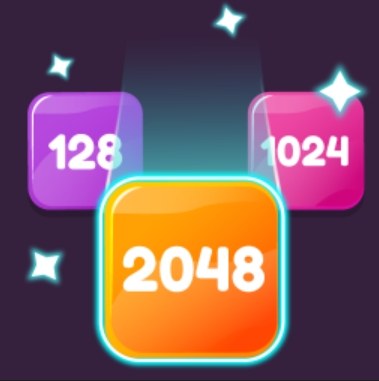
2048 Remastered is a browser puzzle game: slide numbered tiles on a grid, merge matching pairs, and build a 2048 tile before the board fills up. It suits casual players who want a simple, no-install time-killer.
2048 Remastered is a puzzle game built on a familiar idea: slide numbered tiles around a grid, merge matching pairs, and try to keep the board from filling up. The catalogue entry for this one is thin. There's no supplied description and no listed features, so I'm not going to pretend to know about special modes, custom grids, animations, or anything else the page doesn't say. What I can do is talk about the 2048 loop as it's conventionally played and give you priorities that hold up in any straightforward version of it.
That distinction matters. If you load the game and find something different from what I describe, trust the game, not this article. The advice below sticks to the core mechanics that define the genre and to habits that tend to separate long runs from short ones.
What you're actually doing when you play
A 2048 board is a grid of tiles, most of them carrying a number that's a power of two. On each move you push every tile in one of four directions. Tiles with the same value that collide merge into one tile of double the value. After the board settles, a new small tile appears in an empty cell, usually a 2 or a 4.
Your goal is to build a tile of 2048. If you're new to the genre, that's the target the name refers to, and reaching it usually means keeping the board alive for hundreds of moves.
The tension is simple to state and hard to manage. Every move you make adds a new tile somewhere you didn't choose. The board gets more crowded as you go. The game ends when the grid is full and no adjacent pair can merge, which means you lose by running out of room rather than by making one catastrophic error. Most failed runs are a slow squeeze, not a single bad move.
So the thing you're optimizing for isn't a high score in the short term. It's optionality. You want to keep empty cells available and keep your big tiles where they can still combine. Score follows from merges, and merges follow from a board that isn't jammed.
Priorities that keep runs going
If you take nothing else from this piece, take these. They're the habits casual players most often skip, and they're the ones that pay off fastest.
Pick a corner and commit. Choose one corner of the grid and treat it as home for your largest tile. The standard approach is to build your biggest numbers along one edge and never slide them out of that corner. This gives you a fixed anchor. When your largest tile stays put, the rest of the board has a clear direction to organize around.
Keep one direction mostly off-limits. If your big tile lives in the bottom-left, you generally don't want to swipe down or left in ways that dislodge it. Many players effectively play with two dominant directions and use the other two sparingly. Fewer directions means fewer ways to scatter your work.
Build in rows, not randomly. Try to keep a descending staircase of values along your chosen edge: the largest tile in the corner, the next largest beside it, then the next, and so on. When a new tile appears, you want a clear place for it to fit into that structure rather than a board of scattered numbers that can't reach each other.
Merge small tiles early. A pair of 2s sitting in a corner is easy to combine now and annoying later. Clearing low-value tiles keeps cells free, and free cells are the resource you're really managing.
Think one move ahead, not five. Casual players don't need deep planning. They need to notice when a move will leave a gap in the wrong place or trap a mid-size tile against a wall. A quick glance at what the board will look like after your swipe catches most of the damage.
Mistakes that end runs early
These are the specific ways boards die. Watch for them.
- Swiping aimlessly. Alternating directions because a move is available is the fastest route to a scattered board. Every swipe should have a reason, even a small one.
- Breaking your corner. One careless swipe that pulls your largest tile out of its corner can undo dozens of moves. If you've committed to a corner, protect it.
- Letting small tiles pile up. A cluster of 2s and 4s along an edge is a warning sign. Those tiles block merges for bigger numbers and eat the cells you need.
- Filling the middle first. If your board is dense in the center and empty at the edges, your structure is backwards. You want room near your working edge, not in the middle of nowhere.
- Ignoring the last empty cell. When you're down to two or three free cells, every move matters. Slow down. Check whether a swipe will close off your only merge option.
- Chasing score over survival. A big merge feels good, but if it leaves the board with no room to maneuver, it wasn't worth it.
There's also a subtler one: refusing to use the directions you find awkward. Some players avoid swiping up because it feels like it messes up their layout. That avoidance becomes a habit, and the habit becomes a constraint. Practicing the direction you dislike, in a controlled way, is worth the discomfort.
Phone or desktop: does it change anything?
The catalogue doesn't specify controls, so I'll keep this general. 2048-style games are usually played with arrow keys on a keyboard or by swiping on a touchscreen. Both work; the difference is mostly about how deliberate your inputs feel.
On a phone, swipes are quick and easy to repeat, which makes aimless play more tempting. It's also easy to swipe slightly off and register a direction you didn't intend. If you notice that happening, slow your swipes down and make each one distinct.
On a desktop, arrow keys give you crisp, unambiguous moves, and you can rest a finger on a key while you look at the board. That pause between deciding and acting is genuinely useful in the late game. Some players find keyboard play easier for exactly this reason.
Either way, the board is the same and the strategy doesn't change. Play on whatever you have in front of you. It's a browser game, so there's nothing to install.
A short practice plan
You don't need to grind for hours. A focused set of short sessions will teach you more than one long, unfocused one.
Session one: learn the corner. Play a single run with one rule. Keep your largest tile in one corner and don't let it leave. Don't worry about reaching 2048. Just notice how often you're tempted to break the rule and what happens when you do.
Session two: watch the small tiles. This time, focus on clearing 2s and 4s as soon as they appear near each other. Count how many empty cells you tend to have at the end of a run compared with your first session.
Session three: slow down near the end. Play normally, but when you're down to four or fewer empty cells, pause before each move. Ask what the board will look like afterward. This is where most casual runs are lost, and the fix is mostly patience.
Then: one run a day. Short, regular sessions beat marathon attempts because you arrive fresh and you remember what went wrong last time. Keep a mental note of the move that ended your previous run and try not to repeat it.
None of this requires special knowledge of 2048 Remastered's particular build. It's the ordinary discipline of the genre, and it's enough to push most casual players well past where they'd otherwise stall. Load it up, pick a corner, and give yourself room to move.